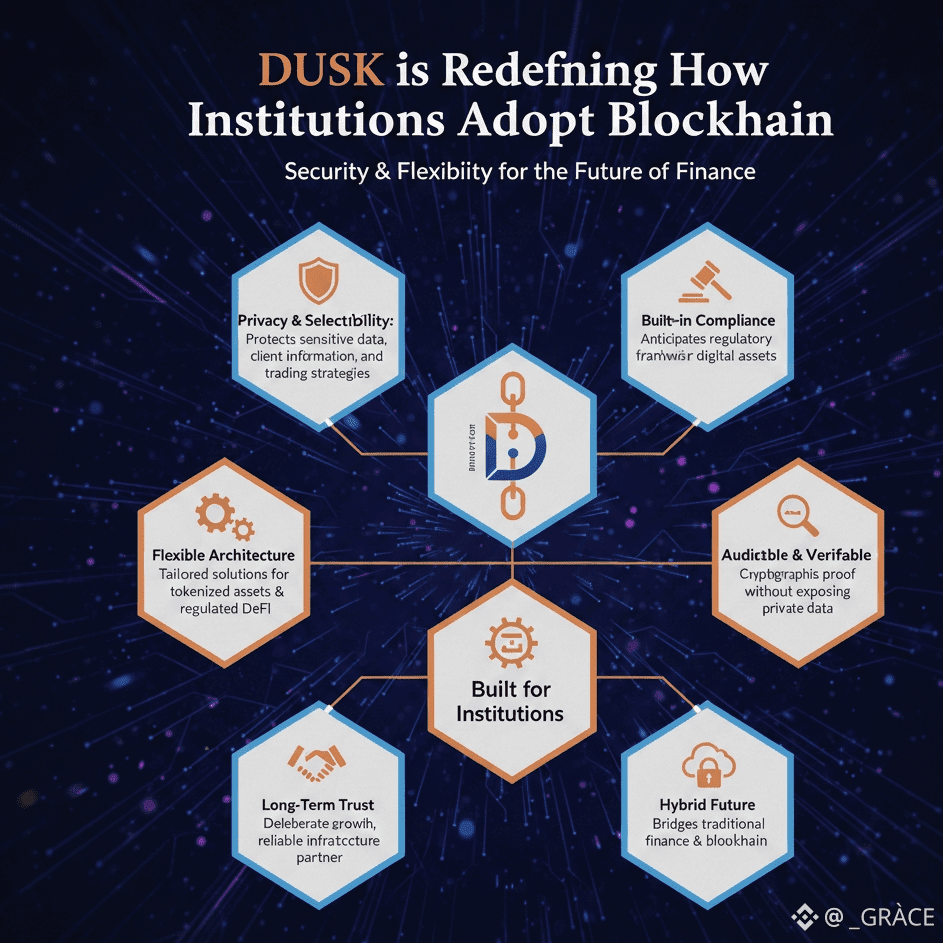
Dusk is quietly changing the way big financial institutions think about blockchain. While most networks are focused on speed, hype, or flashy launches, Dusk is built for organizations that operate in a world of rules, audits, and high stakes. Banks, asset managers, and regulated funds don’t chase trends they need systems they can trust, platforms that fit seamlessly into their workflows. That’s exactly what makes Dusk different.
From day one, Dusk was designed with institutions in mind. Privacy, transparency where it counts, and flexibility are not afterthoughts they are built into the network. This means organizations can explore blockchain without risking sensitive information or running afoul of regulations. Instead of asking institutions to change how they operate, Dusk adapts to them.
One of the network’s most important features is how it handles sensitive data. On public blockchains, everything is visible. That works for open communities and smaller projects, but it doesn’t work for banks or investment firms, where protecting trading strategies, balances, and client information is critical. Dusk solves this with selective visibility. Regulators and auditors can see what they need, while the rest stays private. It’s a subtle but powerful difference, and it’s what makes institutions take notice.
Dusk also stands out for its flexibility. Financial institutions aren’t all the same. Each one has its own rules, risk models, and operational practices. A rigid blockchain platform won’t fit. Dusk’s modular architecture allows developers and organizations to create tailored solutions from tokenized bonds to regulated DeFi platforms without compromising security or performance. It’s a network that works with the complexity of real-world finance rather than against it.
The rise of tokenized real-world assets is a perfect example of why Dusk matters. Stocks, bonds, and other instruments are moving on-chain, but that requires protecting confidential information. Dusk enables assets to be represented digitally, traded efficiently, and settled securely—all while keeping sensitive details private. Institutions can take advantage of blockchain efficiencies without exposing themselves to unnecessary risk.
Compliance isn’t an afterthought at Dusk it’s part of the foundation. Regulatory frameworks for digital assets and tokenized securities are becoming clearer, and Dusk’s design anticipates these requirements. Institutions don’t have to retrofit compliance later; it’s built in. That level of foresight creates confidence, especially for organizations navigating the fine line between innovation and regulation.
Auditability is another critical feature. Banks and exchanges need verifiable records for oversight, but they can’t make all data public. Dusk uses cryptography to let transactions be independently verified while keeping private information confidential. This balance between transparency and privacy is exactly what regulated markets need to operate on-chain with confidence.
Dusk’s growth is deliberate, not flashy. While many projects chase rapid adoption through marketing or incentives, Dusk focuses on long-term value. This approach matches the timelines of institutions, which adopt new technology cautiously and methodically. By building slowly and reliably, Dusk is earning the trust it needs to become a long-term infrastructure partner.
Finance is moving toward a hybrid future. Purely decentralized or fully centralized systems alone can’t meet the needs of modern institutions. Dusk sits in that middle ground, combining privacy, regulatory alignment, and flexible architecture. It offers practical solutions for organizations that need to operate securely on-chain while following real-world rules.
In a space crowded with experimental networks, Dusk is quietly proving its worth. It isn’t chasing headlines or hype. It’s addressing the problems that matter privacy, compliance, adaptability, and auditability. For institutions looking to bring traditional finance and blockchain together, Dusk is becoming the backbone they can rely on.