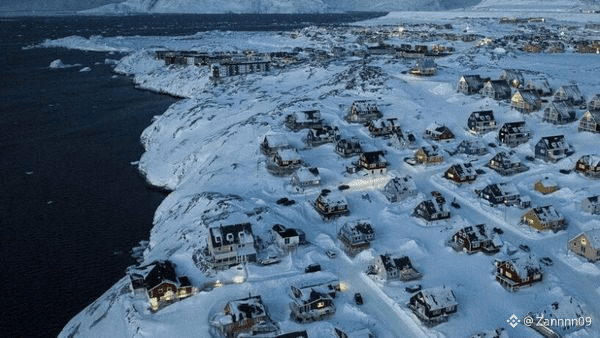
There’s growing geopolitical drama around Greenland — the massive, ice-covered island near the North Pole that most people rarely think about, but world powers absolutely do.
Greenland is an autonomous territory of Denmark.
While it governs its internal affairs, Denmark controls foreign policy and defense, making Greenland strategically tied to Europe and NATO.
🇺🇸 Why the U.S. Wants Greenland
Former U.S. President Donald Trump has repeatedly expressed interest in acquiring Greenland — even suggesting a purchase in the past. The reasoning is strategic, not symbolic:
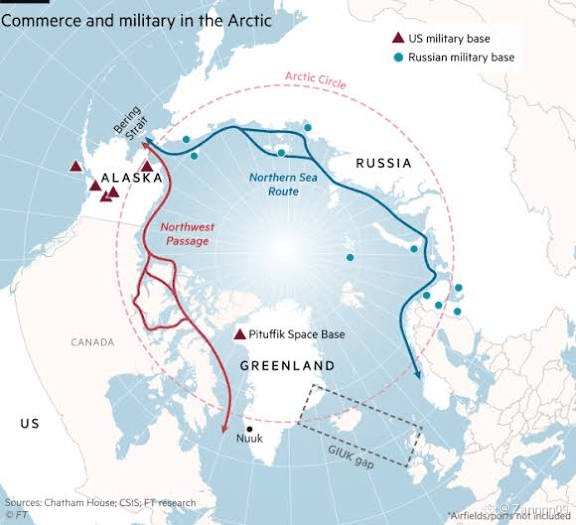
National security: Control over Arctic routes and missile defense positioning
Critical minerals: Rare earth elements vital for AI, semiconductors, and defense tech
Geopolitical competition: Preventing Russia and China from expanding influence in the Arctic
❌ Denmark & Greenland’s Response
Both Denmark and Greenland’s leadership have firmly rejected the idea, stating clearly:
“Greenland is not for sale.”
Public opinion in Greenland also strongly opposes any transfer of sovereignty.
🇷🇺 Why Russia Just Weighed In
In a surprising move, Russia publicly stated that Greenland belongs to Denmark.
This wasn’t an act of support — it was a strategic signal.
Russia’s message is essentially:
“Even we recognize Danish sovereignty.”
“Stop using Russia or China as an excuse to justify U.S. expansion.”
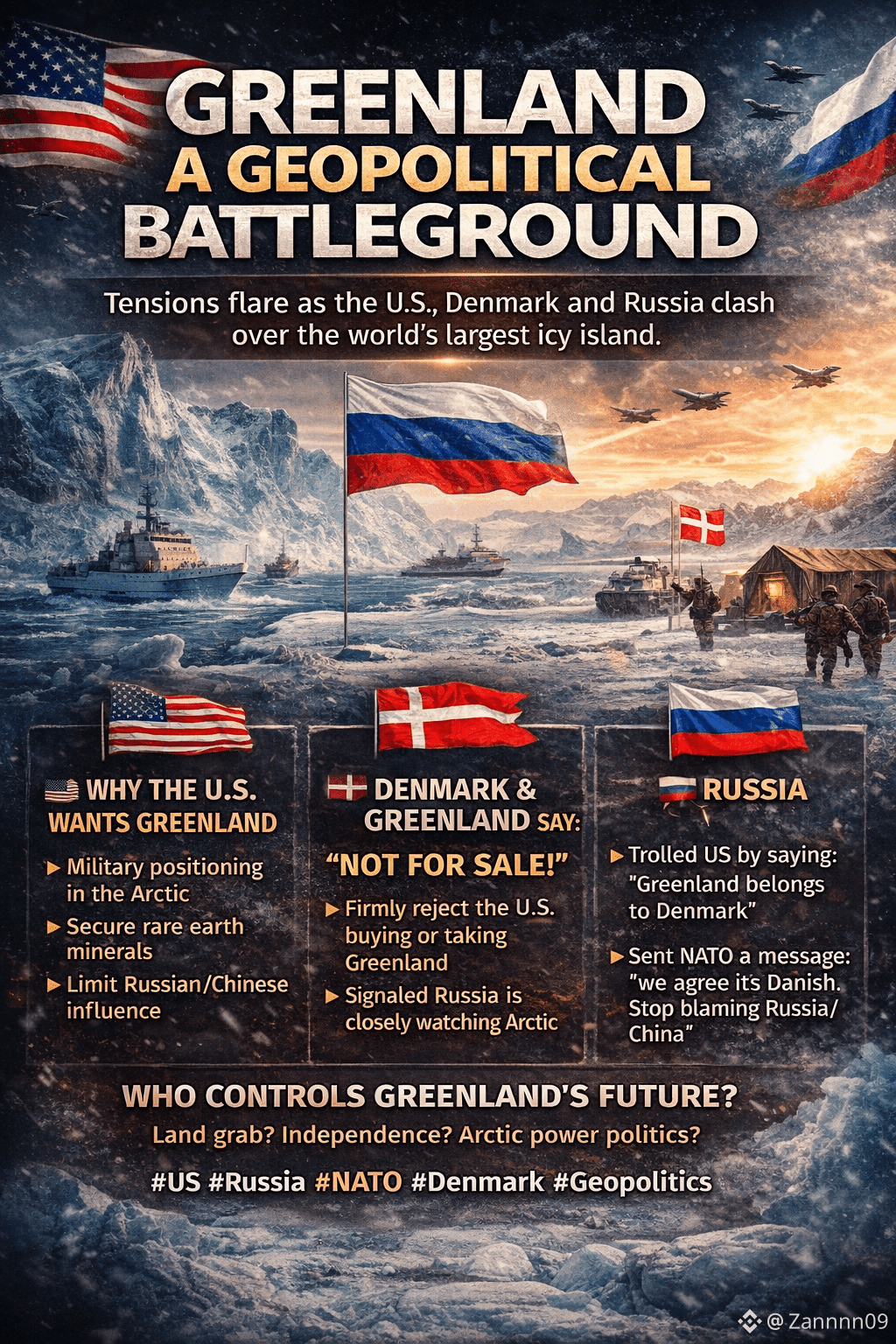
“We’re watching Arctic developments closely.”
It subtly undermines the U.S. narrative that Greenland must be controlled to counter Russian aggression — while positioning Moscow as a defender of international norms, at least rhetorically.
❄️ The Bigger Picture
NATO countries are increasing military presence in the Arctic
The U.S., Russia, and China are all eyeing future shipping lanes and resource access
Greenland has become a strategic chessboard, not just an icy island
This isn’t about land ownership alone — it’s about control of the future Arctic economy and security architecture.
🧭 Final Thought
Greenland sits at the intersection of climate change, military strategy, and resource competition. As the ice melts, global interest rises — and tensions will only grow.
Should Greenland remain with Denmark?
Should it pursue full independence?
Or is the Arctic entering an era where power politics decide everything?
The world is watching.