I spent the entire year watching how Walrus slowly transformed from a bold experiment into a real data backbone that people actually relied on. When 2025 began, the mission was already clear. Walrus wanted to build a high performance data layer where availability, ownership and access could be verified directly on chain without putting massive pressure on developers or forcing them into outdated trade offs. It never tried to copy other storage protocols. It wanted to solve the exact problem that modern builders face when they work with heavy data and need verifiability at the same time.
Now looking back, the timeline feels incredibly clean. You can see the exact moment when the project shifted from theory into production. You can see how mainnet changed the momentum. And you can feel how the entire ecosystem started treating Walrus not as an idea but as a core infrastructure piece. That is the biggest achievement any protocol can reach.
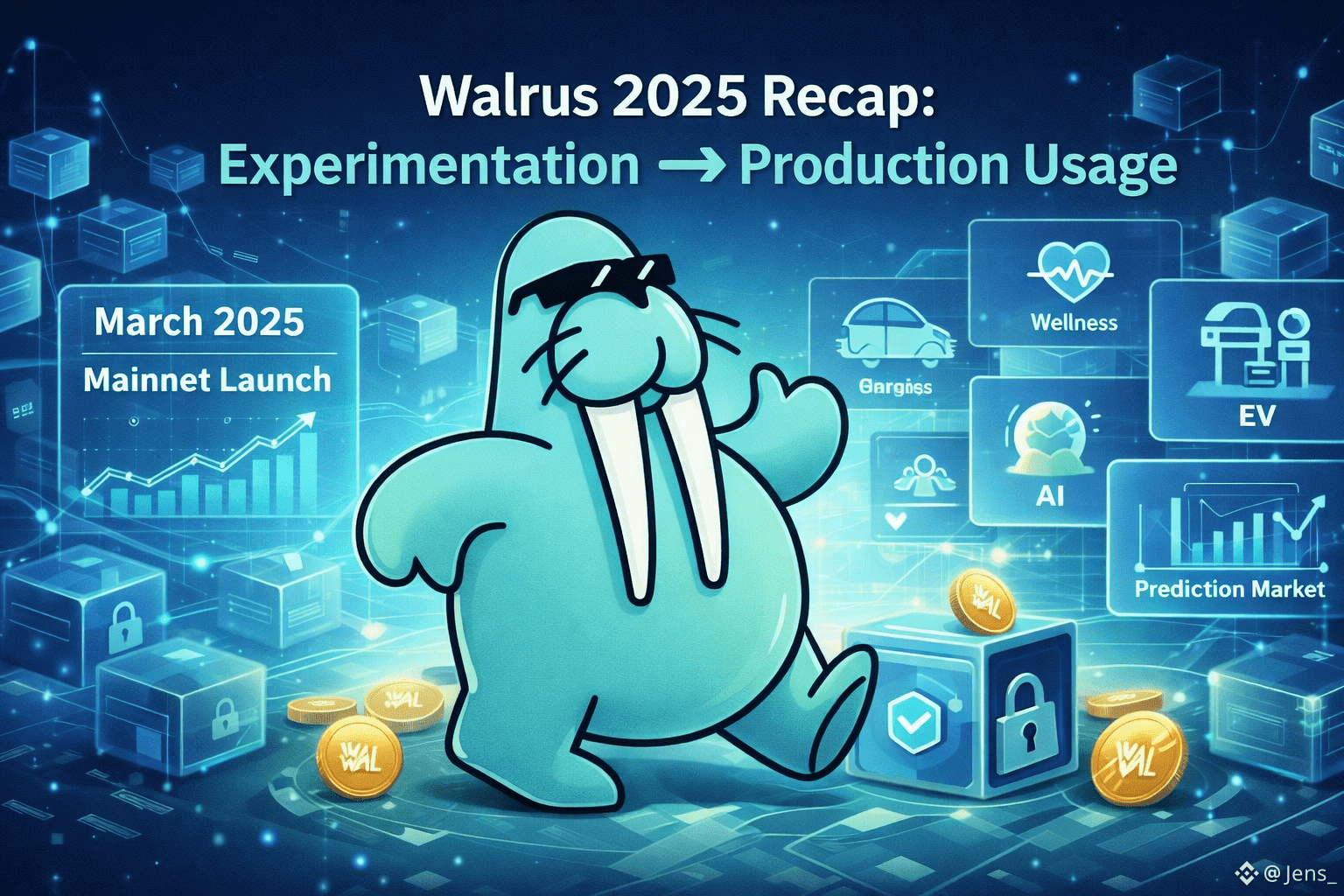
The first real milestone was the Mainnet launch in March 2025. That moment ended the long testing era. It allowed builders to deploy live workloads, push large data, test real reliability and explore how Walrus performs under stress. It was not just about launching a chain. It was about proving that a decentralized data layer could match the performance expectations of AI platforms, EV data systems, health tech apps and more. Shortly after Mainnet, the WAL token had its TGE. This aligned all network incentives, from staking to storage usage to node participation. A protocol becomes truly alive when its economics start functioning under real conditions, and Walrus reached that moment very quickly.
Behind this growth were a few smart architectural choices. Walrus always kept large data off chain because performance matters. But all availability proofs, ownership logic and access control stayed fully enforced on chain through Sui. This balance between speed and verifiability ended up becoming its biggest strength. It created a system where builders could push massive files without sacrificing trust.
After the Mainnet launch, something interesting happened. Builders started choosing Walrus for real use cases. It was not hype. It was not grants pushing projects. It was real demand. Cudis Wellness used it to store user owned health and wellness data. Alkimi Exchange used it for verifiable advertising data. DLP Labs tied EV telemetry to carbon credits and insurance products. Talus Labs built autonomous AI agents that needed tamper resistant state storage. Myriad Markets used Walrus for transparent prediction markets. Every project came with a different style, but they all chose Walrus for the same reason. They needed a storage layer that could handle real world scale.
On top of this ecosystem growth, Walrus kept shipping meaningful upgrades all year. Seal introduced native encryption and programmable access control, giving builders more control over who can access what. Quilt reduced overhead for small files and saved more than three million WAL, which shows how much efficiency matters when you scale. Upload reliability improved noticeably and the SDK kept getting refined so developers could ship faster without fighting the tooling.
When I think about 2026, the picture becomes very clear. Last year was about proving that Walrus works. This year will be about proving that Walrus can sustain, scale and expand without losing its identity. The real test is no longer performance. The real test is consistency. The protocol needs deeper abstraction so builders can integrate it without touching complexity. It needs tighter bonding with Sui without introducing new bottlenecks. And it needs broader use cases beyond the usual data heavy categories.
There are also some operational considerations that matter a lot. Walrus has a strong link with Sui, which means it benefits from ecosystem growth but also inherits ecosystem risks. Incentives must stay balanced so node operators keep participating even as storage demand rises. And the user experience must stay smooth. Even with perfect infrastructure, people still choose centralized systems if they feel easier. Walrus has to make decentralized storage feel natural, not complicated.
Overall, 2025 was a breakthrough year for Walrus. It moved from experimentation to real production usage, it attracted real builders, it shipped real upgrades and it proved that verifiable data layers are essential for the next wave of applications. If 2026 becomes the year Walrus executes consistently, it has everything it needs to become the long term storage layer for the future internet.