

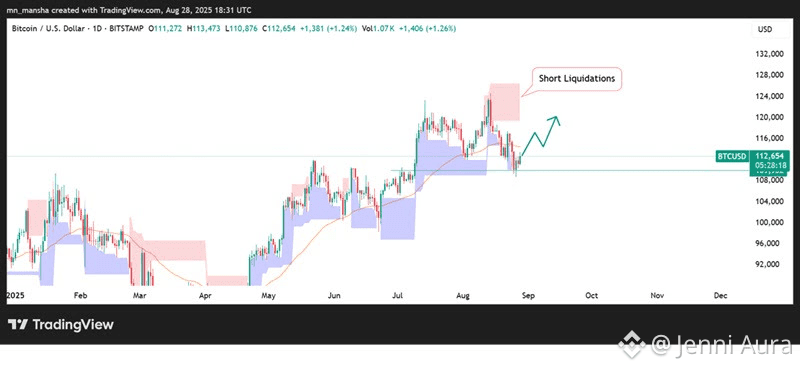
Bitcoin’s current price action may look familiar on the surface ranges forming, breakouts attempted, support and resistance being respected or violated. But when you combine BTC’s present market structure with a Smart Money vs Retail perspective, a very different story begins to emerge. What most traders are reacting to on the chart is often just the effect, not the cause.
Bitcoin’s Current State: A Liquidity-Driven Market
At this stage, Bitcoin is not simply moving because of bullish or bearish sentiment. It is moving because liquidity is being engineered and consumed. Large players are not chasing candles; they are positioning around areas where retail traders are most emotionally exposed. These zones usually sit above obvious highs, below obvious lows, and around heavily discussed levels on social media. BTC’s recent behavior reflects this reality slow builds followed by sharp moves designed to trigger reactions, not confirm trends.
Liquidity Grabs in BTC: Why Sudden Moves Feel “Unfair”
Many of Bitcoin’s recent spikes and wicks can be explained through liquidity grabs. Price pushes aggressively into a level, triggers clusters of stop-losses, and then quickly pulls back. To retail traders, this feels like manipulation or randomness. To smart money, it’s simply execution. Bitcoin’s depth requires massive order flow, and the easiest way to generate it is by forcing emotional traders out of their positions. The move itself is temporary; the liquidity it unlocks is permanent.
Stop Hunts Around Key BTC Levels
Bitcoin is especially efficient at stop hunting because of its visibility. Every major level is publicly discussed, charted, and traded. This creates predictable stop placement just beyond support and resistance. When BTC briefly breaks these levels and instantly reverses, it’s not invalidating technical analysis it’s exploiting human behavior. Institutions understand that fear and FOMO are most intense at these points, and that’s where the best opportunities exist.
Fake Breakouts in Bitcoin: Designed for Confirmation Seekers
BTC fake breakouts are most effective during periods of uncertainty. Price breaks a well-known range, volume increases, indicators confirm, and retail traders enter late seeking validation. But without sustained follow-through, price stalls and reverses. These moves are not mistakes; they are liquidity events. Bitcoin doesn’t reward consensus thinking. When everyone sees the same breakout, that breakout becomes a target, not a signal.
Retail vs Smart Money in the Current BTC Cycle
Retail traders in Bitcoin often ask: “Is this bullish or bearish?”
Smart money asks: “Where are the stops, and how much liquidity is available?”
Retail trades outcomes.
Smart money trades reactions.
Retail waits for confirmation.
Smart money creates it.
This is why many traders feel constantly one step behind BTC’s moves because they are reacting to what smart money has already planned.
What the Chart Still Doesn’t Show
Candlesticks don’t reveal intent. Indicators don’t show positioning. Bitcoin’s chart displays the final result of decisions made long before price moves. To navigate BTC effectively in its current environment, traders must shift from prediction to observation — watching how price behaves after sweeping highs or lows, not during the move itself.
The Real Edge in Bitcoin Trading
The edge isn’t in finding the perfect indicator or the cleanest pattern. It’s in understanding that Bitcoin moves to rebalance liquidity, not to reward obvious trades. Once this shift happens, fake breakouts become signals, stop hunts become opportunities, and volatility becomes information rather than noise.
In Bitcoin, the market doesn’t ask who is right.
It only asks who is positioned and who is emotional.
