

The origins of Dusk Network trace back to 2018, a period when blockchain innovation was accelerating fast but critical gaps were becoming impossible to ignore. The project was shaped by a multidisciplinary founding team led by Emanuele Francioni, a technical lead with a strong background in robotics, and Fulvio Venturelli, who served as Chief Investment Officer. Alongside them was business strategist Jelle Pol. Together, they shared a clear and focused belief: existing blockchain infrastructure was not ready for serious, regulated financial use.
At the time, public blockchains such as Ethereum had already proven their programmability and flexibility. Smart contracts were powerful, composable, and open. However, this openness came at a cost. Financial instruments like securities demand confidentiality, selective disclosure, and compliance-ready privacy. Public chains simply could not offer these guarantees without compromising their core design. On the other side of the spectrum, private blockchains such as Hyperledger solved confidentiality but introduced new problems. They lacked liquidity, open participation, and seamless interoperability with broader crypto markets. Capital could not flow freely, and innovation was constrained within closed environments.
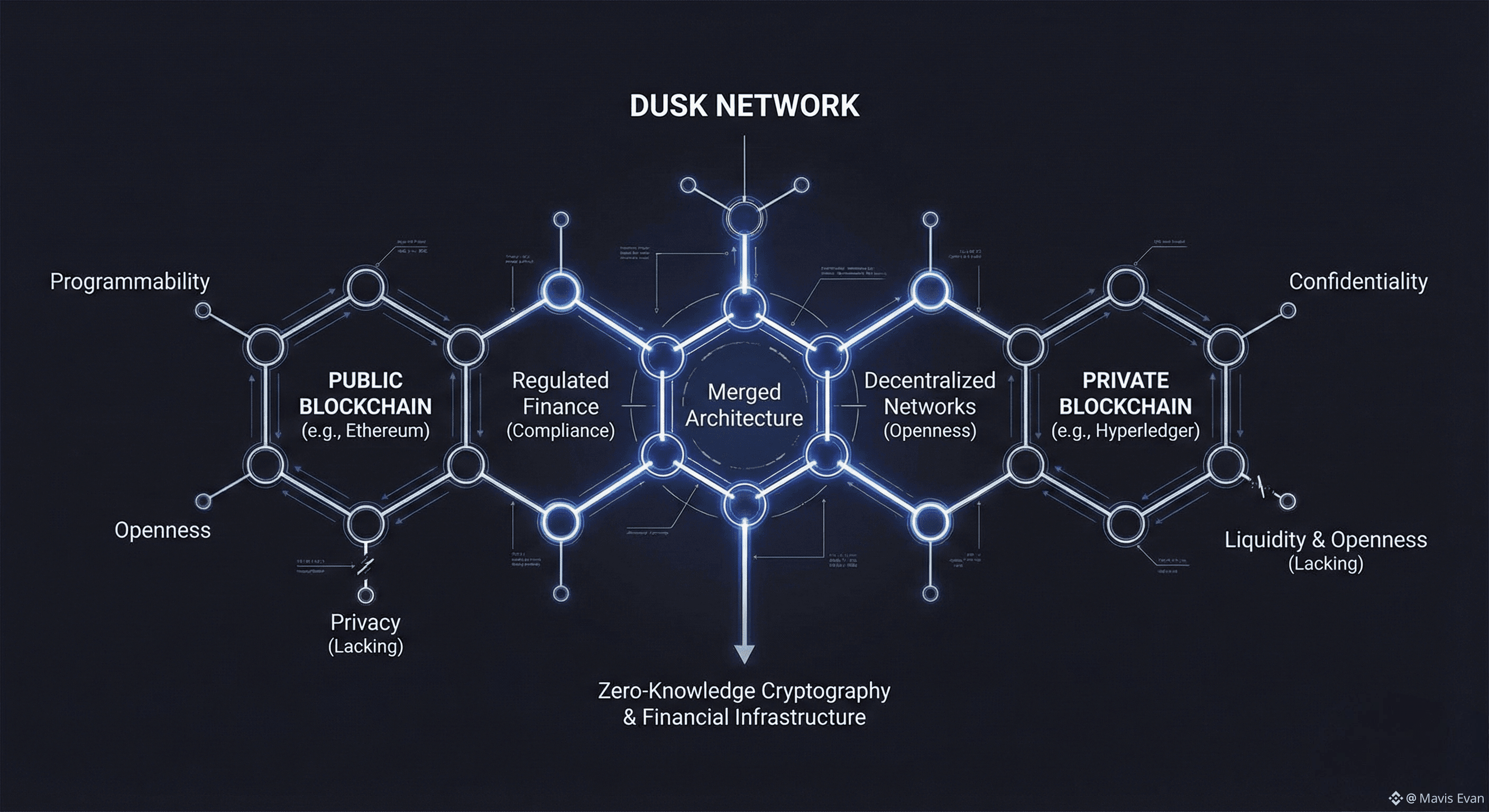
Dusk was founded to close this gap. The goal was not to choose between privacy and openness, but to merge them into a single architecture. From day one, the project positioned itself at the intersection of regulated finance and decentralized networks. This was not a marketing angle but a structural decision that shaped every technical and strategic choice that followed.
In 2018, the team raised approximately $8.1 million, securing backing from respected names in the digital asset space such as Bitfinex, Maven 11, and Blockwall. The funding provided stability, but more importantly, it gave the team freedom. Unlike many projects born during the ICO boom, Dusk deliberately avoided rushing a product to market. There was no short-term hype cycle to chase and no pressure to ship unfinished technology.
Instead, the project entered a prolonged research and development phase. While much of the market was focused on rapid token launches and speculative growth, Dusk took a slower and more deliberate path. This period coincided with the crypto winter, a time when many projects faded due to lack of substance or long-term vision. Dusk survived and quietly advanced, using the downturn as an opportunity rather than a setback.
The team invested heavily in cryptographic research, particularly in the early and still-developing field of Zero-Knowledge cryptography. At the time, zero-knowledge systems were complex, computationally demanding, and far from production-ready. Yet the founders believed this technology was essential for building financial infrastructure that could meet regulatory standards without sacrificing decentralization.
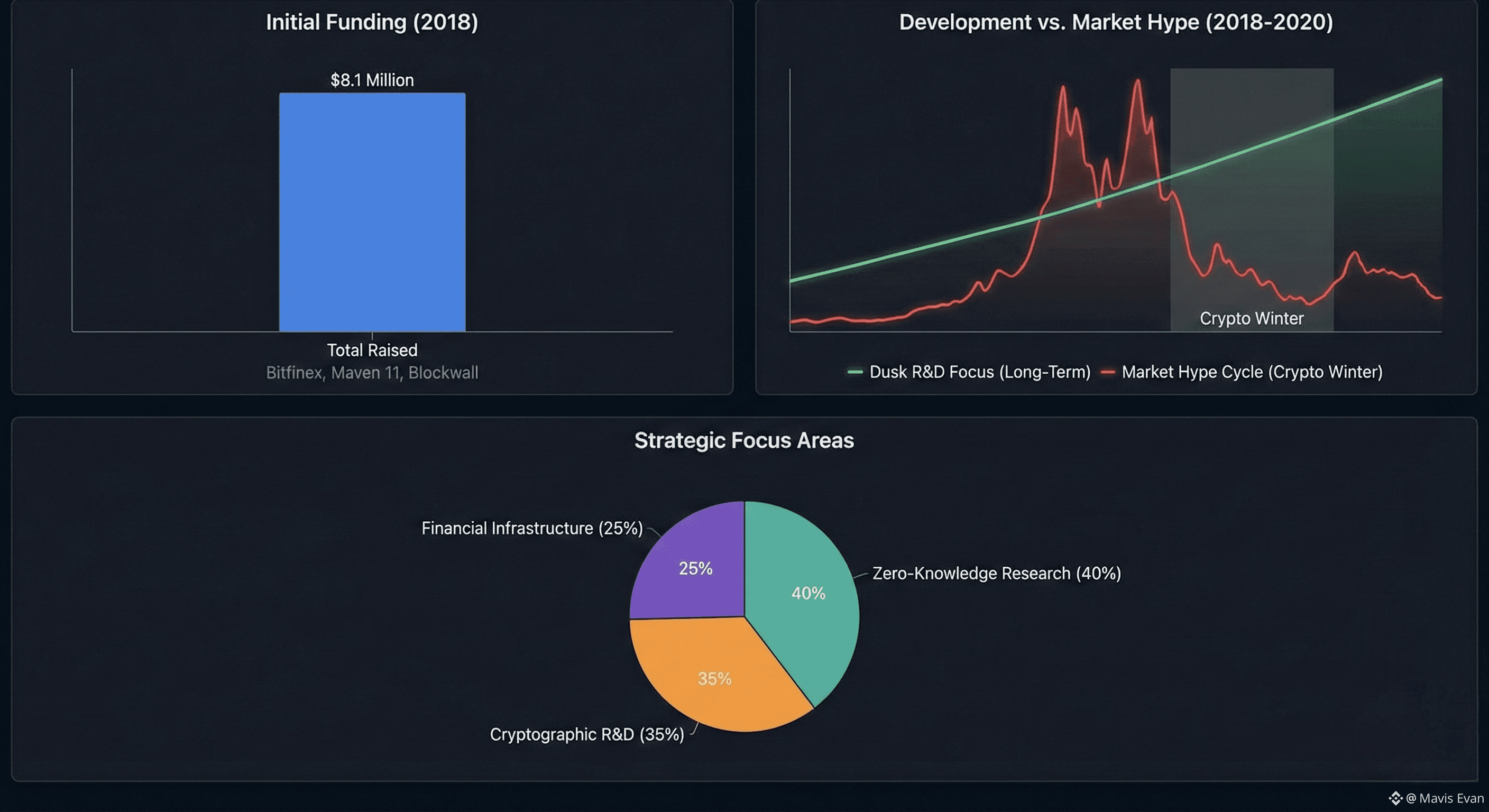
This strategic patience defined Dusk’s evolution. Rather than adapting existing tools, the project focused on building foundations strong enough to support real-world financial markets. The result was a network philosophy rooted in precision, compliance, and long-term relevance. Dusk was not created to follow trends. It was built to outlast them.
