

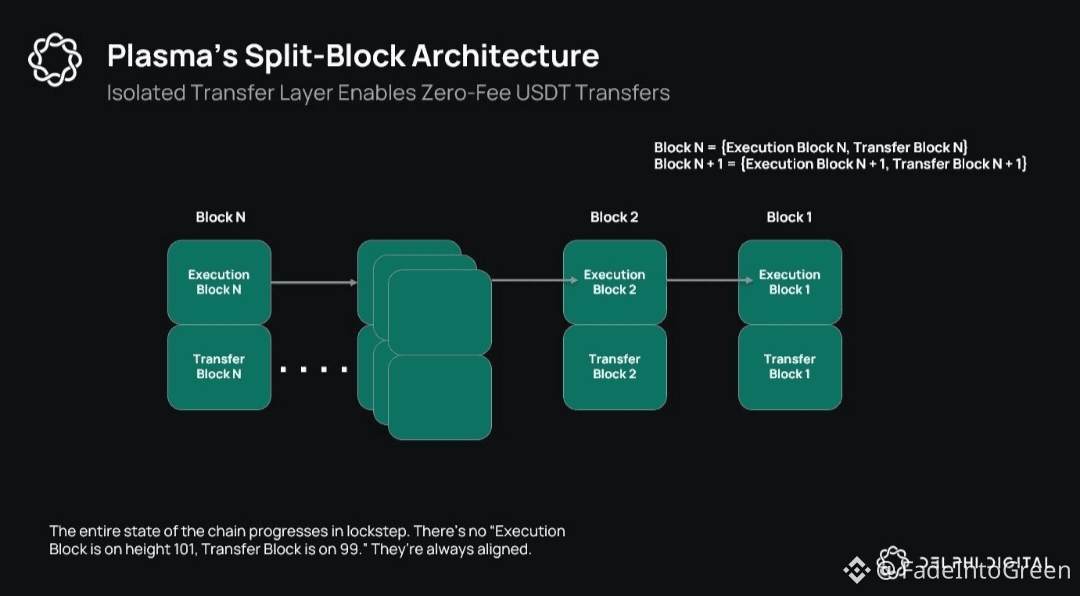
In the early days of crypto, everything revolved around volatility. Prices moved fast, narratives shifted even faster and most blockchains were designed with one idea in mind
enable experimentation. Speed, composability, decentralization and programmability mattered more than stability. That made sense at the time. Crypto was still proving itself
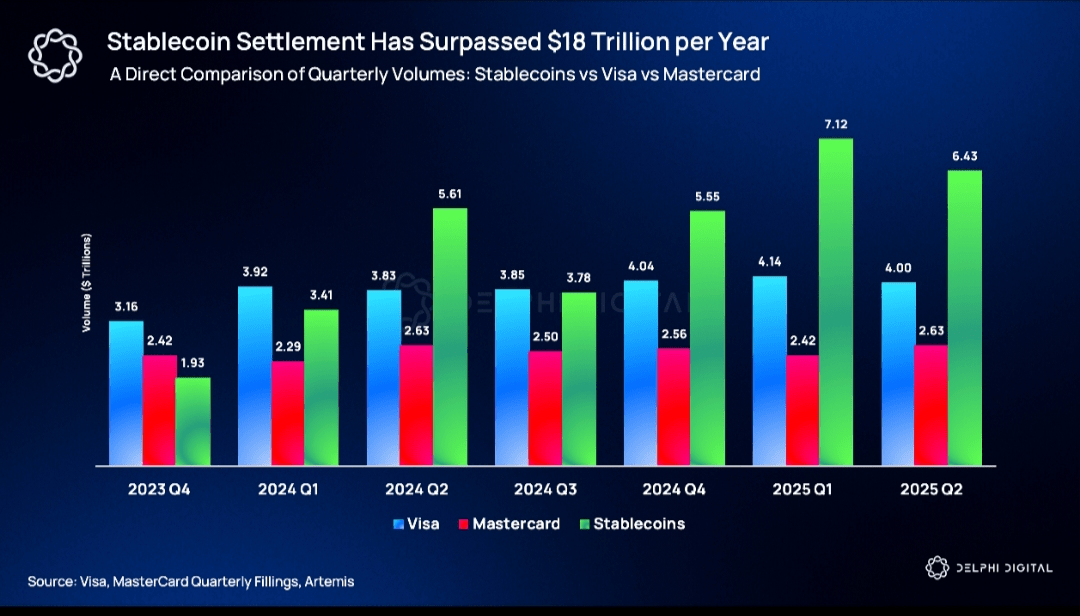
But while attention stayed on price charts, something far more important was happening underneath. Stablecoins quietly became the most widely used financial instrument in the entire digital asset ecosystem
What started as a simple bridge between fiat and crypto evolved into the backbone of DeFi, exchange liquidity, cross border transfers, treasury management and increasingly, institutional settlement. Today, when value actually moves on chain, it usually moves in stablecoins
And that reality exposes a problem most people did not notice until recently
the blockchains hosting stablecoins were never designed specifically for moving stable value at scale
This is the gap Plasma is trying to address and it explains why @Plasma and $XPL exist at all
Stablecoins do not behave like speculative assets. They behave like money. And money demands different infrastructure
When someone transfers USDT or USDC, they are not experimenting. They are settling
They care about how much it costs, how long it takes, and whether the transaction is final. They do not care about blockspace auctions, gas wars or unrelated network congestion caused by NFTs or meme coins
Yet most stablecoins still live on general purpose Layer 1 chains that treat them like just another token
This mismatch matters more than it sounds
General purpose blockchains are designed to do everything. They prioritize flexibility and expressiveness. Fees fluctuate based on demand. Finality is often probabilistic. Congestion in one part of the network spills into everything else. For developers building complex applications, this tradeoff can be acceptable. For people moving money, it’s friction
In traditional finance, settlement systems are intentionally boring. They are predictable, repetitive and optimized for reliability. No one praises ACH or RTGS for innovation. They praise them for working every single day
Crypto’s first phase focused on proving decentralization and programmability. Its next phase is about building infrastructure that can actually handle financial activity without drama. Stablecoins are pushing the ecosystem in that direction
This is where the idea of purpose built stablecoin infrastructure comes from
Instead of forcing stablecoins to operate inside systems optimized for something else, a new category of blockchains is emerging that designs the entire stack around value transfer. These networks don’t try to be everything. They try to be dependable
Plasma is one of the clearest examples of this shift
Plasma is not positioning itself as an Ethereum or Solana competitor. It is not trying to win the entire developer ecosystem or host every possible application. Its focus is much narrower and because of that, much more intentional
if stablecoins have become financial infrastructure, then the blockchain hosting them should behave like financial infrastructure too
That philosophy shapes Plasma’s design choices
Other than of treating stablecoins as secondary assets, Plasma puts them at the center. Transfers are optimized for predictability and low friction. Gas complexity is abstracted where possible. The goal is to make moving stable value feel closer to sending money than interacting with a blockchain
Finality is another key difference. On many networks, transactions are probably final after a certain number of blocks. That is fine for traders
It is less fine for merchants or payment processors. Plasma targets fast, deterministic settlement so that when value moves, it actually settles
At the same time, Plasma does not ignore the existing crypto ecosystem. By staying EVM compatible, it allows developers to reuse tools, wallets and knowledge they already have. This is not about reinventing everything. It’s about focusing the system on one job and doing it well
Bitcoin anchoring adds another layer to the story. It is not about using Bitcoin for day to day security. It is about long term immutability, audit confidence and credibility. For institutions and regulated entities, those signals matter more than flashy features
Taken together, these design decisions point to something important
Plasma is not chasing hype cycles. It is trying to build something that works quietly, consistently and predictably
That approach makes sense when you look at who stablecoins increasingly serve
Institutions do not want excitement. They want certainty. They want systems that behave the same way tomorrow as they did today. They care about known costs, known throughput and known settlement behavior. As stablecoins move deeper into institutional workflows, the infrastructure supporting them has to meet those expectations
Whether Plasma becomes a preferred rail for that activity is still an open question. But the problem it addresses is real and it is growing
The role of xpl fits into this picture, but it is often misunderstood
Xpl isnot designed to be a fast moving speculative token and it does not rely on hype mechanics. Its value is tied to the network itself validator participation, governance and ecosystem growth. That means it behaves more like an infrastructure asset than a narrative token
Historically, assets like this do not move first. They move after the system becomes useful and boring. That can be frustrating in a market trained to chase momentum, but it is also how real infrastructure tends to work
Early signals around Plasma show interest rather than certainty. Integrations are forming. Tooling is improving. Activity reflects stablecoin use cases more than speculation. These are encouraging signs, but they do not guarantee success. Infrastructure adoption takes time, and it only proves itself under sustained usage and stress
Any honest discussion also needs to talk about risk
Plasma is still early. Execution matters. Governance maturity matters. Regulatory environments are shifting, especially around stablecoins. Adoption is not guaranteed, even for well designed systems. And because xpl is native to Plasma, network performance directly affects token utility
There’s also a less obvious risk that often gets ignored: expectation mismatch
If people approach Plasma expecting fast returns or DeFi style yield dynamics, they will likely be disappointed. Plasma is built for settlement, not speculation. When expectations donot match reality, even good systems can lose trust
Security adds another layer. Audits and architecture reduce risk, In stablecoin environments, people often underestimate these risks because price volatility is low
Ultimately, Plasma’s future comes down to adoption. Technology alone does not create value. If stablecoin issuers, payment processors, developers and users choose to route real activity through Plasma, it wins
Zooming out, Plasma represents something bigger than one project
Crypto is slowly moving away from the idea that one chain should do everything. Specialization is becoming an advantage. General purpose chains will continue to exist, but dedicated settlement networks may increasingly handle the financial core
This mirrors how financial systems evolved long before crypto existed
Plasma and xpl sit inside that transition
They represent a serious attempt to treat stablecoin settlement as infrastructure rather than experimentation. The vision is coherent. The risks are real. The outcome is uncertain That is normal
There are no guarantees in building financial rails. Success is earned through execution, transparency, resilience and time
The most responsible position is neither blind optimism nor outright dismissal, but informed participation
Stablecoins have already become critical infrastructure.
Now the question is which networks will quietly earn the trust to carry them #plasma


