

Why Long-Term Decentralized Storage Fails Without Penalties
🧠 The Hard Truth About Storage: It’s Not a Technical Problem First
Most people think decentralized storage fails because of:
Slow speeds
High costs
Limited adoption
Those are secondary symptoms.
The real problem is simpler — and harsher:
Storage is a long-term promise in a short-term incentive world.
This mismatch has broken more systems than any bug ever could.
This is where Walrus Protocol takes a position that many projects avoid:
Walrus treats storage as an economic contract, not a best-effort service.
All mechanisms described are grounded in the Walrus whitepaper and aligned with well-studied economic theory
🎭 The Illusion of “Good Behavior” in Open Networks
In traditional cloud storage:
Contracts are enforced by law
Operators have reputations at stake
Exit is costly
In permissionless networks:
Anyone can join
Anyone can leave
Pseudonyms are cheap
Relying on “good actors” here is naïve.
Game theory tells us why.
🎲 The Prisoner’s Dilemma of Storage Nodes
From a single node’s perspective:
Choice Short-Term Outcome Long-Term Outcome Store honestly Ongoing costs Network survives
Cheat quietly Save costs Network degrades
Without enforcement, cheating dominates.
This is the classic tragedy of the commons, formalized by Garrett Hardin long before crypto existed.
Walrus does not try to moralize this behavior.
Walrus prices it.
🪙 WAL Token: Collateral, Not Decoration
In Walrus, the WAL token is not just:
A governance symbol
A speculative asset
It is bonded collateral.
Storage nodes:
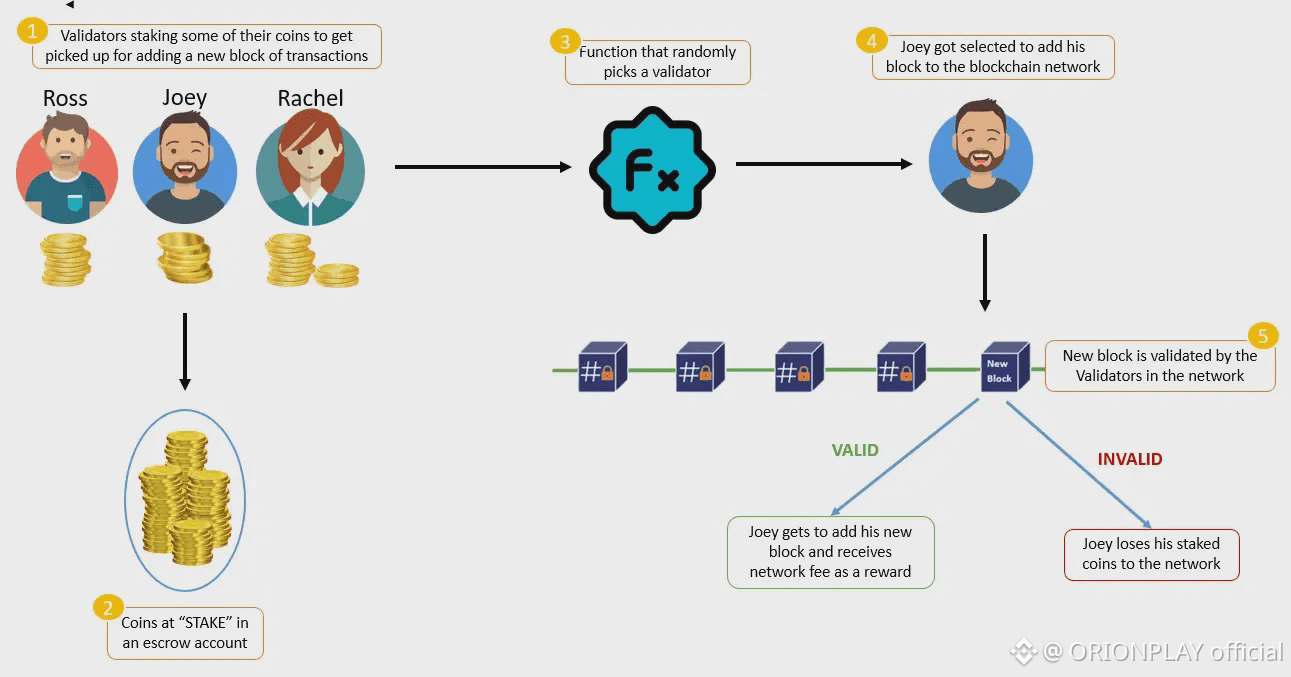
Stake WAL
Accept future liability
Expose capital to slashing
This converts storage from:
“Please keep my data”
into
“Prove you deserve this stake.”
🧩 Delegated Staking: Distributed Oversight, Not Trust
Walrus allows anyone to:
Delegate stake to nodes
Share rewards
Share penalties
This creates:
Competition among nodes
Economic reputation
Continuous monitoring by capital
Delegators behave rationally:
Capital flows toward reliable nodes
Poor performance becomes expensive
This mirrors how Proof-of-Stake secures blockchains —
but Walrus applies it to data persistence, which is far harder
🔪 Slashing: The Mechanism That Makes Promises Real
Slashing is uncomfortable by design.
Why?
Because discomfort changes behavior.
In Walrus, slashing occurs when:
Data is unavailable
Recovery obligations are ignored
Shard migration fails
Importantly:
Slashing is provable
Slashing is automatic
Slashing compensates honest participants
This aligns incentives perfectly:
Cheating is no longer cheaper than honesty.
🧠 Why Slashing Beats Reputation Systems
Reputation systems fail because:
They lag behind reality
They can be faked
They don’t repay victims
Slashing:
Is immediate
Is objective
Is redistributive
In Walrus:
Slashed funds offset recovery costs
Honest nodes are rewarded
System equilibrium is restored
This is economic self-healing.
⏳ Time as an Enforcement Tool: Epochs Matter
Walrus introduces epochs, not just for scheduling — but for enforcement.
Epochs:
Lock responsibilities
Freeze stake assignments
Delay exits
A node cannot:
Earn rewards
Misbehave
Exit instantly
This eliminates the classic:
“Take rewards, then disappear” strategy
🚪 Unstaking Is Deliberately Slow
In Walrus:
Unstaking is delayed
Migration must complete
Capital remains slashable
Why?
Because liability outlives intent.
This mirrors financial markets:
You cannot exit a long-term bond overnight
Risk follows commitment
Storage, treated correctly, works the same way.
😄 Analogy (Because This One Makes It Obvious)
Most storage networks:
“Cancel anytime.”
Walrus:
“Fulfill the contract — or forfeit collateral.”
Only one of these protects data for years.
🧠 Why Many Projects Avoid This Design
Strong penalties:
Slow early growth
Scare opportunistic actors
Reduce speculative participation
Walrus accepts these costs deliberately.
Because:
Infrastructure that matters must survive boredom, not hype.

