Plasma today stablecoins are already part of everyday life. People use them to hold value, send money to family, pay for services, and move funds across borders. This is no longer a future idea or a niche behavior. It is already happening at scale. Plasma grows out of this reality. It does not try to push stablecoins into a system designed for something else. It starts by accepting that stablecoins behave like money, and then builds the network around that truth.
Most blockchains were not created with this use case in mind. They were designed as general platforms, where payments compete with many other activities. As a result, stablecoin transfers often feel heavier than they should. Fees fluctuate. Transactions slow during busy periods. Users sometimes cannot move their funds because they do not hold the correct gas token. These small frictions add up. When money does not move smoothly, trust slowly erodes. Plasma is built to remove these frictions instead of working around them.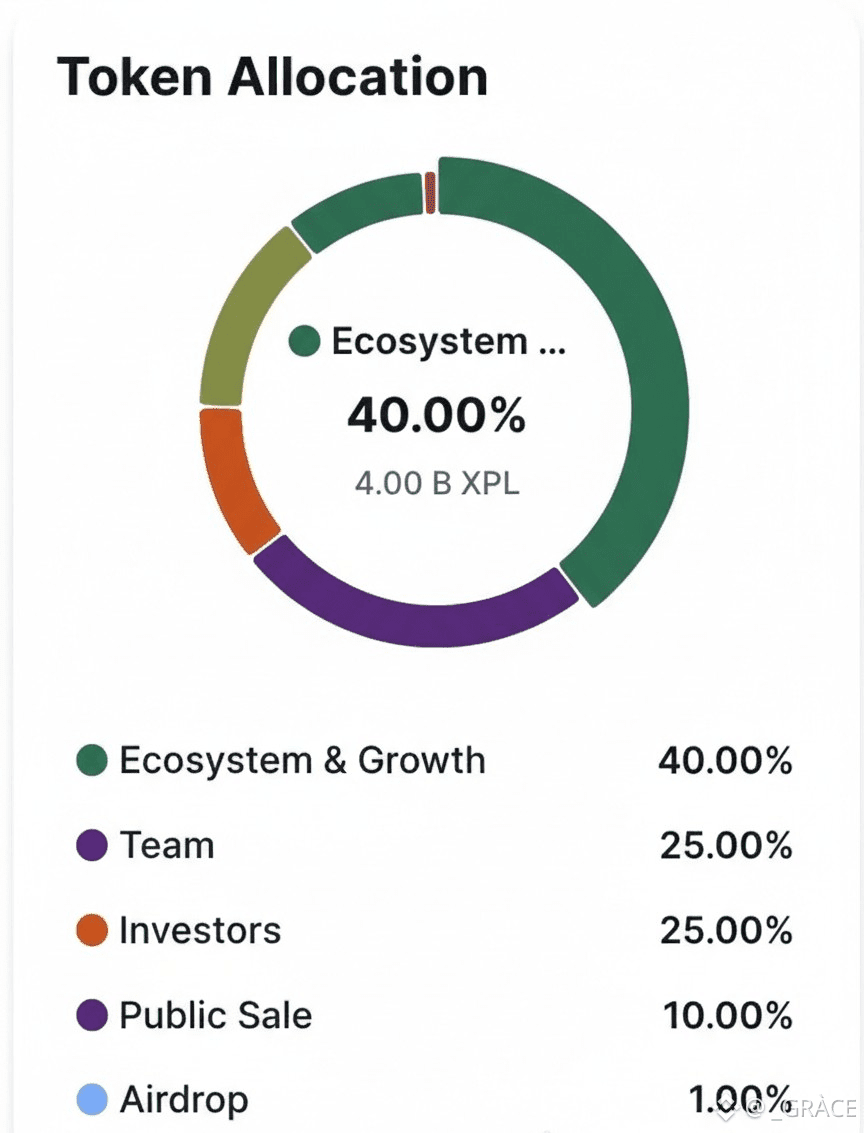
At its core, Plasma is focused on settlement. Settlement is the moment when a transfer becomes final and unquestionable. In real life, this moment matters more than anything else. When someone pays a merchant, they want certainty. When someone sends money home, they want assurance. Plasma treats settlement as the foundation of the network, not as a secondary outcome. The system is shaped to make stablecoin transfers complete quickly and consistently.
This focus reflects how money is actually used. Payments do not happen occasionally. They happen constantly, all day, every day. A network supporting stablecoins must remain steady under continuous flow. Plasma is designed with this rhythm in mind. It aims to feel reliable during normal use, not just impressive during controlled tests.
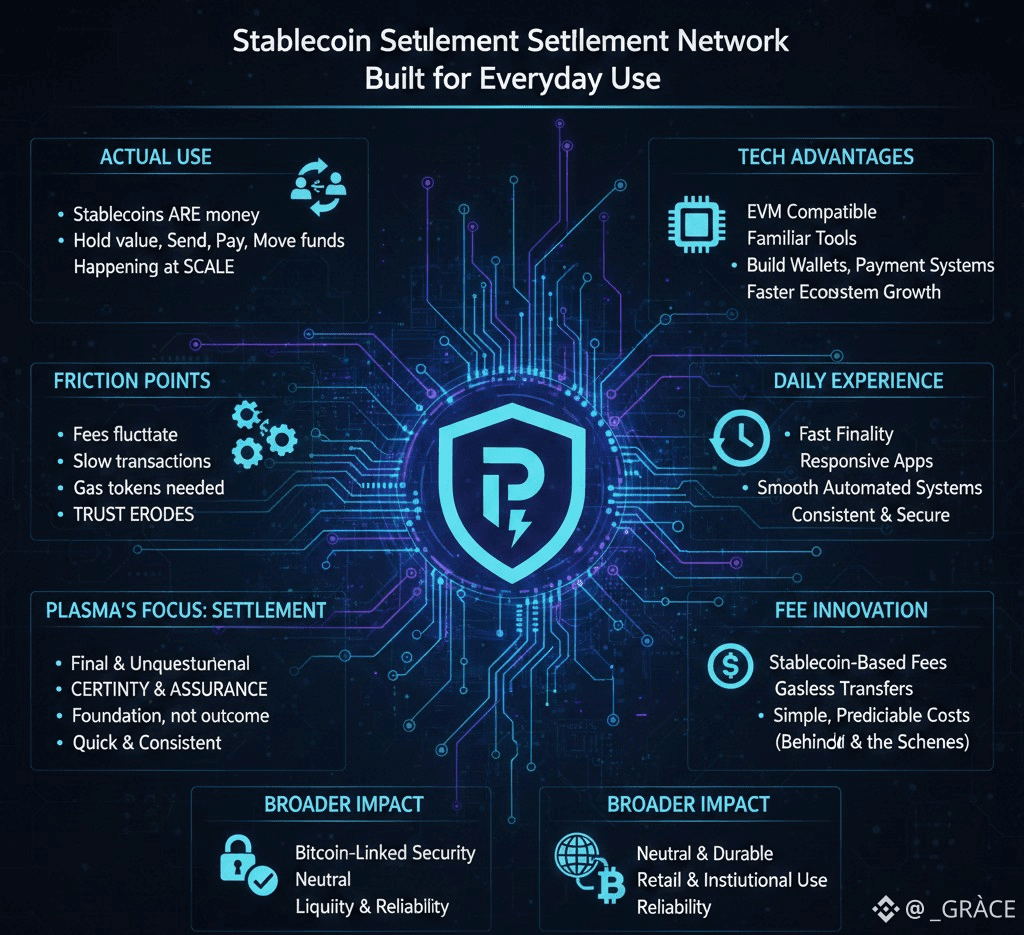
Plasma is fully compatible with the Ethereum Virtual Machine. This choice keeps things practical. Developers do not need to learn a new environment or abandon familiar tools. They can use existing knowledge, patterns, and security practices to build wallets, payment systems, and financial applications. This reduces friction on the building side and helps the ecosystem grow naturally.
When developers can focus on solving real problems instead of technical overhead, better products emerge. A stablecoin‑focused network benefits from many simple, reliable applications working together. EVM compatibility makes this coordination easier and faster.
Fast finality plays a big role in how Plasma feels in daily use. Transactions confirm quickly, allowing users to move on without waiting or second‑guessing. This speed changes behavior. Merchants can act immediately. Payment apps feel responsive. Automated systems can run smoothly without delays.
Speed alone is not enough. Plasma balances fast confirmation with consistency and security. Stablecoin settlement requires reliability above all else. Plasma is designed to handle ongoing usage without unpredictable slowdowns, keeping transfers smooth even as activity grows.
One of the most meaningful design choices in Plasma is how it handles fees. Traditional blockchain systems often require a separate token to pay for gas. This creates an unnecessary barrier. Holding money but being unable to send it breaks the idea of money itself. Plasma removes this problem by allowing stablecoin‑based fees and, in some cases, gasless transfers.
This makes the experience simpler. Users think in one unit instead of juggling multiple assets. Wallets become easier to use. Onboarding becomes smoother. Stablecoins start to behave more like cash in a digital form.
Paying fees in stablecoins also makes costs predictable. Users know what they are paying. Merchants can plan expenses. Applications can display clear pricing. Institutions can model operations without worrying about volatility. Plasma aligns costs with how people already think about value.
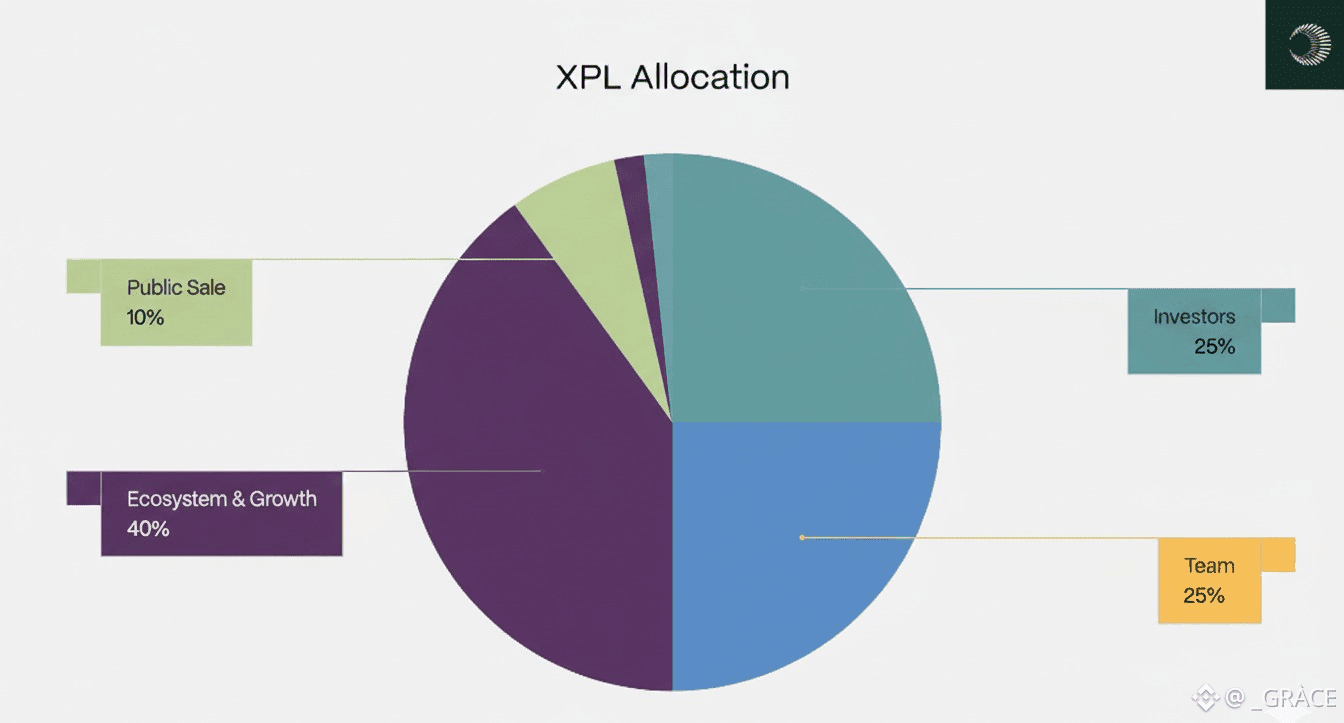
Behind the scenes, the network still relies on a native token for security and coordination. The XPL token supports validators and consensus. This structure keeps the user experience clean while maintaining a strong foundation underneath. Users interact with stablecoins, while XPL quietly supports the system’s integrity.
Plasma also places importance on long‑term security and neutrality. Its design connects security to Bitcoin, signaling durability and resistance to interference. As stablecoin networks grow, they become critical infrastructure. Neutrality matters. Users need confidence that the system will remain reliable regardless of outside pressure.
Plasma is built to serve both everyday users and institutions. Retail users benefit from fast transfers, low friction, and simple tools. Institutions benefit from predictable settlement, clear costs, and dependable infrastructure. These groups are different, but their needs overlap more than it seems.
When retail usage grows, liquidity improves. When institutions participate, reliability increases. Plasma aims to support both without compromising either, creating a base layer that scales through steady use rather than hype.
Stablecoin settlement is about consistency, not bursts of activity. Plasma prioritizes stablecoin traffic so payments remain smooth even as the network expands. This mindset separates payment infrastructure from experimental platforms.
The use cases follow naturally. Everyday payments become easier. Merchant settlement becomes faster. Remittances become more dependable. Micropayments become practical. For institutions, treasury movement and automated financial flows become simpler and more predictable.
Plasma is not trying to redefine money. It is trying to respect how money already works. By building around stablecoins as they are actually used, Plasma aligns technology with real behavior.
The real measure of Plasma will be execution. A settlement network must perform under real conditions, with real users and real volume. If Plasma continues to deliver on reliability, simplicity, and clarity, it can become a meaningful part of how stablecoins move value in everyday life.