
I can pinpoint the precise time when I began to focus on stablecoin infrastructure differently. It wasn't a novel meme coin cycle or an ostentatious DeFi story. In many locations, digital dollars are just more practical than local rails, thus it was interesting to observe regular people utilize USDT like cash, shipping it across borders, paying freelancers, and moving value at strange hours. The peculiar aspect was that, although stablecoins are already generating "real finance" volume, the blockchains that transport them still feel like multipurpose thoroughfares designed for a bygone era. Plasma basically exists because of such mismatch.
Plasma presents itself as a Layer 1 blockchain designed exclusively for stablecoin settlement, particularly USDT. It focuses on moving stablecoins quickly, consistently, on a large scale, and with fewer UX pitfalls rather than attempting to be everything at once. If you've ever had to explain cryptocurrency payments to someone who isn't a trader, the design decisions also make sense. The average person does not want to purchase a different token in order to pay fees. They don't want to speculate on gas. During congestion, they don't want to wait, attempt again, and hope the transaction is confirmed. They want the funds to be transferred right away.
Because of this, Plasma's most notable feature—gasless USDT transfers—is so straightforward that it almost seems obvious. The network is designed to maximize the stablecoin payment experience from the ground up, and transmitting USD₮ may be done with no transfer costs, according to Plasma's own chain overview. Before you realize how many payments and remittances are tiny transactions, it sounds like marketing. In those situations, even a tiny charge turns into a tax on regular consumers. A chain that eliminates the fee friction is trying to get closer to a true payment rail rather than just being "cheaper cryptocurrency."
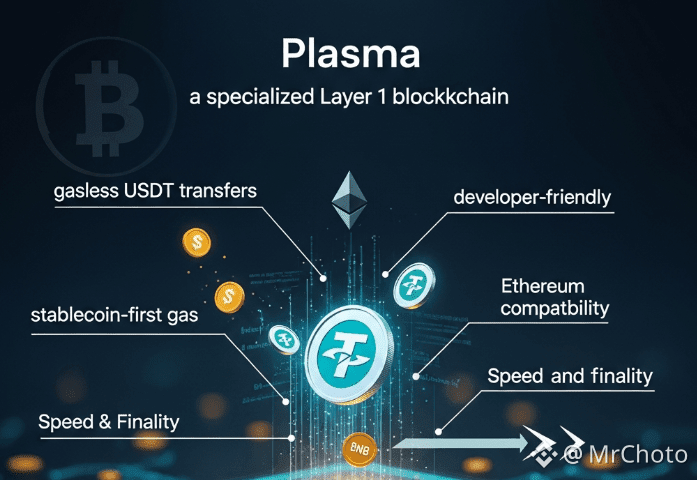
The second major concept is what Plasma refers to as stablecoin-first gas, which eliminates the need to pay fees in any arbitrary native token. According to some explanations, Plasma allows users who are not native to cryptocurrency to pay for gas with stablecoins (and even Bitcoin in certain configurations via auto-swap), which directly lowers onboarding friction. If you've ever onboarded someone into cryptocurrency, you are familiar with the agony: when they eventually have USDT, they attempt to send it, but they are unable to do so because they lack ETH, TRX, BNB, or any other token required for fees. The entire "money should move freely" narrative is ruined by this little detail.
Instead of making everyone learn new tools, Plasma also aims to be developer-friendly under the hood. In order to guarantee that developers may implement Ethereum-style smart contracts without rewriting their apps, one source particularly recommends utilizing Reth, the Rust-based Ethereum execution client. It is constructed with full EVM compatibility. That's a calculated decision: in order for stablecoin settlement to grow, you need more than just faster blocks; you also need Ethereum-ready integrations, wallets, onramps, merchant systems, and contract tooling.
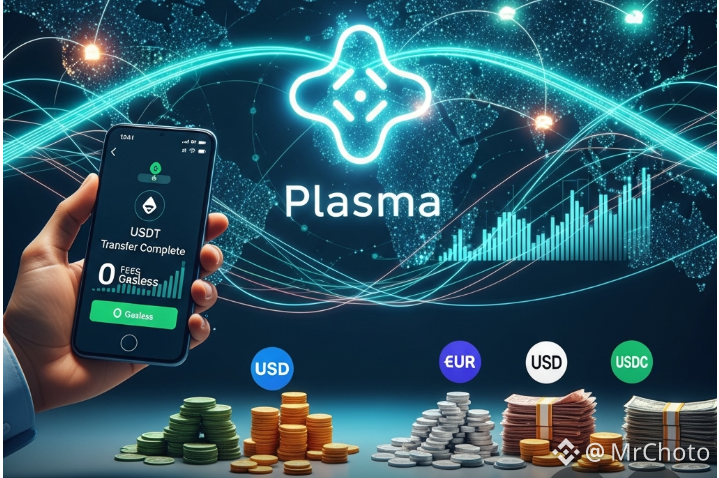
Speed matters too, but Plasma frames speed in a way that actually matters for payments: finality. It uses PlasmaBFT, derived from Fast HotStuff, designed to reach settlement quickly and consistently. The difference between “fast blocks” and “fast finality” is subtle, but in payments, it’s everything. A merchant doesn’t want “probably confirmed.” They want certainty. A payments processor doesn’t want probabilistic settlement. They want predictable completion. Sub second finality, if it performs as intended, is less about hype and more about removing operational ambiguity.
From the perspective of long-term credibility, Bitcoin-anchored security is perhaps the most intriguing aspect. In order to improve neutrality and censorship resistance, Plasma outlines a Bitcoin sidechain strategy that anchors security to Bitcoin. Whether you're a Bitcoin maximalist or not, you can see the reasoning: neutrality is risk management, not simply a philosophical idea, when developing a settlement layer for global stablecoins. Payment networks quickly turn political. In essence, a chain that seeks to accommodate large stablecoin flows is marketing itself as financial infrastructure, which must be resistant to takeover.
The target market for Plasma becomes evident at this point. It targets more than just cryptocurrency traders. Retail customers in markets with high stablecoin acceptance as well as institutions seeking quicker settlement without the peculiarities typically associated with crypto UX are the two segments for whom it is designed simultaneously. Remittance companies, payment processors, fintech apps, stablecoin issuers, and any system that gains from "dollars moving at internet speed" fall under this category.
The narrative of Plasma appeals to me because it doesn't pretend that stablecoins are a thing of the future. One of the most successful product-market fits in cryptocurrency to far is stablecoins. Specialized infrastructure that views stablecoin mobility as the main goal rather than an afterthought has been the missing component. Plasma clearly positions itself as "stablecoin native" and "purpose built for USD₮ payments at global scale."
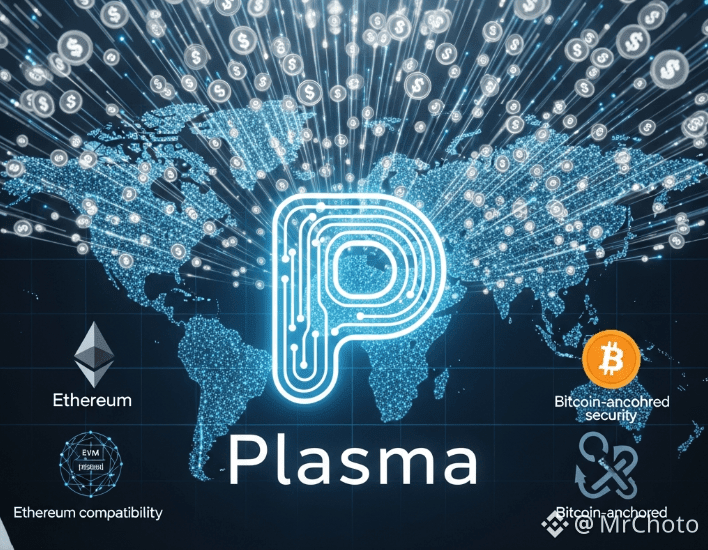
None of this, of course, ensures success. Distribution is more important than technology, making payments one of the most challenging industries in the world. Adoption will rely on whether wallets integrate Plasma, whether onramps support it, whether exchanges connect liquidity, and whether merchants or apps select it as a default rail, even if Plasma is theoretically sound. However, if you consider the design only as an engineering and product response to the reality of stablecoins, the choices are logical: eliminate onboarding and fee friction, maintain Ethereum compatibility, promote deterministic fast settlement, and anchor security to something that has international legitimacy.
Plasma is attempting to make stablecoins feel dull—in the greatest possible way, if I had to sum it up in one very human sentence. It's the type of dull where money transfers and settles instantly, gas tokens are not a concern, and the infrastructure doesn't care who you are. Boredom is not an offense in the finance industry. Reliability is boring. Reliability may prove to be the most beneficial breakthrough in stablecoin settlement. @Plasma #Plasma $XPL

