

The folks over at the Dusk Foundation? They sweat the small stuff, especially when it comes to keeping their blockchain tech locked down. They know that if their system is going to play nice with the big guys – institutions and regulated industries – it needs to be Fort Knox-level secure. That's why they've put security audits and checks at the top of their to-do list.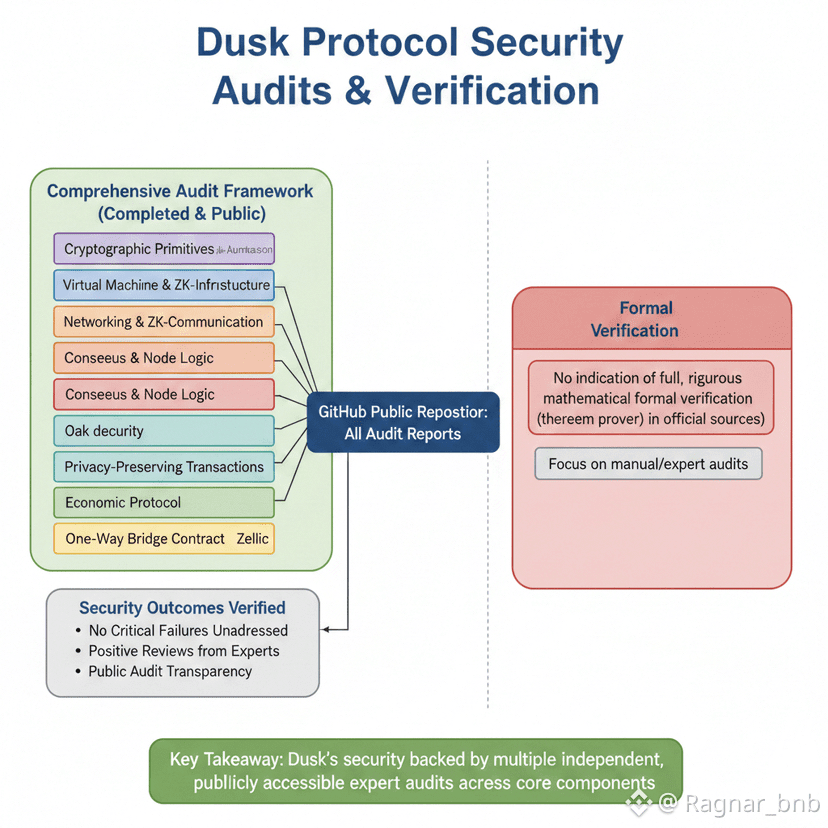
So, what does that look like in practice? Well, they've brought in a team of outside experts to kick the tires on pretty much every part of their system. And get this: they've made all those reports public. That's right, you can dig through the details yourself. It's all about being open and building trust.
Think of their audit setup like this: it's not just a one-time thing. It's built in from the get-go and keeps chugging along. Before they even launched their main network, they had already run over a dozen audits, covering all the major pieces of the puzzle. That added up to more than 200 pages of security deep dives. And they kept doing it even after they launched! They've got cryptographers, security firms, you name it all double-checking their work.
Want to see the goods? They've got a spot on GitHub where they've stashed all the audit reports. You can geek out on the cryptography, the networking stuff, how the virtual machine acts, how they make sure everyone agrees on what's what (consensus), and even the code that moves things from old systems to the new Dusk Network. It's all there for anyone – developers, curious folks, even other auditors – to take a peek and see how things are holding up.
One thing they've really focused on is the math that makes Dusk's privacy features tick. They had Jean-Philippe Aumasson, a big name in cryptography, look at the base code for things like signatures and those fancy hash functions. He gave it a thumbs up, saying it was solid and in line with the plans, with just a few minor tweaks needed. The Dusk team jumped on those right away.
Then there's the virtual machine (they call it Piecrust VM) and the stuff that makes zero-knowledge proofs work (that's the tech behind keeping things private). Porter Adams, another respected security whiz, poked around in there. This is the stuff that lets smart contracts do their thing without spilling all the beans. Adams found a few little things – like the potential for numbers getting too big or too small – but the Dusk team patched them up quick. He even said the code and instructions were really well done.
They didn't stop there. They also had Blaize Security check out Kadcast, which is how messages zip around the Dusk network. Blaize said it was built right and the code was good. They did suggest a couple of small improvements, like better instructions and how to deal with computers that are just sitting idle. You guessed it: Dusk took care of it.
For the really core stuff – how everyone agrees on things and the basic workings of a Dusk computer (node) – they brought in Oak Security. These guys are big in blockchain security. They looked at the consensus mechanism and the node software (called Rusk), checking for weaknesses and code quality. Good news: they said Dusk's system for reaching agreement was solid, and any problems they found were taken care of.
And what about keeping transactions private? That's where Phoenix comes in. It's Dusk's way of letting you move things around without revealing all the details. Jules de Smit, a cryptography expert, gave it a once-over and said it was well-designed and worked as it should. He suggested a few little changes, which were implemented. So, you can rest assured that those confidential transactions are pretty darn safe.
Last but not least, they even audited the bridge that lets you move tokens from older systems (like Ethereum) over to Dusk. Zellic, a security firm known around the block, checked it for all sorts of potential problems, like sneaky attacks and ways to lose tokens. They gave it a clean bill of health.
Okay, so what exactly did all these audits look at?
*Cryptography:** Making sure the math behind the system is sound.
*Zero-Knowledge and VM Systems:** Checking the Piecrust VM and the system that makes private stuff work.
*Network Protocol Security:** Looking at how messages get sent around the network.
*Consensus and Core Node Logic:** Examining how everyone agrees on what's happening and the basic workings of a Dusk computer.
*Privacy Transaction Logic:** Seeing how private transactions are handled.
*Economic Protocol:** Pol Finance checked out how rewards are given out and how the system encourages good behavior.
*Smart Contract Bridges:** Making sure the bridge that moves tokens from other networks is safe.
The bottom line?
* No big, unfixed problems: Any serious issues found during the audits were fixed before the main network went live.
* Experts give it a thumbs up: People like Aumasson and Porter Adams (remember them?) have said that Dusk's security and privacy systems are solid and well-documented.
* Open to the public: All the important audit reports are available for anyone to see on GitHub.
* Always improving: The Dusk Foundation is committed to keeping their security tight by updating things and running more audits as the system changes.
One thing to keep in mind: While Dusk has had a ton of audits by outside experts, they haven't done full formal verification on the entire system. That's where you use math to prove that every single possibility has been checked. The reports mostly talk about manual audits and expert reviews, not those super-detailed mathematical proofs.
So, what's the takeaway?
Dusk takes security super seriously. They've had a bunch of independent audits done on pretty much everything – the math, how things are agreed upon, the core workings of the system, the network, the privacy stuff, how incentives work, and even the bridge to other networks. And these audits were done by people who know their stuff, and the reports are available for anyone to check out.
