


Dusk Foundation was created for a part of blockchain that many projects avoid because it is complex and demanding. It focuses on finance that must follow rules, protect sensitive information, and still remain verifiable. I’m not looking at a chain built for quick experiments. I’m looking at infrastructure designed for situations where value, ownership, and responsibility are real.
From its early days, Dusk was shaped around regulated finance. This includes financial products, payments, and assets that cannot exist in a fully public environment. Traditional finance works because certain information stays private while certain outcomes can be verified. Dusk brings that same logic on chain. Instead of exposing everything by default, it protects data unless there is a clear reason to reveal it.
Most blockchains assume that full transparency is always good. In practice, this breaks real financial use cases. Businesses cannot publish internal flows. Investors cannot reveal positions. Users cannot live with permanent exposure of their financial history. Dusk treats privacy as a core requirement, not an optional add on. Transactions and balances can remain confidential while the system still enforces rules at the protocol level.
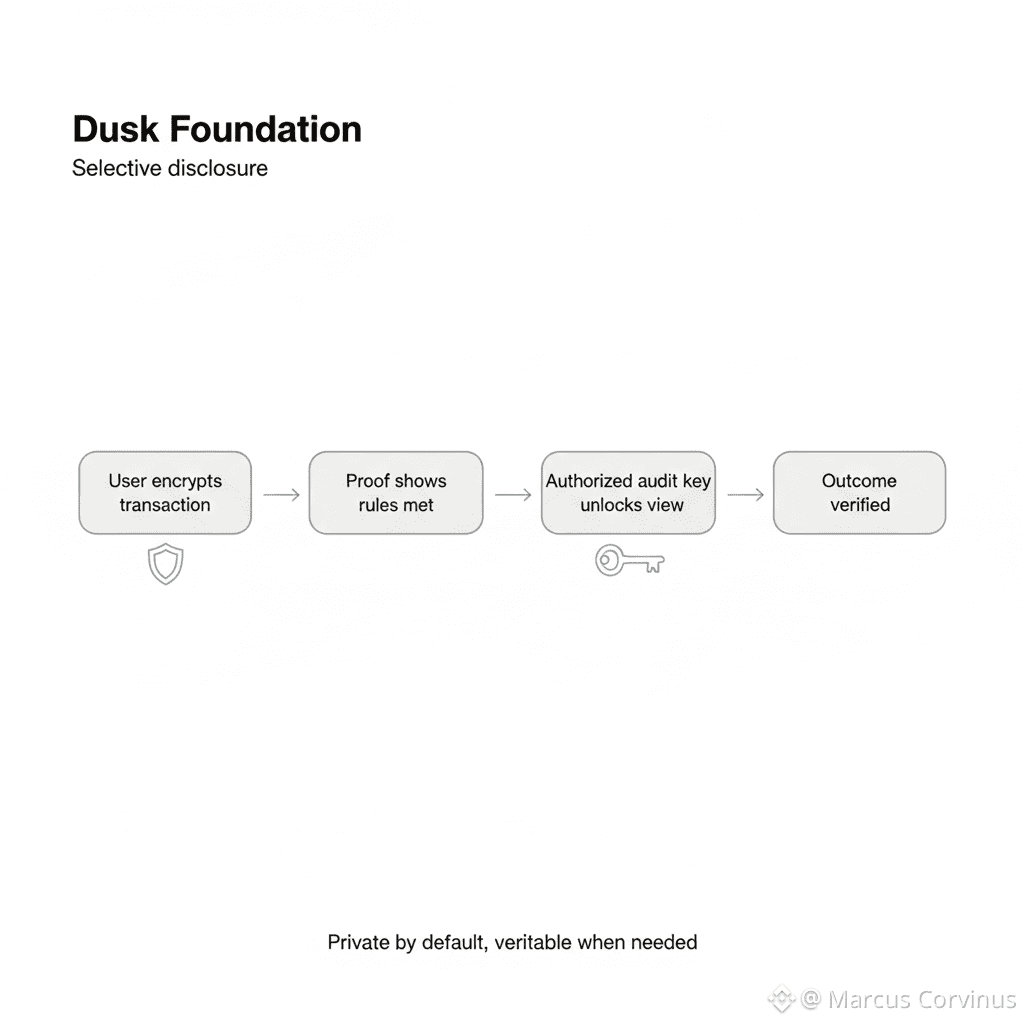
At the same time, Dusk does not remove accountability. Finance needs proof. If rules exist, the system must be able to show they were followed. Dusk is designed so actions can be validated without revealing sensitive details. If a regulator or authorized party needs to verify something, the system supports that. If no verification is required, the information stays protected. This balance is central to the entire design.
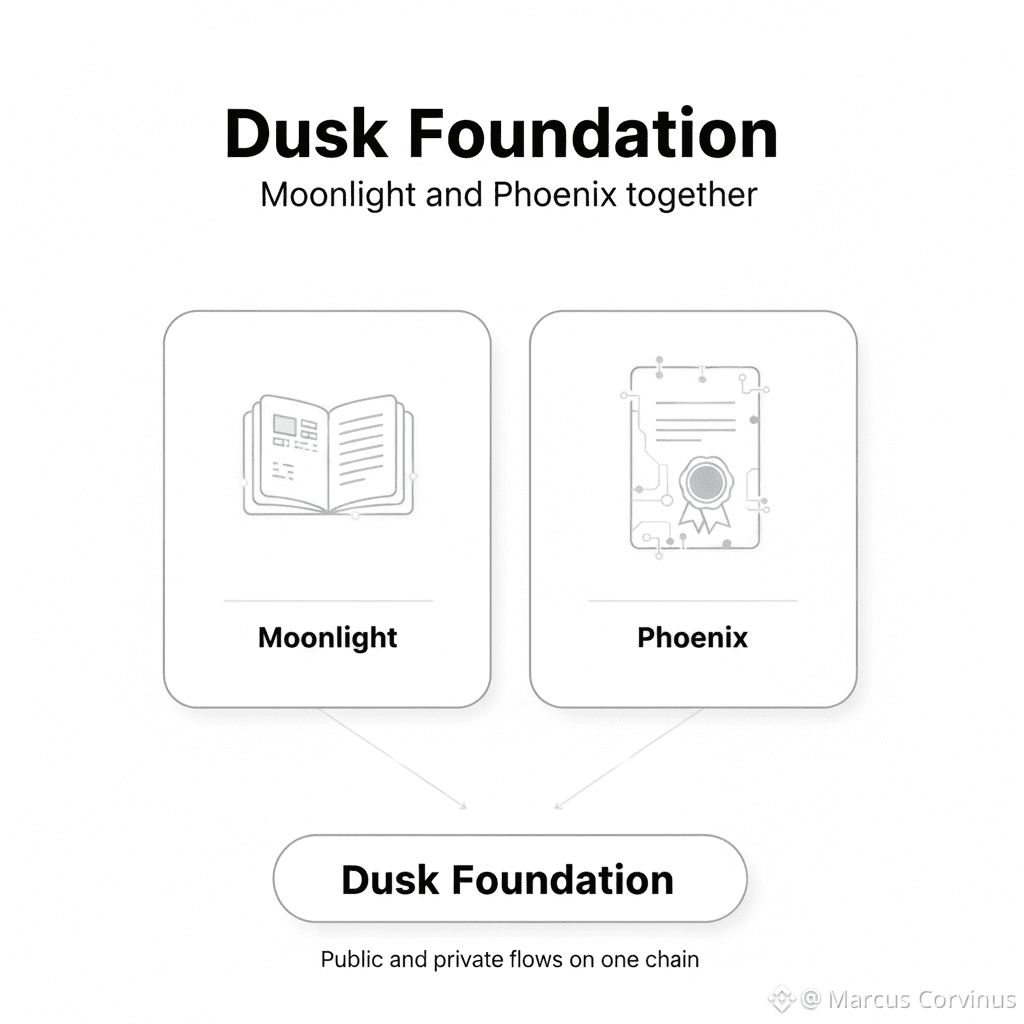
One of the key ideas behind Dusk is that not all actions need the same level of visibility. Some activity should be public, such as certain settlements or system level events. Other activity must remain confidential, such as individual balances or trading strategies. Dusk supports both models on the same base layer. This allows financial systems to behave naturally instead of being forced into extremes.
The network architecture is built for stability and long term operation. It is designed to run continuously without relying on sudden incentive changes. Validators secure the chain through staking, and rewards are structured to remain predictable over time. If a blockchain is meant to support financial infrastructure, it cannot behave unpredictably. Dusk reflects this understanding in how its incentives and security are designed.
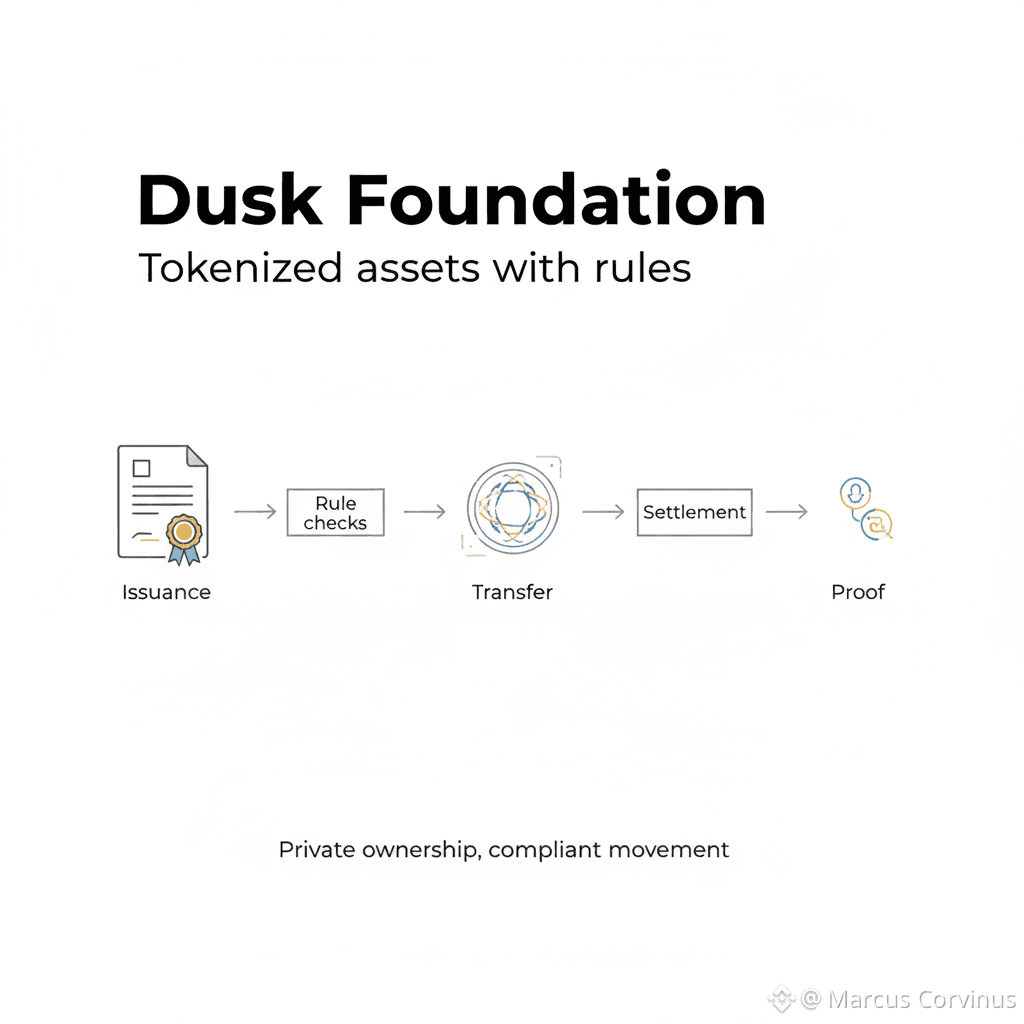
Dusk places strong emphasis on real world assets. Tokenized assets are not abstract ideas here. They represent ownership and financial claims that already exist outside the chain. These assets carry legal and operational rules. Dusk is designed so these rules can be enforced on chain without exposing sensitive information publicly. Ownership can change, transfers can settle, and compliance conditions can be met without unnecessary data leakage.
Identity and permissions are handled with similar care. Financial systems need to know who is allowed to act, but public identity creates long term risk. Dusk allows users to prove that they have the right to perform an action without exposing personal details. If identity disclosure is required, it can happen in a controlled and limited way. If not, it remains private. This approach protects users while still supporting regulated activity.
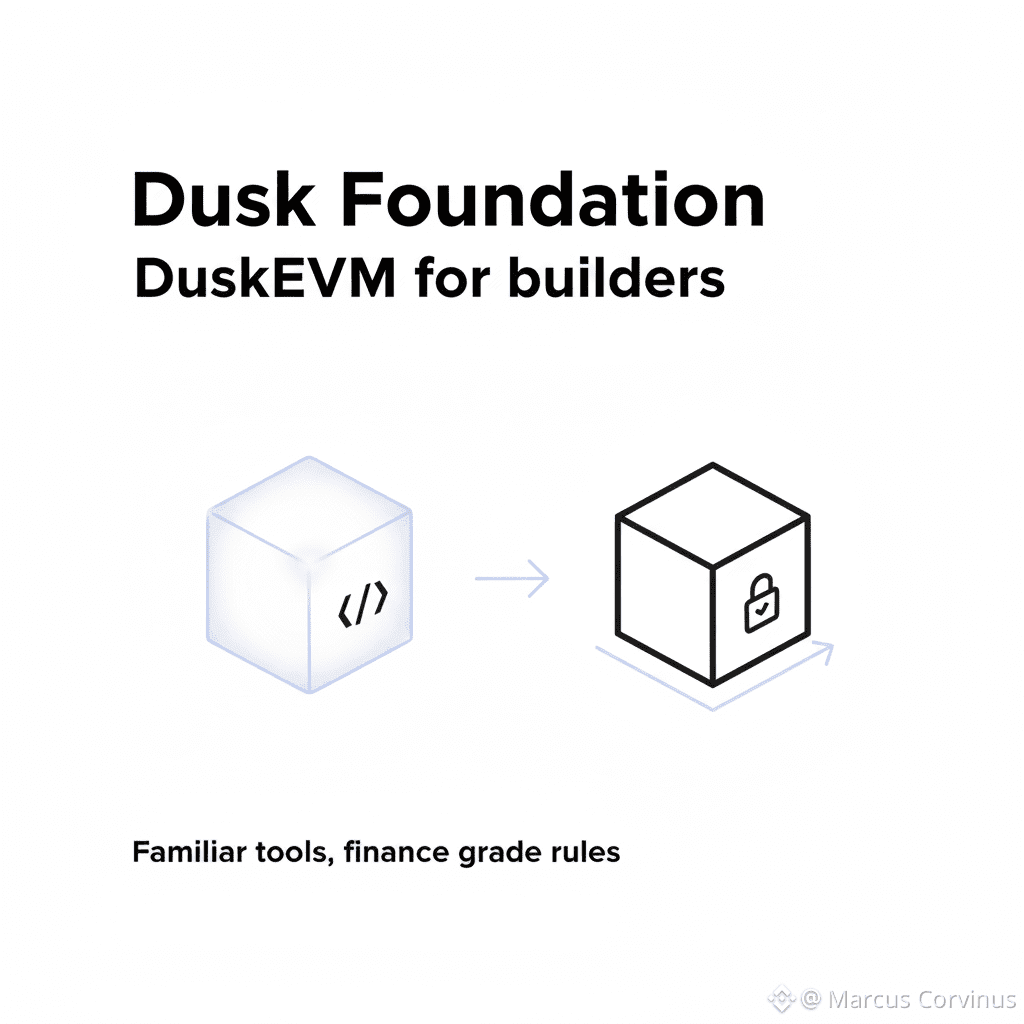
I’m also looking at how Dusk supports builders. A financial blockchain only succeeds if developers can build usable products on top of it. Dusk supports familiar development models while embedding privacy and verification into the protocol itself. This reduces complexity for teams building applications and lowers the barrier for creating compliant financial tools.
Payments on Dusk follow the same principles. They are designed to be fast because delays create friction. They are designed to be private because exposure creates risk. They are designed to be verifiable because trust depends on proof. Many systems compromise on one of these points. Dusk aims to support all three together because finance requires that balance.
The DUSK token plays a functional role in network security and participation. It is used for staking, aligning validators with the long term health of the system. The emission model is structured to support the network over many years rather than relying on short cycles. This matters for infrastructure that is meant to last.
Access to the DUSK token is available through Binance, providing a familiar entry point for participants without changing the principles of the network itself.
Auditing and verification are treated as normal parts of development. Dusk emphasizes review, testing, and careful validation because trust in financial systems is built gradually. Code must be examined. Assumptions must be challenged. This approach reflects the expectations of the financial world the project is designed to serve.
What stands out is the overall direction. Dusk is not trying to replace finance or remove rules. It is trying to modernize financial infrastructure so privacy and compliance can coexist on chain. If blockchain becomes part of regulated finance, systems like Dusk fit naturally into that future.
I’m not viewing Dusk as a project chasing attention. It is focused on correctness, structure, and long term relevance. It operates in a space that is difficult and slow to build, but necessary for scale.
Dusk Foundation represents an approach where privacy, verification, and regulated finance are not treated as contradictions. They are treated as requirements that must work together. This focus is what defines the project and gives it a clear place in the broader blockchain landscape.
