


Dusk Foundation started with a mindset that feels very different from most blockchain projects. From the beginning, it was not built to impress quickly or chase attention. It was built around a simple but uncomfortable truth. Real finance does not work in a fully open world, and it also cannot survive in a closed one forever. I’m seeing Dusk as a project that accepted this tension early and decided to build directly inside it instead of running away from it.
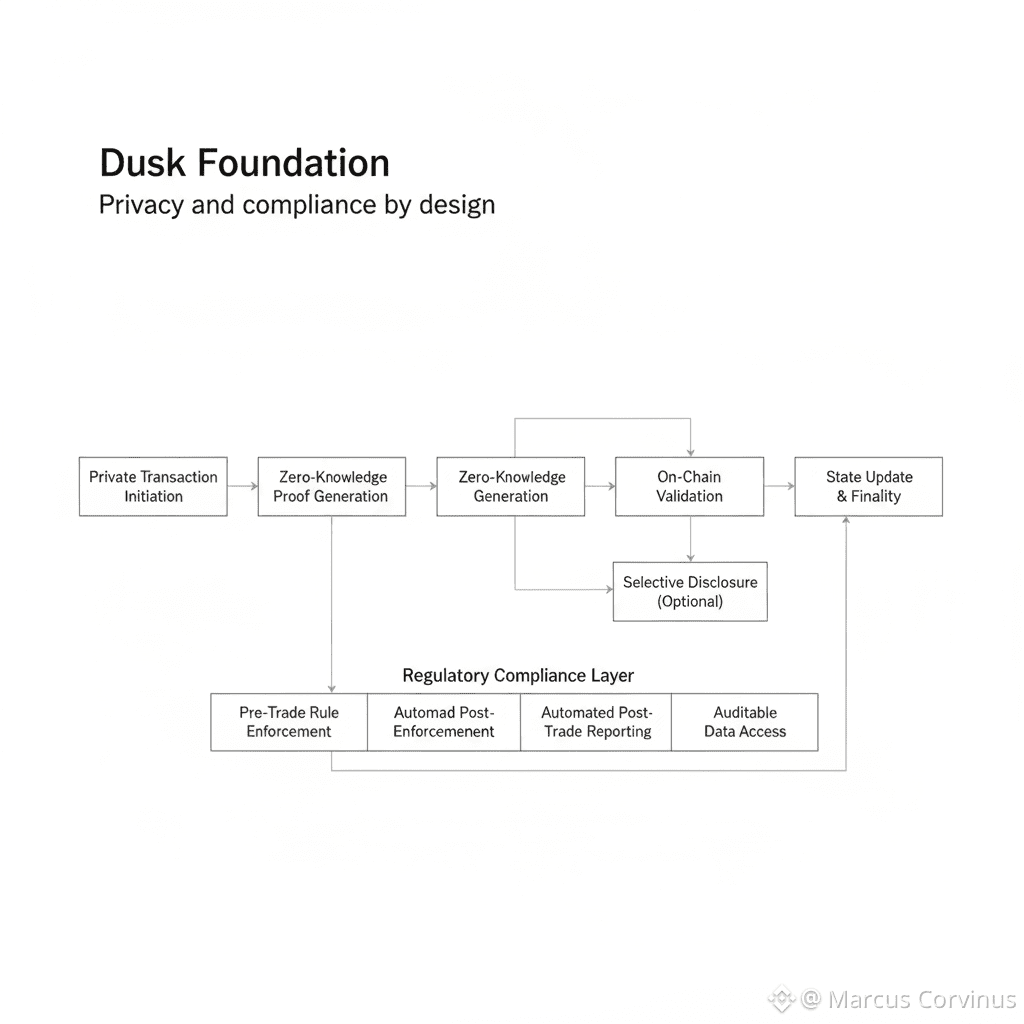
When I look at traditional finance, I see systems built on trust, rules, and responsibility. Banks protect data. Funds protect positions. Companies protect sensitive operations. At the same time, regulators must be able to verify everything. Many blockchains force a hard choice. Either everything is public, or everything is hidden. That choice breaks real financial use cases. Dusk exists because that model does not work. They’re trying to let privacy and verification live together without one destroying the other.
At its core, Dusk is a layer one blockchain built for financial settlement. Settlement is not a background process. It is the moment where ownership becomes real and final. In legacy systems, this moment is slow and fragmented across many intermediaries. On Dusk, settlement happens on chain with strong finality. I’m noticing that the focus is not on speed as a marketing point, but on certainty. If something settles, it is finished. That feeling of finality matters more than people realize when real value is involved.
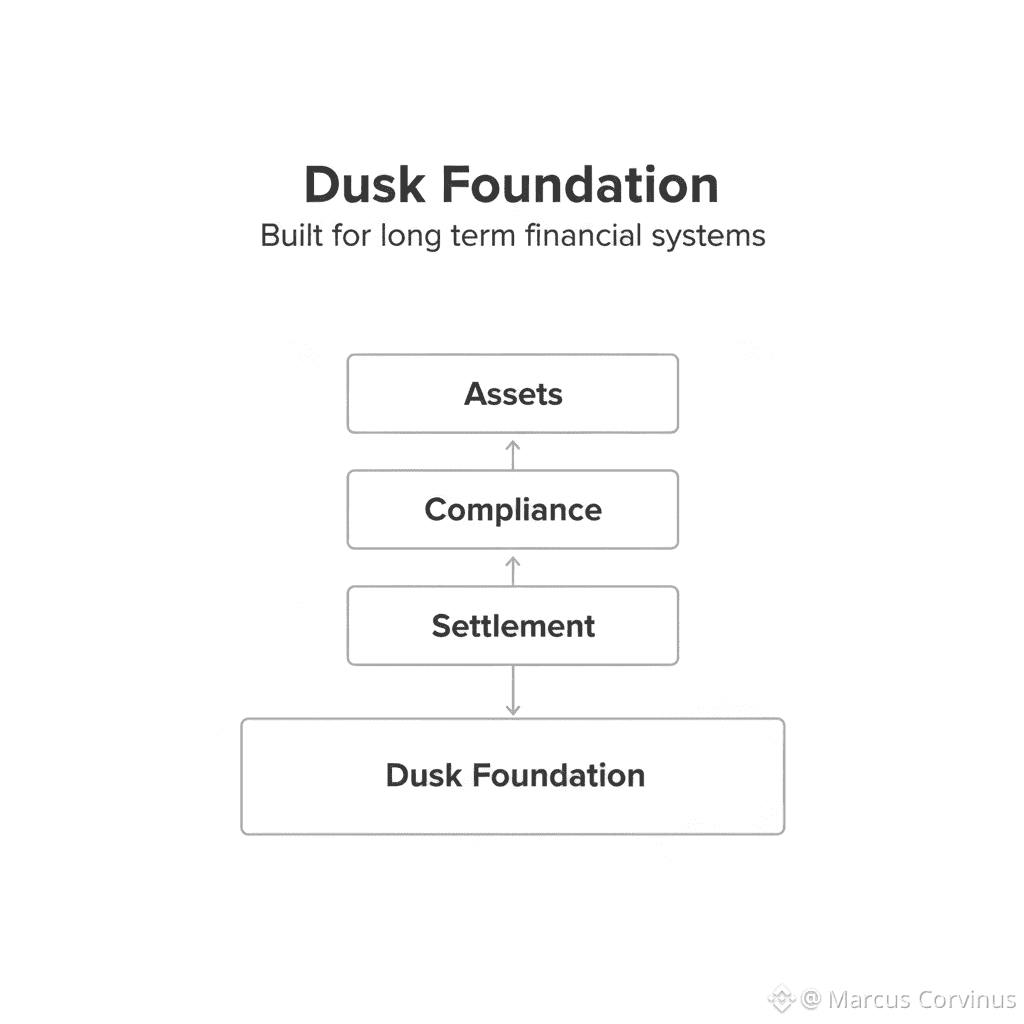
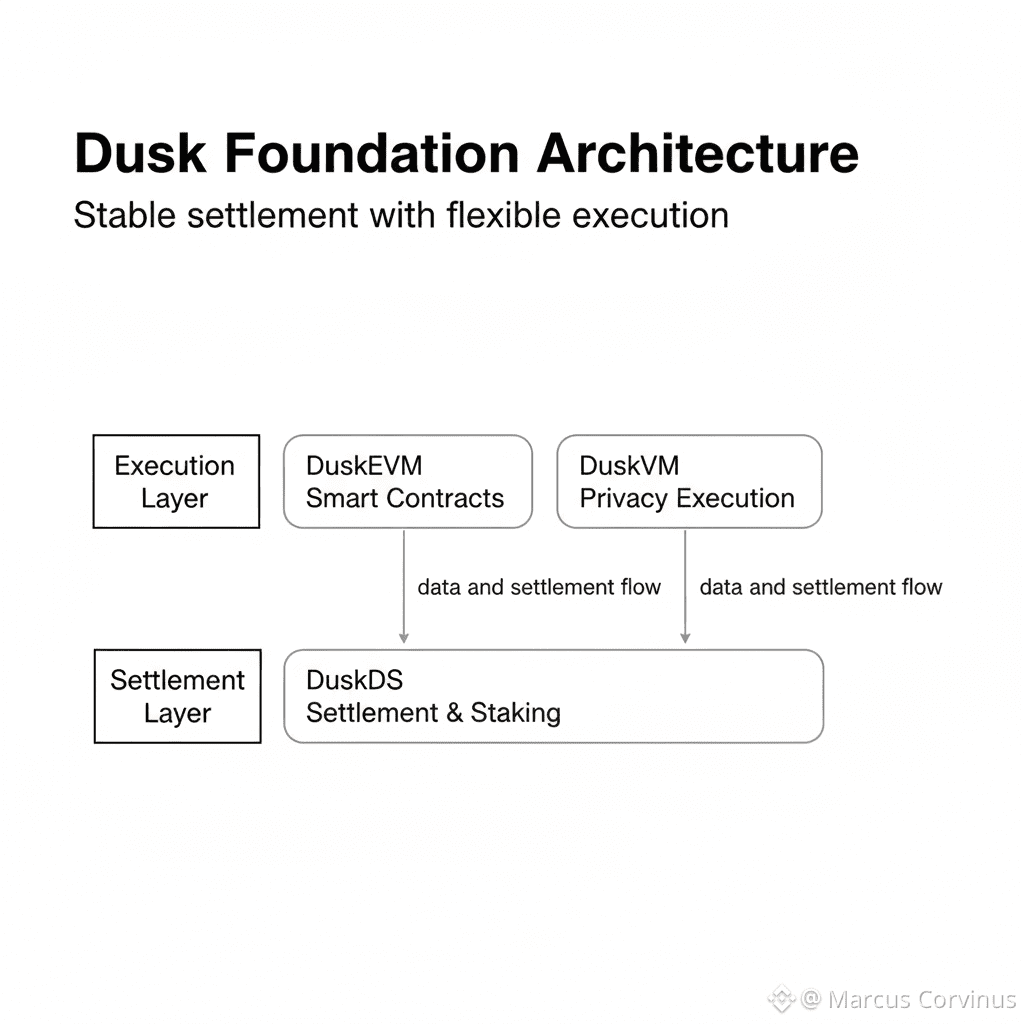
The architecture of Dusk separates the core settlement layer from the execution layer. This is a quiet but powerful design choice. The settlement layer stays stable and dependable. Applications can evolve on top of it without breaking the foundation. Developers are able to build using tools they already understand. They’re not forced into unfamiliar systems just to participate. If builders feel comfortable, ecosystems grow naturally instead of being forced.
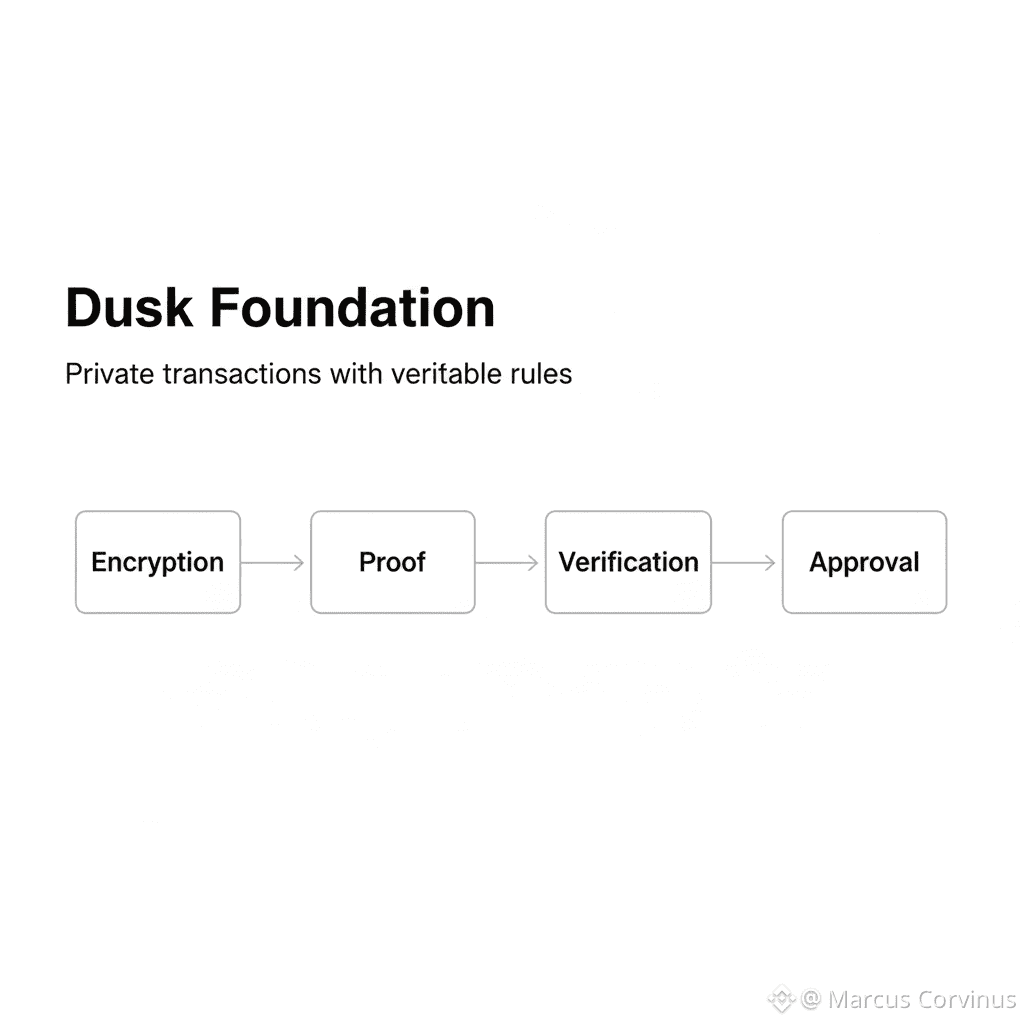
Privacy on Dusk is not extreme or careless. It is deliberate. Some transactions are public because transparency is required. Others are private because exposure would cause harm or break rules. Private transactions on Dusk are built to prove correctness without revealing sensitive details. If an authority or auditor needs access, controlled disclosure is possible. I’m seeing this as privacy that respects responsibility, not privacy that tries to escape it.
Compliance is treated as part of the system, not a problem to solve later. Many blockchains leave compliance entirely to applications. Dusk brings compliance closer to the base layer. Rules around access, eligibility, and conditions can be enforced directly by the network. If institutions are involved, this is not optional. Legal teams need systems that can explain themselves clearly. Dusk seems to understand that trust is built long before the first asset moves.
Money used inside a financial system matters just as much as the assets being traded. Dusk supports regulated digital settlement structures so that assets and money operate under the same legal expectations. If assets follow rules but settlement does not, the system stays fragile. If both sides align, confidence grows. I’m seeing this as one of the reasons Dusk feels grounded rather than experimental.
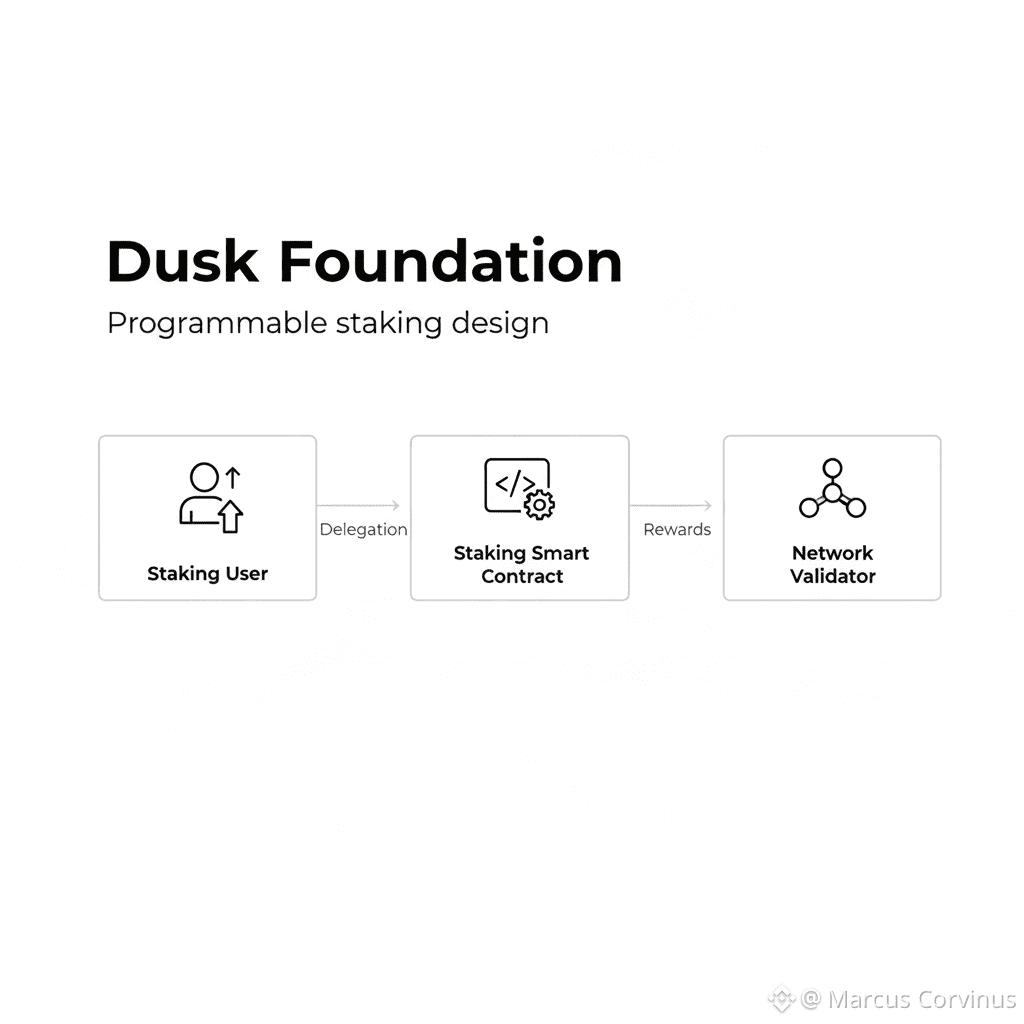
Staking on Dusk is designed to be practical instead of technical. It does not assume every participant wants to manage infrastructure. Smart contracts can participate in staking, which allows services to handle complexity on behalf of users. If systems feel easier, more people take part. If participation increases, network security becomes stronger. It is a simple cycle that mirrors how financial products work outside of crypto.
The network token has a clear and limited role. It secures the chain and pays for network activity. Supply is defined from the beginning and emissions are spread over many years. There are no sudden changes designed to shock participants. Predictability is not boring in finance. It is reassuring. If people can plan, they can commit. Dusk keeps this part structured and understandable.
Interoperability is handled with care. Assets should not feel trapped on one network, especially regulated assets. At the same time, movement across systems must not break structure or rules. Dusk is built to support standard communication so assets can interact beyond a single environment while keeping their identity intact. I’m seeing this as preparation for a future where financial systems are connected, not isolated.
What stands out most to me is what Dusk is not trying to be. They’re not trying to host everything. They’re not chasing trends that fade quickly. They’re building infrastructure for financial systems that already exist and systems that will exist long term. If blockchain becomes part of mainstream finance, it will not happen through noise. It will happen through systems that feel stable, predictable, and trustworthy.
If we imagine a future where savings, investments, and payments live on chain, privacy cannot disappear and rules cannot disappear. Dusk is built for that future. They’re not promising chaos or total exposure. They’re offering balance. Balance between openness and protection. Balance between innovation and responsibility.
I’m watching Dusk as a long term build. They’re not here for a single cycle. They’re building for a world where blockchain stops feeling experimental and starts feeling dependable. If that shift happens, projects like Dusk will already be there, steady and prepared to carry real financial weight.
