

What Smart Money Is Doing While Retail Panics
Every time the market freaks out, it’s the same story. Prices crash, social media goes full doom-and-gloom, and you see endless screenshots of people getting liquidated. Retail investors can’t sell fast enough—they just want out, no matter what. Fear takes over. But behind the scenes, there’s a whole different approach. This is when you really see the gap between retail panic and the discipline of smart money.
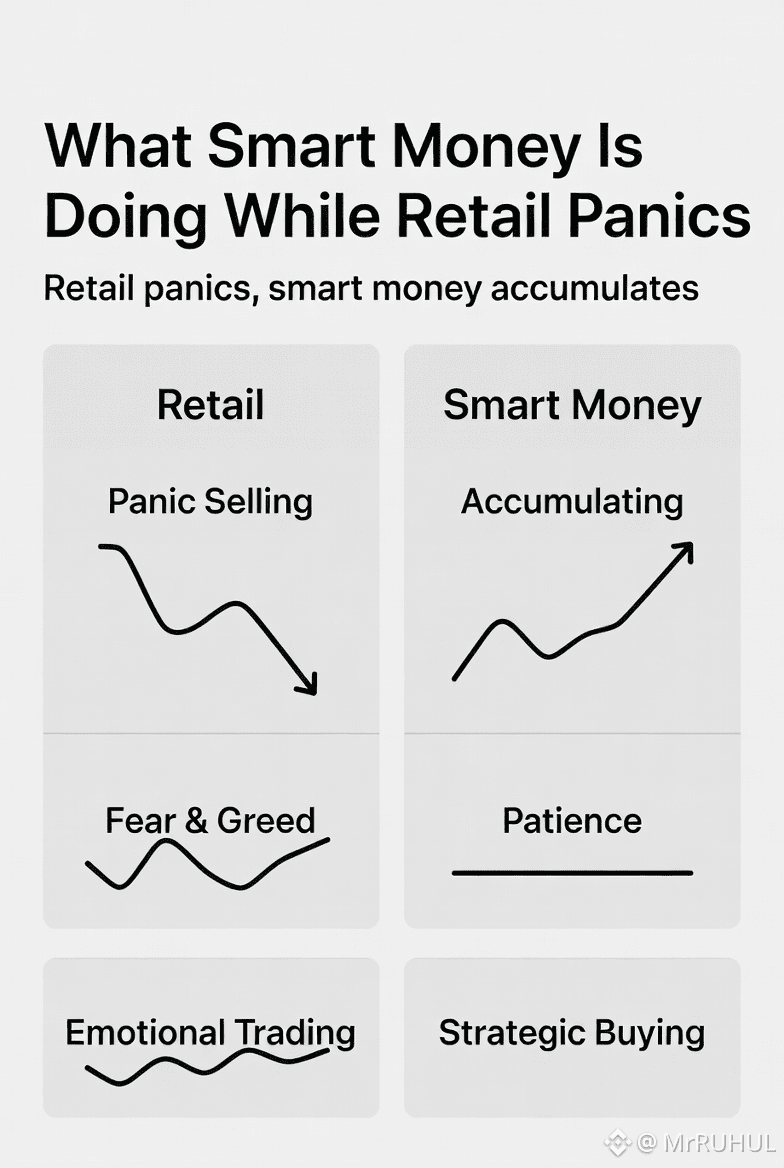
Retail folks mostly react. They’re glued to price swings, headlines, and whatever everyone else is feeling, not actual probabilities or structure. When things tank, they treat volatility like it’s breaking news, instead of what it usually is—a bunch of leveraged bets unwinding, same as always. They sell just because prices drop, not because their actual reasons for buying changed. And it’s not surprising—losses feel endless, wins are forgotten overnight.
Smart money? They see volatility coming a mile away. Institutions, big funds, and seasoned investors all expect these rough patches. They’ve run the numbers. They know liquidity will dry up sometimes. So when panic hits, they don’t scramble. Their game plan was set long before the crowd even realized something was wrong.
The first move smart money makes during chaos? Usually nothing. That’s not indecision—it’s discipline. The capital that lasts through cycles knows you don’t have to react to every single price move. Sometimes just sitting tight—holding cash or your core bets—is the edge. If you’re not desperate or overleveraged, time works for you.
While the retail crowd obsesses over short-term losses, smart money watches the big picture. They track where the forced selling comes from: traders who borrowed too much, funds with wobbly balance sheets, or shops getting hit with sudden withdrawals. These sellers don’t care about price—they just need out. That’s when mispricings pop up. Smart money isn’t trying to magically pick the bottom; they’re looking for signs that selling is just mechanical, not driven by real problems.
And when they do buy, they’re picky. No “buy the dip” frenzy. They only scoop up assets that already checked all the boxes before the crash—strong balance sheets, real-world use, sustainable token models, or critical infrastructure. Panic drags everything down, but that just means quality stuff goes on sale.
They move slow, too. No rush to nail the exact bottom. They build positions quietly, sometimes over months, using the wild swings to get a good average price. Compare that to retail, which jumps between full-blown panic and blind optimism.
Smart money uses these shakeouts to rebalance, not to pile on risk. They cut losers—assets whose stories fell apart, or where liquidity vanished, or ones that only work in a bull market. At the same time, they add to winners: core infrastructure, market leaders, or projects set to thrive as weaker players disappear.
Really, smart money is always thinking in cycles, not just this week or next. They know markets swing from mania to despair and back again, but the real stuff—adoption, building, capital—moves slowly. Panic is just a phase, not the end of the story. Their decisions are about where things might be in a year or two, not just tomorrow’s price.
Retail panic is loud, fast, and emotional. Smart money stays quiet, patient, and behind the scenes. By the time the mood flips and everyone’s bullish again, their positions are already locked in.
Every cycle, wealth doesn’t change hands at the top or bottom headlines. It shifts quietly, in those moments when fear makes most people believe “this time is different.” Smart money gets through those moments on purpose—and uses them to get ready for what’s next.#BinanceSquare
