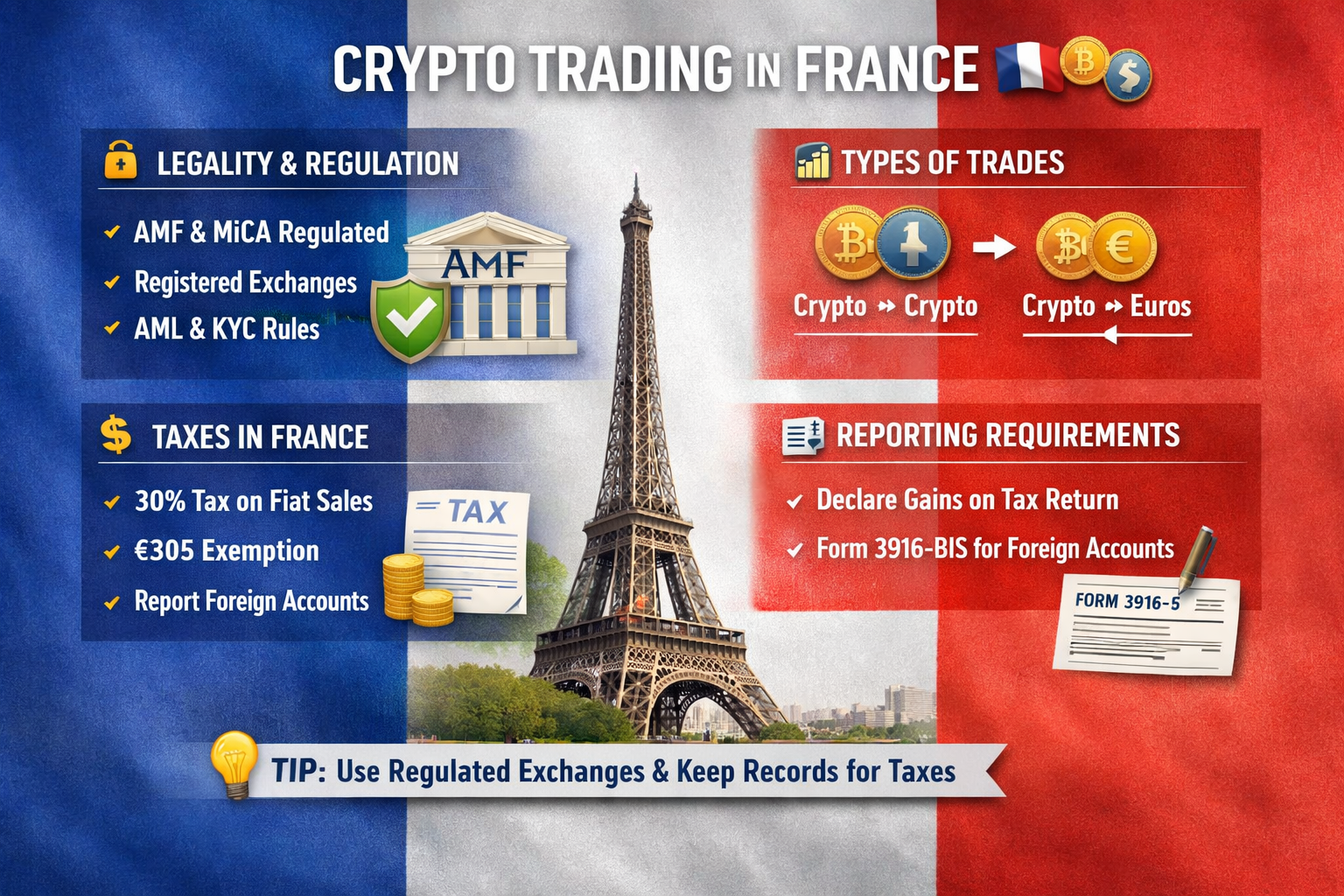
Oto jasny przegląd handlu kryptowalutami we Francji — obejmujący legalność, zasady, podatki i jak to działa, jeśli chcesz handlować kryptowalutami tam w 2026 roku:
🇫🇷 1. Czy handel kryptowalutami jest legalny we Francji?
Tak — handel kryptowalutami jest legalny we Francji. Możesz kupować, sprzedawać i handlować aktywami cyfrowymi, takimi jak Bitcoin, Ethereum i innymi, za pośrednictwem regulowanych platform. Francuski organ regulacyjny rynków finansowych (Autorité des Marchés Financiers — AMF) nadzoruje handel kryptowalutami i wymaga, aby giełdy i dostawcy usług byli zarejestrowani i zgodni z przepisami przeciwdziałania praniu pieniędzy (AML) oraz zasadami poznawania klienta (KYC). �
Datawallet +1
Od momentu wejścia w życie regulacji MiCA na poziomie UE, wszystkie firmy kryptograficzne muszą uzyskać licencje UE (MiCA CASP), aby legalnie działać we Francji i UE, z terminem przejściowym do około 30 czerwca 2026 roku. Firmy, które nie będą przestrzegać, mogą być zmuszone do wycofania się z rynku lub zakończenia działalności. �
Reuters
📊 2. Jak działa handel kryptowalutami
Giełdy i platformy: Możesz korzystać z regulowanych giełd (takich jak Coinbase, Binance i innych, które przestrzegają standardów AMF/MiCA) do handlu kryptowalutami za kryptowaluty lub kryptowaluty za fiat (np. euro). �
Rodzaje transakcji:
Transakcje kryptowalutowe: Wymiana jednej kryptowaluty na drugą (np. BTC ↔ ETH).
Transakcje kryptowalutowe na fiat: Sprzedaż kryptowalut na euro — to jest traktowane jako zbycie i jest opodatkowane (zobacz podatki poniżej).
Bezpieczeństwo: Zawsze wybieraj platformy z silnym bezpieczeństwem (2FA, zimne przechowywanie) i te zarejestrowane we Francji/UE. �
Związek Handlowców
💰 3. Podatki od handlu kryptowalutami
Podatki są jednym z najważniejszych aspektów handlu kryptowalutami we Francji:
🧾 Zyski kapitałowe i zdarzenia opodatkowane
Transakcje kryptowalutowe generalnie nie są opodatkowane — wymiana kryptowalut nie jest zdarzeniem podlegającym opodatkowaniu, o ile pozostajesz w ramach aktywów cyfrowych. �
summ.com
Sprzedaż na fiat (np. EUR) jest opodatkowana.
Używanie kryptowalut do zakupu towarów/usług również traktuje się jako zbycie w celach podatkowych. �
summ.com
📊 Stawki podatkowe
Okazjonalni handlowcy: Stała stawka podatku 30% (nazywana Prélèvement Forfaitaire Unique — PFU), która obejmuje:
~12.8% podatek dochodowy
~17.2% składki na ubezpieczenia społeczne
Profesjonalni handlowcy/górnicy: Jeśli handel/staking/górnictwo jest uważane za twoją główną działalność, zyski mogą być opodatkowane jako dochód z działalności gospodarczej — do ~45%. �
MEXC
💶 Zwolnienia i progi
€305 rocznego zwolnienia: Jeśli twoje całkowite zyski kapitałowe ze sprzedaży kryptowalut wynoszą poniżej €305 rocznie, są zwolnione z opodatkowania — ale musisz je nadal zgłosić. �
summ.com
📝 Sprawozdania i obowiązki
Musisz uwzględnić zyski z kryptowalut i konta w swoim francuskim zeznaniu podatkowym.
Zagraniczne konta kryptowalutowe (np. na Binance, Kraken) muszą być zgłaszane za pomocą formularza 3916-BIS, nawet jeśli nieużywane — kary za brak zgłoszenia mogą być znaczne. �
Crypternon +1
📈 4. Regulacja i nadzór
Regulacja MiCA: Prawo UE dotyczące rynków aktywów kryptograficznych teraz reguluje firmy kryptograficzne, wymagając licencjonowania, ochrony konsumentów i standardów sprawozdawczości. �
Reuters
Francuska AMF: Działa jako krajowy regulator i egzekwuje przestrzeganie zasad AML/KYC.
Francja była głośna w kwestii egzekwowania rygorystycznego nadzoru nad kryptowalutami i może dążyć do centralizacji nadzoru UE, aby wzmocnić ochronę inwestorów. �
Reuters
🧠 5. Porady dla handlowców kryptowalut w Francji
✅ Używaj regulowanych giełd, które przestrzegają zasad AMF/MiCA.
✅ Prowadź szczegółową dokumentację wszystkich transakcji — daty, kwoty, wartości w euro i używane platformy.
✅ Zawsze zgłaszaj konta walutowe, aby uniknąć kar.
✅ Rozważ konsultację z profesjonalistą podatkowym w celu dokładnego złożenia dokumentów — szczególnie jeśli handlujesz często lub zawodowo.
📌 Podsumowanie
Handel kryptowalutami jest legalny we Francji i objęty prawem UE o kryptowalutach (MiCA). �
Datawallet
Podatki stosuje się głównie, gdy przekształcasz na fiat lub używasz kryptowalut do zakupów; wymiana kryptowalut na kryptowaluty zwykle nie jest opodatkowana. �
summ.com
Regulacja jest rygorystyczna, z wymaganymi licencjami dla platform i obowiązkami sprawozdawczymi dla handlowców. �
Reuters
Jeśli chcesz, mogę również wymienić najlepsze giełdy kryptowalut dostępne we Francji i porównać ich opłaty i funkcje.$BTC