
Most chains assume governance is a social layer. Something you debate, vote on, and clean up later with forum links and blog posts.
That assumption isn’t neutral — it’s legally undefined.
Because markets don’t run on consensus vibes. They run on which rule version was binding at the moment value was created, and whether that version can survive audit pressure months later.
On Dusk, governance doesn’t float above the system. It presses down on it.
A policy update isn’t commentary. It’s a versioned constraint that snaps into force, with no ambiguity about when it applied and what it overrode. There’s no “current interpretation” fallback. If a transaction cleared under v4, then v4 owns the consequences — even if v5 shipped an hour later and reads cleaner in hindsight.
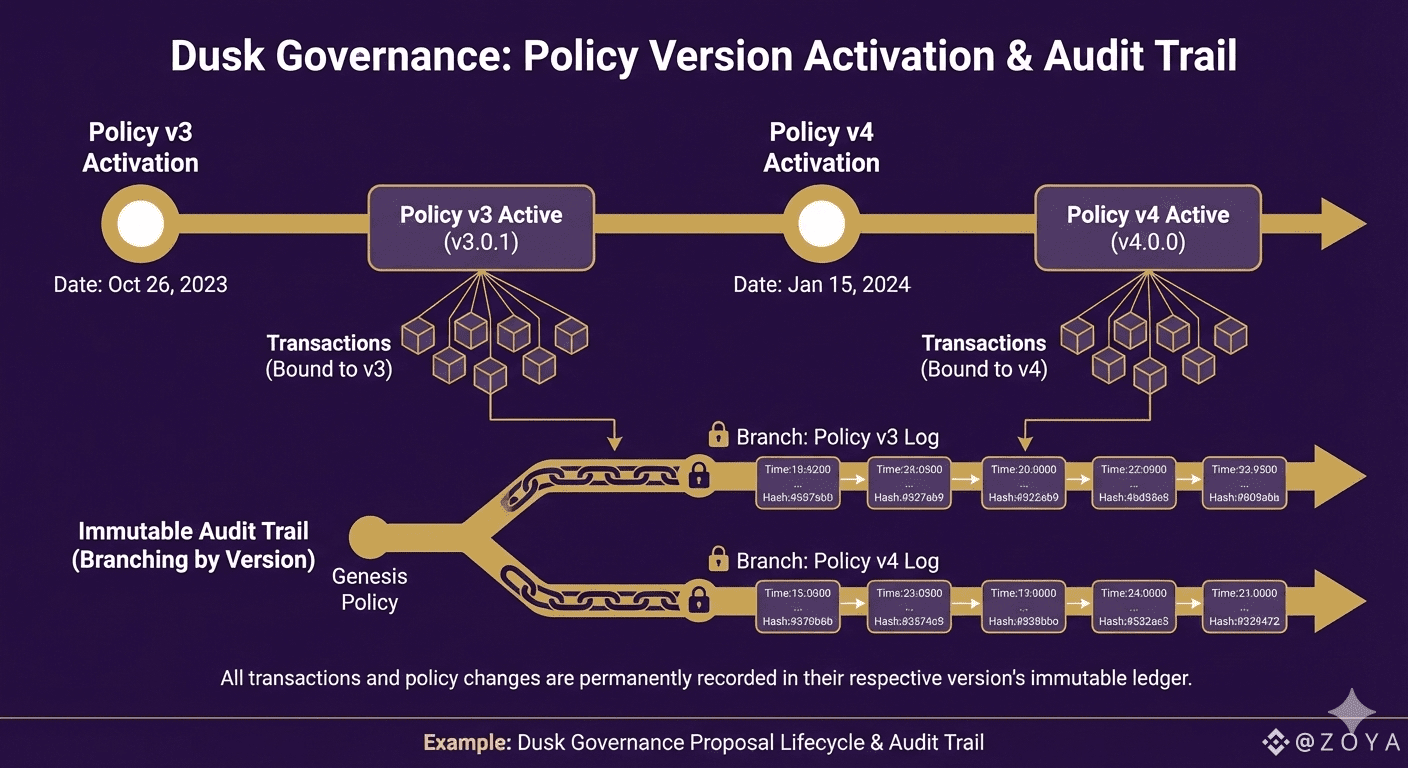
The industry still believes governance failures look like forks or public fights. That’s visible noise. The real failure is quieter and more expensive: when nobody can answer which policy governed this event without escalating it to legal.
Dusk treats policy the way serious systems treat releases. Versioned. Enforced. Non-negotiable after execution.
And once governance works like this, discretion evaporates. No retroactive alignment. No “we meant it this way.” The system remembers better than people do.
What breaks first in crypto markets isn’t throughput. It’s defensibility when rules evolve faster than memory.
Dusk optimizes for that moment — not the vote, but the audit.
