
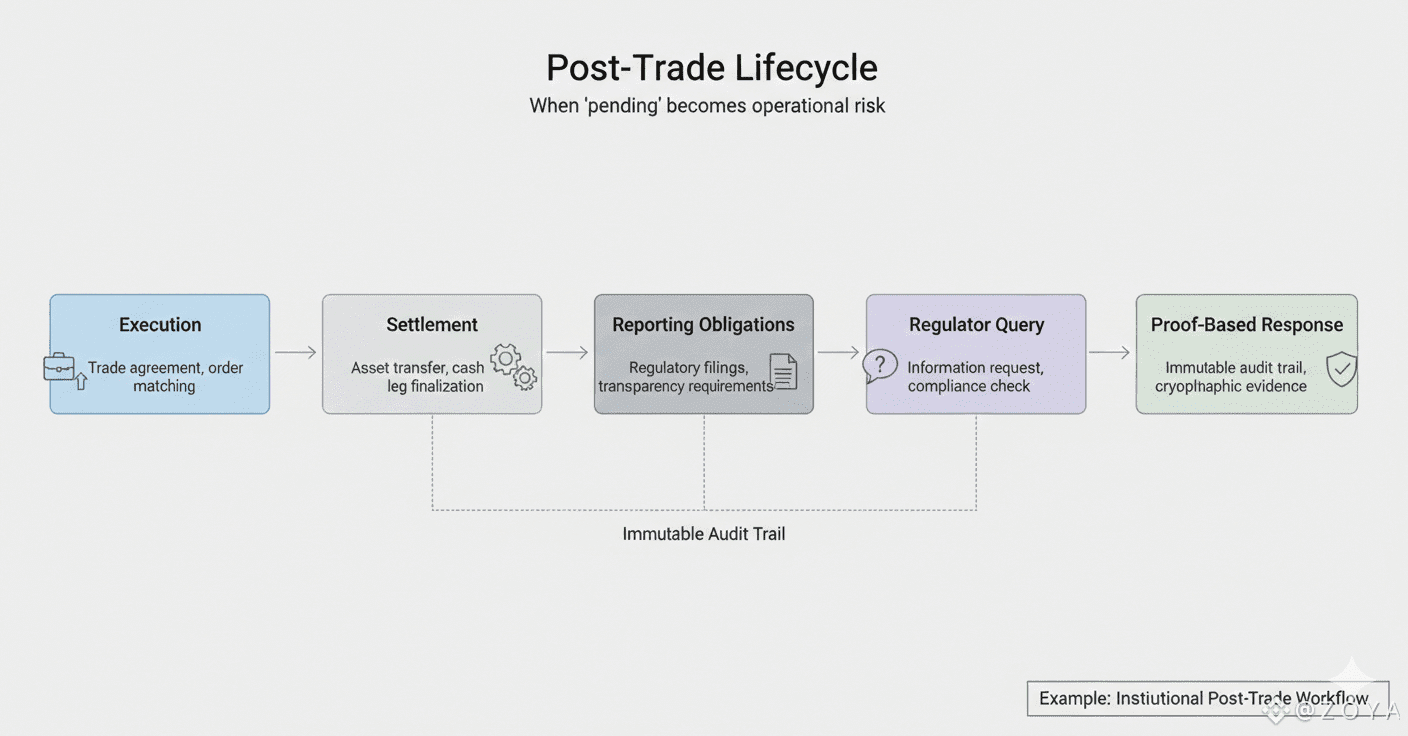
What breaks first in crypto markets is the belief that reporting is an afterthought.
Issuers love the trade. Venues love the volume. Everyone nods until the first regulator asks a question that can’t be answered with a dashboard screenshot.
On Dusk, post-trade reporting isn’t reconstruction. It’s pre-commitment.
The audit trail doesn’t ask what you intended to disclose. It shows what was provable at the instant value moved.
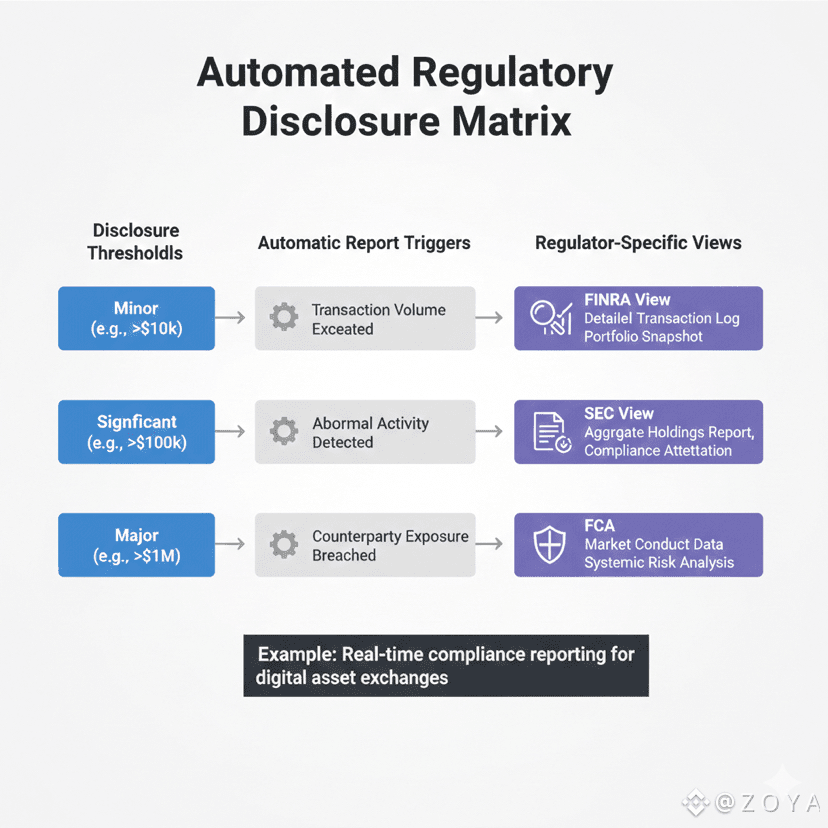
The industry still believes audits fail because transparency is insufficient. That’s backwards. They fail because disclosure paths weren’t designed early enough to matter.
On Dusk, reporting isn’t generous. It’s exact. Auditors don’t get the whole book. They get the answer the rule demands, bound to the rule that was active then — not the one that feels safer now.
Investors notice when surprises disappear.
Issuers notice when improvisation stops being an option.
Regulators notice when answers arrive without negotiation.
Once reporting becomes automatic, excuses stop circulating. And that’s when crypto infrastructure starts getting treated like market infrastructure.
