
Stablecoin payment systems don’t usually fail outright.
They hesitate.
A USDT transfer can sit pending for 25–30 seconds and suddenly nobody wants to be responsible for the next step. The interface still says “sent,” but the task stays open. A merchant refreshes. Ops gets pinged. Someone decides to wait one more block.
That pause is where trust starts leaking.
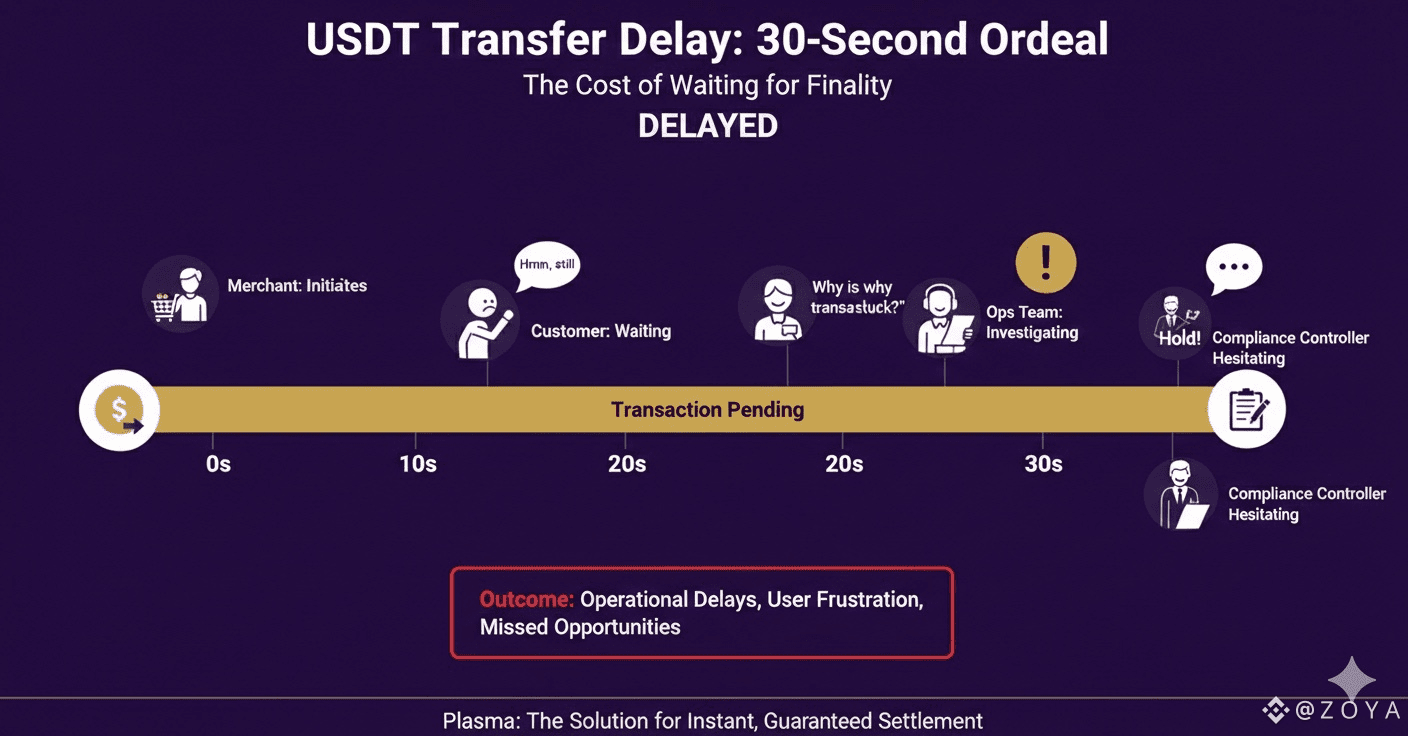
At that point, nobody is thinking about block times or consensus design. What’s being tested is simpler: does the system give a signal a human is willing to act on without hovering over it.
Gasless stablecoin flows quietly raise expectations here. When a user doesn’t think about gas or retries, pressing send carries an assumption that the rest will resolve cleanly. Not eventually. Cleanly enough that no follow-up is required.
The worst state isn’t failure.
It’s “probably fine.”
Failures trigger decisions. Pending states trigger hesitation. Screenshots get taken. Messages start. The transfer stops being money and becomes a coordination problem. No one wants to be early. No one wants to be late.
This shows up most clearly in cross-border payments. Merchants don’t think in abstractions. They think in cutoffs, settlement windows, reconciliation. When a transfer lingers past expectation, the system stops negotiating with the chain and starts negotiating with the clock.
That’s how networks quietly lose trust. Nothing breaks. The interface looks the same. But behavior shifts. People wait longer. They double-check. They route around the system next time if they can.
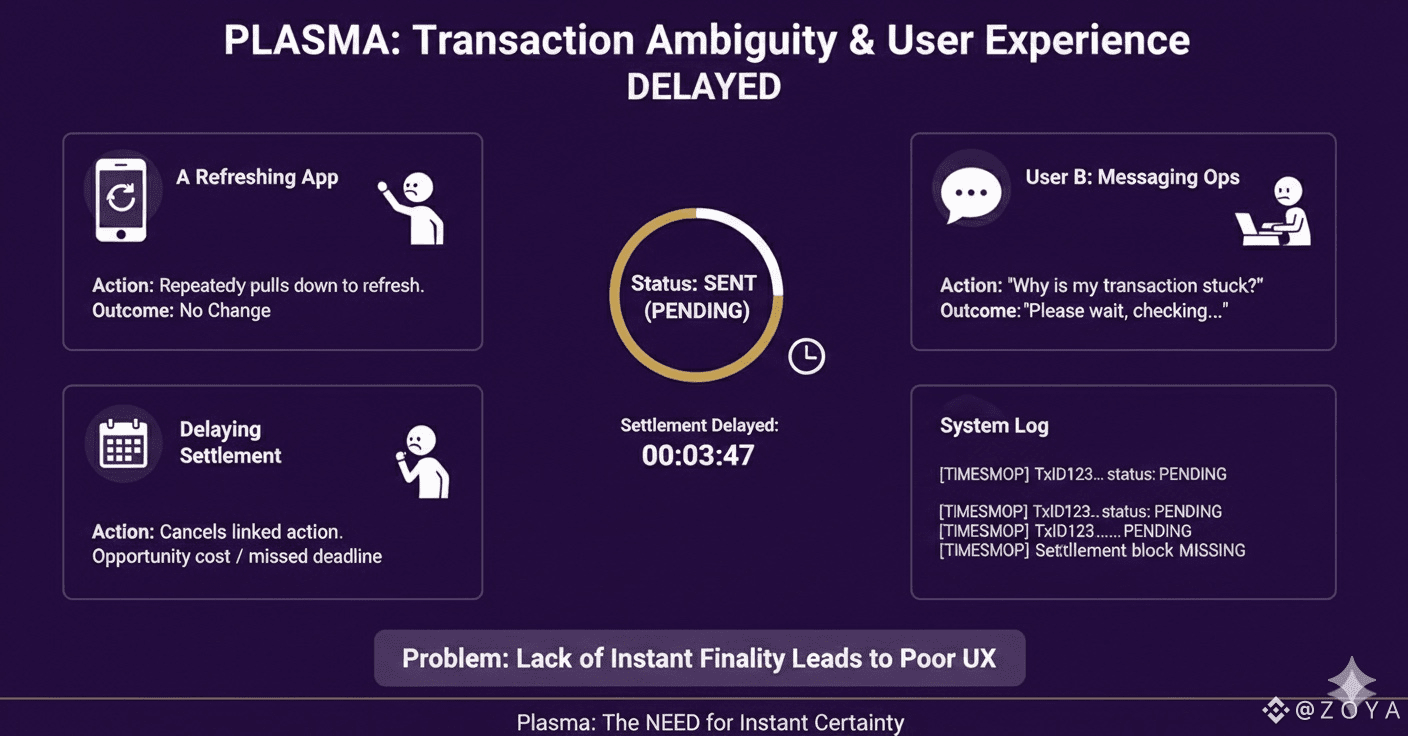
Plasma appears to be built with this human behavior in mind.
Sub-second finality via PlasmaBFT matters less as a benchmark and more as a way to compress uncertainty into something a person can mentally close. Bitcoin anchoring plays a different role. It doesn’t help in the moment, and it doesn’t need to. It provides long-horizon neutrality and credibility for institutions deciding where value should live.
Those solve different problems.
What actually clears a payment isn’t the word “secure.” Secure doesn’t close a task. What does is a signal that arrives early enough and plainly enough that no one feels the need to explain it afterward.
The first time a routine USDT transfer forces someone to write “still pending,” the system hasn’t failed. But it has been noticed.
Plasma’s design seems to respect that threshold. Not as a metric, but as a moment. And in stablecoin payments, moments like that decide whether trust is reinforced—or quietly spent.


