
A simple way to tell whether a blockchain is meant for experimentation or for real financial use is to look at how it treats observation. Many systems behave as if constant visibility is either neutral or automatically good. That assumption does not hold in real financial markets. Markets are always monitored, but they are not fully exposed. Oversight exists alongside limits on who sees what. Dusk starts from that reality. Scrutiny is normal. Unlimited exposure is not.
As onchain finance becomes more connected to real economic activity, visibility stops being free. Public balances, open transaction flows, and exposed counterparties create behavior that has little to do with trust and a lot to do with exploitation. Front running becomes easier. Defensive strategies increase. Volatility feeds on itself. At the same time, accountability does not disappear. Dusk works around this tension by separating verification from exposure. Systems can be examined without forcing sensitive information into public view during normal operation.
At the protocol level, this shows up in how state is handled. Transactions and asset data can remain confidential, while proofs make it possible to verify correctness when questions arise. This is closer to how financial systems already work. Auditors and regulators do not watch everything in real time. They intervene when needed. Dusk replaces discretionary access with cryptographic proof, so verification does not depend on trust or special permissions.
This changes how risk behaves onchain. In transparency-first systems, risk is pushed outward. Users are expected to monitor activity constantly and react quickly. Under stress, that behavior tends to amplify problems rather than contain them. Dusk moves risk inward, into execution. Rules are checked automatically. If conditions are not met, actions do not go through. Problems are blocked at execution instead of being analyzed after the fact.
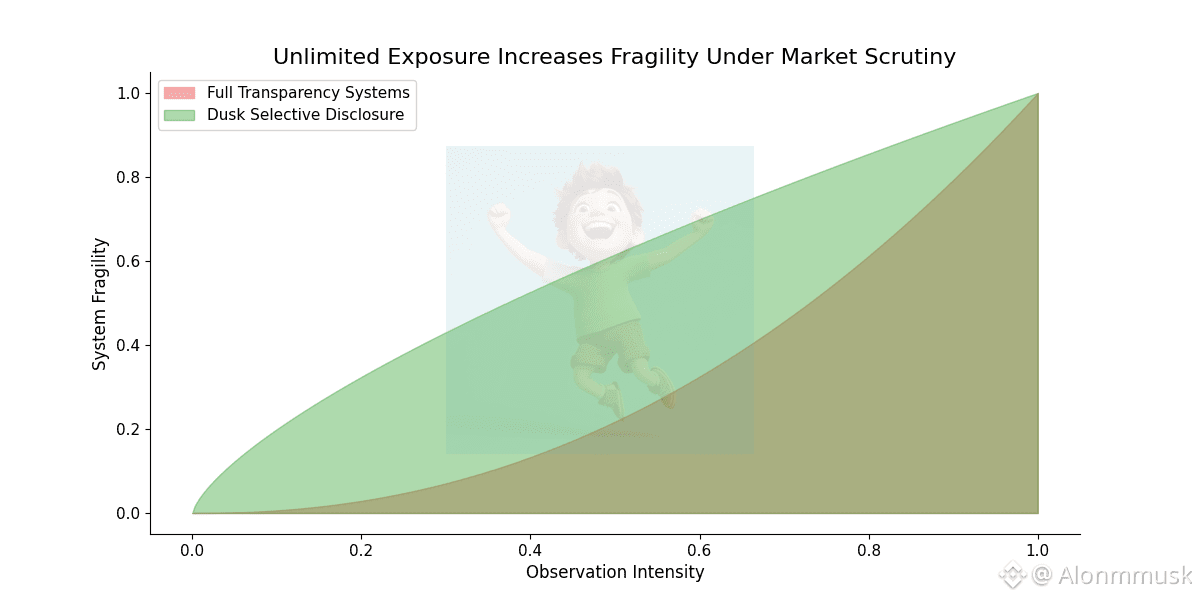
For developers, this creates a stricter environment, but also a more predictable one. Building on Dusk requires defining constraints clearly upfront. Who can interact. Under what conditions. What disclosures are triggered and when. These are not left to interpretation later. This discipline reduces failure modes that only appear once systems are live and under pressure.
Tokenized assets make this easier to see. Real world assets are not static tokens. They exist inside legal and operational frameworks that change over time. Ownership may need to remain private. Transfers may need to be conditional. Certain disclosures may only apply in specific cases. Dusk supports this by allowing those rules to live inside the asset itself, rather than being managed externally or enforced manually.
The ecosystem forming around Dusk reflects this mindset. Builders are not optimizing for short-term traction or narrative momentum. They are working on issuance frameworks, in practice, regulated DeFi structures, and settlement layers that assume audits and oversight will happen. These teams design with the expectation that scrutiny increases over time, not decreases.
Decentralization is also treated differently here. It is often framed as radical openness. In practice, decentralization is about removing discretionary control. A system where rules are enforced consistently by code is more decentralized than one where enforcement depends on interpretation, even if everything is visible. Dusk strengthens decentralization by reducing judgment calls at execution.
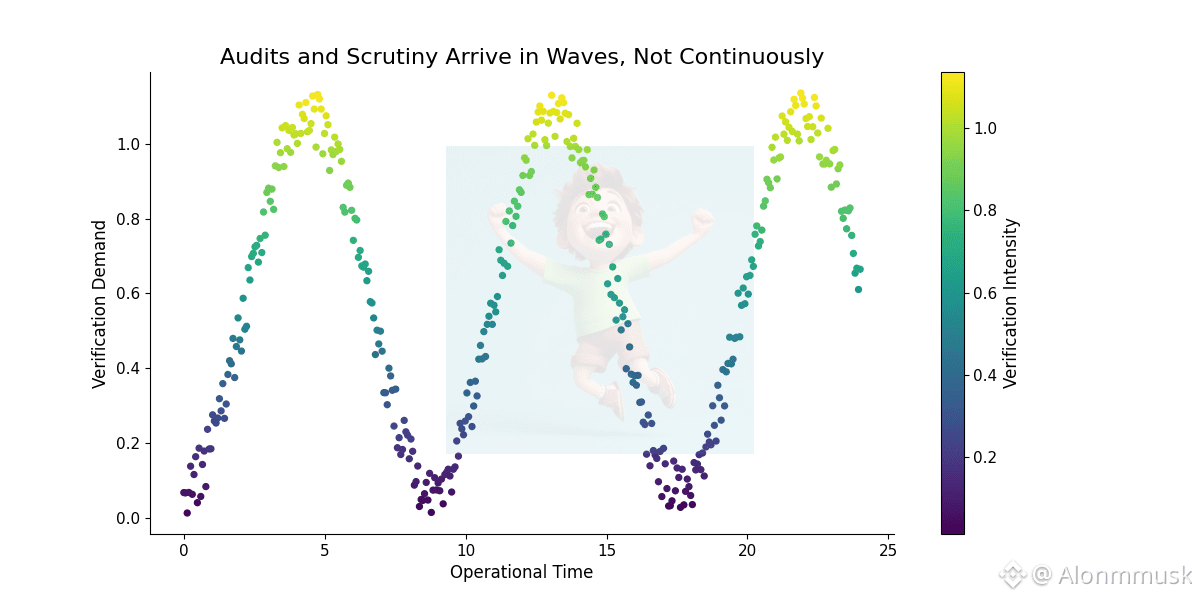
Censorship resistance follows the same logic. It is not just about blocking transactions. It is about preventing selective enforcement. When constraints are encoded directly into the protocol, they apply the same way regardless of who is watching or applying pressure. That consistency matters more than slogans when systems are stressed.
Economic design supports this stability. Systems built around aggressive incentives often behave unpredictably when conditions are changes. Dusk leans toward predictable economics in practice, that allow builders and users to plan without constant adjustment. For financial infrastructure, stability is usually more valuable than rapid expansion.
Usability improves as a result. Clear rules enforced by code simplify user experience. Participants do not need to interpret vague requirements or rely on offchain assurances. Complexity stays inside the protocol instead of being pushed onto users.
As crypto continues to mature, the networks that last will be the ones that assume observation is permanent. Markets will be watched. Rules will be challenged. Systems will be tested. Infrastructure built around ideal conditions will struggle. Dusk is designed for this environment by aligning privacy, enforcement, and verification into a single execution model.
What defines Dusk is not speed or spectacle, but consistency. Its design choices point in the same direction. Verification without exposure. Enforcement without discretion. Privacy that holds up under pressure. The network stays focused on this problem space instead of drifting with trends.
Dusk is not avoiding scrutiny. It is preparing for it. By building systems that remain private, verifiable, and enforceable while being watched, it aligns with a phase of crypto where credibility matters more than novelty.
When attention fades and pressure increases, systems that continue to function are the ones that remain relevant. Dusk is building for that outcome.
For educational purposes only. Not financial advice. Do your own research.
@Dusk #Dusk #dusk $DUSK
