



In 2016, Ethereum was still young.
No DeFi empires.
No NFTs.
No trillion-dollar narratives.
Just a bold idea… and a massive experiment called The DAO.
The DAO raised over $150 million worth of ETH — unheard of at the time. It was meant to prove that code could replace traditional organizations. No bosses. No middlemen. Just smart contracts.
Then, in a single moment, everything broke.
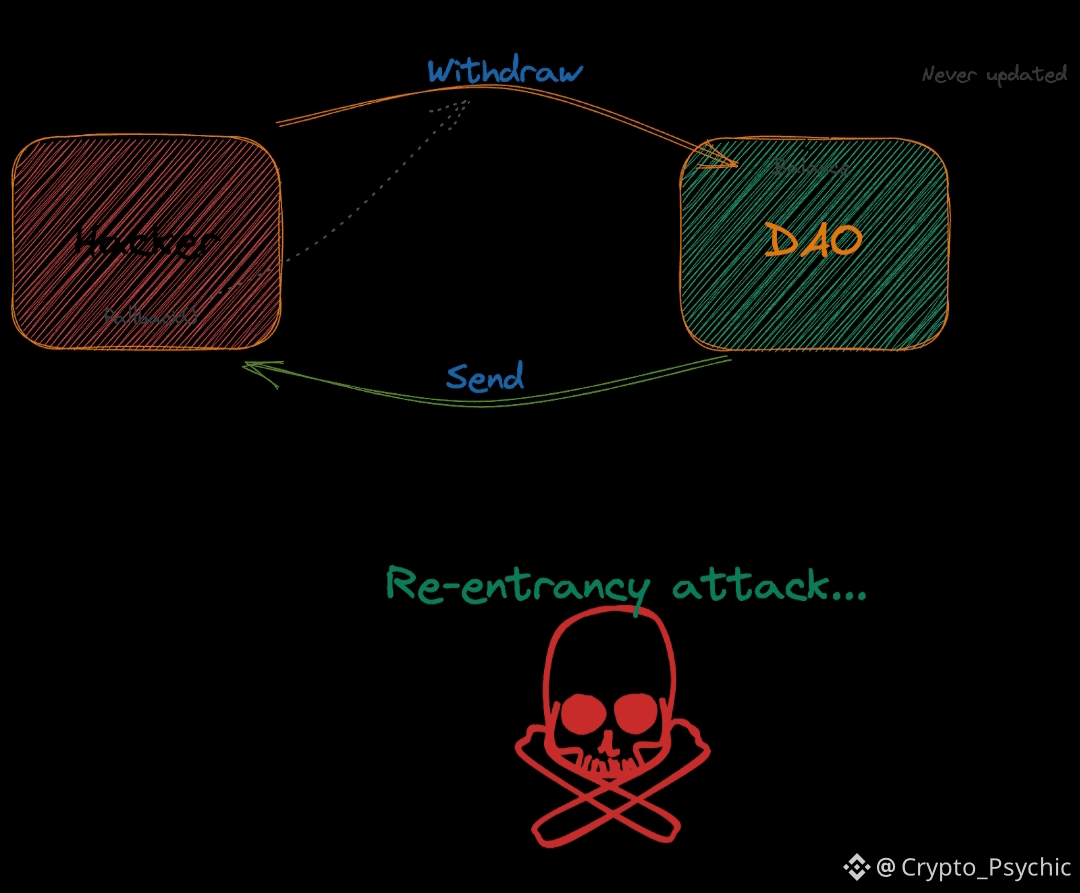
A vulnerability was exploited.
Millions in ETH began draining out in real time.
Panic spread. Prices crashed.
People declared Ethereum finished.
This wasn’t a bear market.
This was an existential crisis.
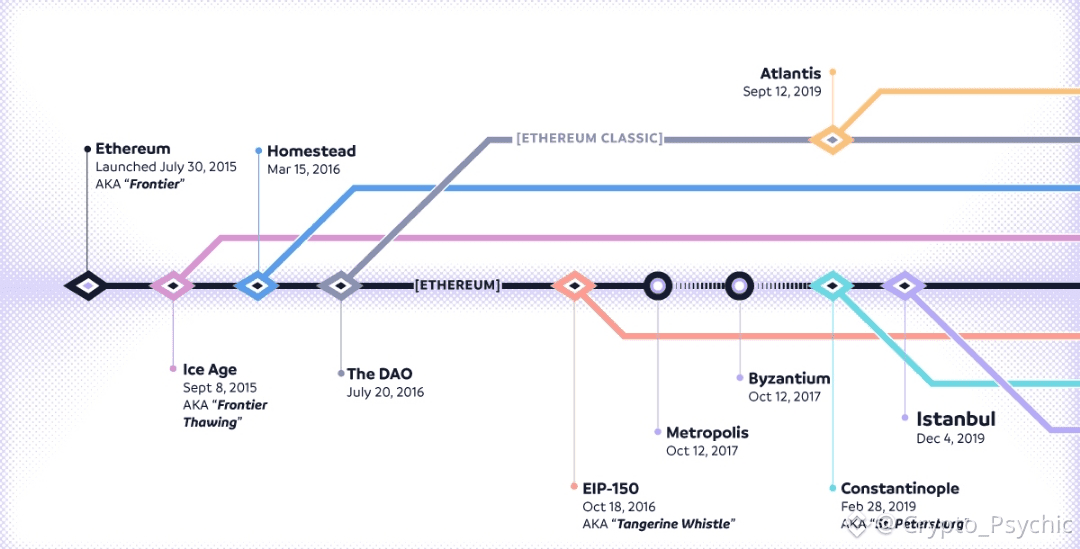
The community faced an impossible choice:
Do nothing, and accept that code is law — even if it destroys trust.
Or intervene, rewrite history, and save the ecosystem.
At the center of it all was Vitalik Buterin — not as a ruler, but as a voice among thousands.
Weeks of debates followed. Forums exploded. Ideologies clashed.
There was no “right” answer.
In the end, Ethereum hard-forked.
Funds were recovered.
Ethereum survived.
And something rare happened in finance: people were given a choice.
Those who believed intervention was wrong stayed on the original chain — now known as Ethereum Classic.
Those who believed survival mattered more continued on Ethereum.
Both chains lived.
That moment taught crypto a brutal but necessary lesson:
Decentralization isn’t about perfection.
It’s about transparent decisions when everything is on the line.
Ethereum didn’t grow because it never failed.
It grew because it failed publicly… and adapted.
Every DeFi protocol, every NFT, every layer-2 traces back to that night.
Markets reward resilience, not purity.
And sometimes, the chains that survive aren’t the ones that never break —
but the ones willing to face their breaking point.
That’s not just crypto history.
That’s how real systems are forged.
