


There is a moment, usually right after a tap on a screen or the scan of a QR code, when money either feels instant and invisible or clunky and painfully on-chain.
For most people outside crypto, stablecoins only become interesting when they behave like the first case no gas pop-ups, no native token juggling, and no suspenseful wait for confirmation.
Plasma $XPL is one of the first chains that openly claims it can deliver that UX at scale gasless, sub-second stablecoin transfers, wrapped in Bitcoin-anchored security and EVM familiarity.
The real question is not whether it can push transactions through quickly, but whether it can do that while staying meaningfully decentralized as volumes, use cases, and political attention all increase.
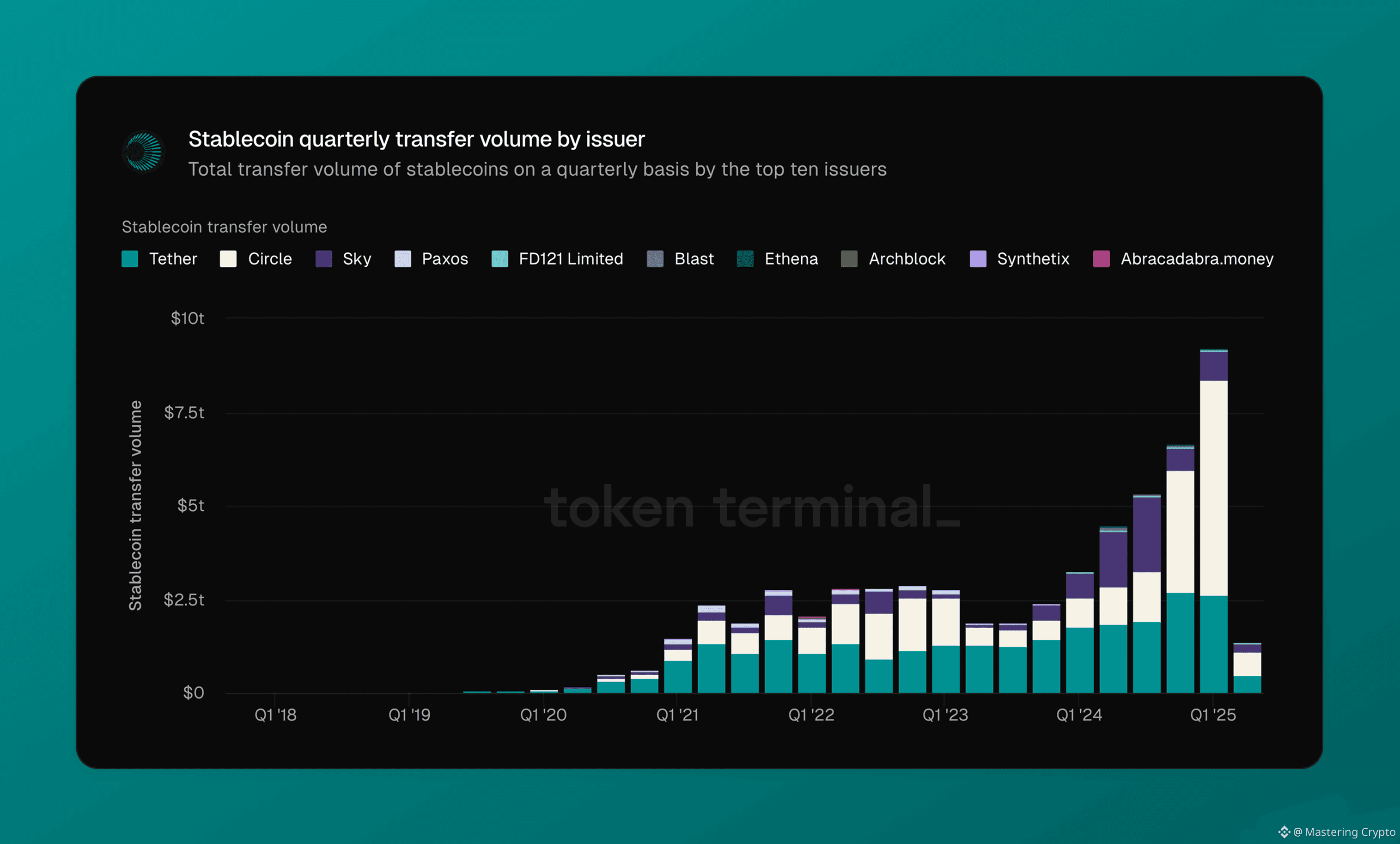
Plasma positions itself as a stablecoin-native Layer 1, deliberately optimized around USDT and similar assets rather than trying to be a general-purpose everything-chain.
The core promise is simple to describe and hard to deliver users should be able to send stablecoins with sub-second finality and, in many cases, pay no explicit network fee at all.
To support this, Plasma relies on a custom consensus engine called PlasmaBFT, an enhanced HotStuff-style BFT protocol that pipelines block proposals and votes so that multiple steps happen in parallel instead of sequentially.
This pipelining, combined with a design that targets thousands of transactions per second, is what allows the network to commit transfers in under a second while keeping latency predictable enough for real-world payments.
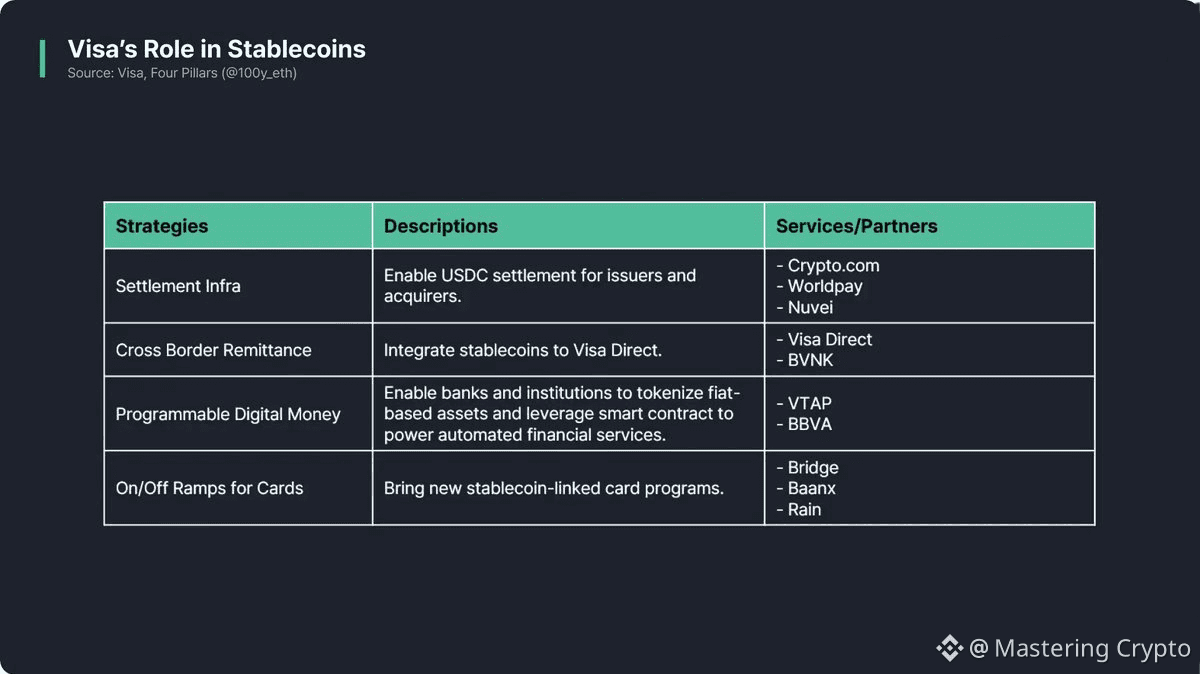
The gasless experience many users will notice first is not magic it is a protocol-level paymaster system that selectively sponsors fees for specific, standardized stablecoin transfers, especially USDT.
A treasury backed by XPL and managed by the Plasma Foundation underwrites those fees, applying rate limits and eligibility checks so the subsidy cannot be trivially drained or exploited by spam.
Outside of those sponsored paths, the network still charges gas, typically in XPL but with flexibility to accept other tokens via built-in paymaster contracts that let applications configure alternative gas assets.
The result is a spectrum of UX at one end, fully gasless USDT transfers for mainstream users at the other, power users and DeFi protocols paying in XPL or even in stablecoins themselves when customization matters more than pure subsidy.
Under the hood, Plasma tries to keep the decentralization story intact by running a proof-of-stake validator set secured with XPL staking and a BFT consensus that can tolerate a minority of faulty or malicious nodes.
Validators stake XPL to participate, earn rewards for honest behavior, and face a reward-slashing model in which misbehavior costs them their future yields rather than their principal stake, a twist intended to encourage participation while still punishing attacks.
The architecture emphasizes horizontal scalability rather than pushing hardware requirements into data-center territory, Plasma’s modular design aims to keep nodes relatively accessible while distributing workload so that not every node has to process every detail at all times.
If that balance holds, decentralization can remain credible even as usage grows, because the cost of running a validating node should not spiral into institutional-only territory.
Framed against the broader industry, Plasma reads like a direct response to the frictions of stablecoin UX on general-purpose chains.
Ethereum’s gas markets, even in calmer periods, ask users to manage a volatile native asset just to move what is supposed to be a dollar on-chain, while many Layer 2s still expect some form of native token for fees.
Stablecoin-centric chains and appchains are emerging across ecosystems, but Plasma leans harder into the idea that fees themselves can be abstracted away or paid in the very asset being moved.
It also aligns with a growing trend of Bitcoin-anchored designs that try to blend Bitcoin’s security with EVM programmability, using bridges and validator-secured mechanisms to bring BTC and stablecoins into more expressive environments.
In that sense, Plasma is not just another Ethereum-style L1 it is part of a movement to turn Bitcoin’s gravity and stablecoin demand into a combined payments rail.
From a stability and censorship-resistance angle, the elephant in the room is the role of centralized actors Tether, major exchanges, and the Foundation itself.
Plasma’s ecosystem has visible backing from Tether, Bitfinex, and prominent venture investors, which accelerates liquidity and integration but also concentrates influence, especially in the early validator and governance set.
The protocol-level paymaster is, at least today, funded and governed in a fairly centralized way, and that introduces governance risk policy shifts on what is subsidized, who gets priority, or how rate limits are tuned can materially change user experience.
There is also the reality that stablecoins like USDT can be frozen at the issuer level, regardless of how decentralized the base chain claims to be, which means Plasma’s decentralization is structurally bounded by the centralization of its core asset.
At the same time, decentralization is not a binary switch but a gradient of tradeoffs, and Plasma’s design does reflect an effort to push those tradeoffs in a constructive direction.
The use of EVM compatibility and common tooling lowers barriers for independent developers and infrastructure providers to join, which can organically expand the validator, relayer, and bridge operator sets over time.
The plan for cross-chain interoperability, especially with a trust-minimized Bitcoin bridge and potential future upgrades like BitVM2, points toward a future where Plasma is one node in a larger, more decentralized network of chains rather than a walled garden controlled by a few institutions.
If governance progressively becomes more on-chain and stakeholder-driven, some of the early centralization around the paymaster and key parameters could soften as the ecosystem matures.
Viewed from a personal, builder-oriented lens, Plasma feels like an experiment that leans into what most users actually care about does my money move instantly, cheaply, and reliably.
The gasless transfers and sub-second finality address precisely the kind of UX that product teams have been hacking around for years, using custodial abstractions, off-chain settlement, or opaque fee models.
For developers, the presence of protocol-level paymasters and flexible gas tokens suggests a toolkit for designing experiences that look almost Web2-native while still settling on a verifiable chain.
That is exciting, but it also raises questions about how much of the system’s complexity ends up being hidden behind centralized services, wallets, or foundations that act as de facto gatekeepers.
The claim that Plasma can stay decentralized at scale while offering gasless, sub-second stablecoin transfers ultimately hinges less on the raw technology and more on how governance, validator economics, and ecosystem incentives evolve as the network grows.
Technically, PlasmaBFT and the modular infrastructure appear capable of sustaining high throughput without collapsing into a tiny cartel of industrial-grade validators, especially if hardware requirements remain modest and delegation widens participation.
Economically, as long as XPL’s role in staking, rewards, and potentially paymaster funding remains transparent and broadly distributed, the network can push back against centralizing pressure from a few large holders or partners.
The social layer who runs nodes, who controls bridges, who steers protocol upgrades will probably decide whether Plasma ends up closer to a decentralized public utility for stablecoins or a highly efficient but tightly controlled payment rail.
Looking forward, the most plausible future is one where Plasma neither achieves perfect decentralization nor collapses into pure corporatized infrastructure, but instead carves out a middle path shaped by market forces and regulatory realities.
If stablecoin volume continues to grow and demand for instant, predictable transfers keeps rising, networks like Plasma that can combine user-first design with verifiable settlement will gain real leverage over legacy payment rails.
The pressure will then be on the community, validators, and governance to keep pushing the system toward greater openness more diverse validators, transparent paymaster policies, robust bridges so that the decentralization story does not quietly erode beneath an impressive UX surface.
In that sense, the question can Plasma stay decentralized at scale is less a static technical puzzle and more an ongoing commitment that will need to be renewed every time the network hits a new growth milestone.

