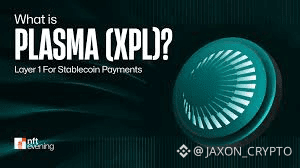
When I think about money, I do not think about numbers on a screen. I think about trust, timing, and the quiet fear people feel when a payment is delayed or fails. Plasma is built from that emotional truth. It is a Layer 1 blockchain created specifically for stablecoin settlement, and that single focus makes it feel different. Instead of forcing people to adapt to complex systems, Plasma adapts to how people already use money in real life.
The core idea behind Plasma is clear. Stablecoins are no longer a future concept. They are already being used every day for salaries, remittances, business settlements, and savings. Plasma accepts this reality and builds everything around it. The blockchain is fully EVM compatible, which means developers can use familiar tools without friction. This lowers risk and speeds up innovation. At the same time, Plasma introduces its own consensus mechanism that delivers sub second finality. That speed matters emotionally. When someone sends money, they want closure. They want to feel sure, not uncertain.
One of the most meaningful design choices is the stablecoin first gas model. Users can pay transaction fees using stablecoins instead of holding a volatile asset just to move funds. This removes stress and confusion, especially for people who only want payments, not speculation. Plasma also enables gasless stablecoin transfers through relayer systems. For users, this feels almost magical. You send money and it simply works. No calculations, no extra steps, no fear of making a mistake.
Security is treated with deep respect. Plasma is designed to anchor its state to Bitcoin, adding an external layer of neutrality and resistance. This is not about marketing. It is about protecting transaction history and reducing the risk of silent censorship. If money represents freedom, then neutral infrastructure protects that freedom. This matters deeply for users in regions where financial systems are fragile or unfair.
Plasma’s tokenomics are designed to support the network without exploiting users. The native token is used for staking, securing the network, and participating in governance. Those who help protect and guide the system have real responsibility. At the same time, everyday users are not forced to interact with the token. Stablecoin gas keeps the experience simple and accessible. Network fees can support long term development and ecosystem growth while staying aligned with real usage.
The roadmap reflects patience and discipline. Early stages focus on testing, validator stability, and developer onboarding. Later stages introduce advanced user experience features, deeper security measures, and wider adoption in regions where stablecoins already matter. Growth is meant to feel organic, not rushed.
There are risks, and ignoring them would be dishonest. New consensus systems require careful testing. Stablecoin regulations can change. Centralization pressures must be actively resisted. Stablecoins themselves can lose trust. Plasma acknowledges these risks and builds with caution rather than denial.
What makes Plasma feel human is its intention. It is not loud. It is not chasing attention. It feels like infrastructure built by people who understand that money carries emotion. Stress when it fails. Relief when it works. Hope when it becomes reliable. Plasma is trying to make digital payments feel steady, simple, and fair. If the future of money is going to be on blockchains, then it should also feel safe for the people who rely on it every day.