

Plasma is one of those projects that immediately grabbed my attention because it approaches digital money differently. I’ve seen countless blockchains try to do everything at once DeFi, NFTs, games, governance and often, in the process, they forget the simplest thing: moving money should be effortless. That’s where Plasma stands apart. From my perspective, it’s not about hype or flashy features; it’s about making stable digital dollars feel like real money instant, inexpensive, and frictionless.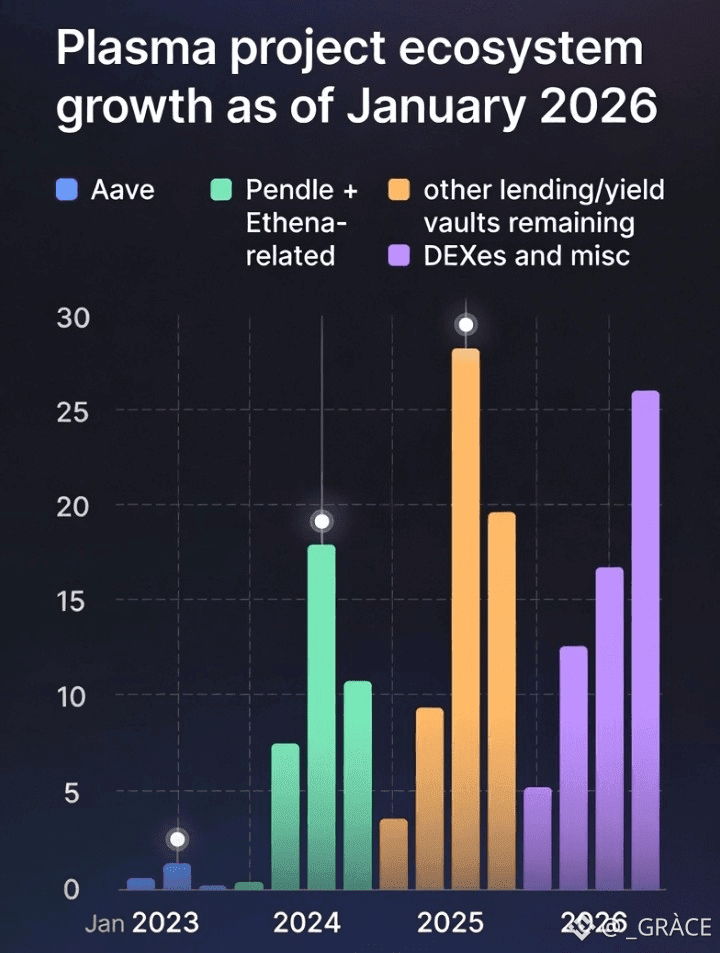
When I first explored Plasma XPL, what struck me was the clarity of its mission. This isn’t a platform trying to host every possible application. Its focus is laser-sharp: payments first. And it shows in every layer of its design. You can feel that someone deliberately thought about the end user someone who just wants to send value without worrying about technical complications. That simplicity is surprisingly rare in crypto today.
I’ve always been intrigued by how networks treat stablecoins. Most chains treat them like any other token: you need gas, you juggle multiple balances, and sometimes the costs outweigh the convenience. Plasma flips this model. It makes stablecoins native to the system. In practical terms, that means sending USDT doesn’t require extra tokens or gas calculations. You just send value, period. From my experience, this is the kind of usability that will determine which networks actually gain mainstream adoption. People don’t want to think like crypto engineers they want to think like they’re using money.
Behind the scenes, Plasma’s architecture is still powerful. It’s fully compatible with the Ethereum Virtual Machine (EVM), so developers don’t have to start from scratch or learn an entirely new ecosystem. For me, this is a clever combination: simplicity for users, flexibility for builders. It’s like getting a sleek, user-friendly car that runs on a proven engine under the hood. Developers can leverage familiar tools while the average user enjoys a frictionless experience.
One of the aspects that really earned my respect is how Plasma handles security. Many blockchains try to secure themselves internally through staking or validator systems. Plasma takes a different approach: it anchors its state to Bitcoin. To me, this is brilliant. You get the censorship resistance and neutrality of Bitcoin without compromising speed. Transactions finalize in seconds, yet the ledger’s history benefits from one of the strongest security foundations in the world. In my opinion, this is a rare balance between speed, reliability, and trust exactly what payments infrastructure needs.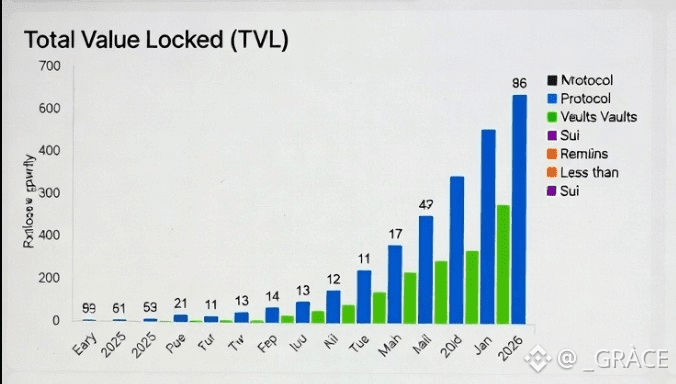
Thinking about use cases made this even more tangible for me. Take remittances, for example. Migrant workers send billions of dollars home every year. Traditional systems are slow, costly, and opaque. A network where stable digital dollars move instantly and cheaply without extra steps or token juggling can actually change lives. Or consider small businesses: a merchant accepting digital dollars doesn’t want unpredictable fees eating into cash flow. Plasma removes that friction entirely, creating a payments experience that mirrors the simplicity of cash or familiar mobile wallets.
It’s also worth noting that this focus on payments isn’t limiting. On the contrary, I see it as a strategic advantage. Too many networks try to be everything, which dilutes attention and often results in poor performance. Plasma demonstrates that specialization can lead to excellence. By concentrating on stable digital dollar transfers, it lays the groundwork for a future where financial services can be built on a predictable, efficient, and secure base layer.
Economics and adoption are also thoughtfully designed. Because users don’t need to hold fuel tokens or calculate gas, onboarding is seamless. In my experience, this reduces hesitation and encourages more people to participate. It’s a subtle but critical difference: the easier it is to start using a network, the faster it grows. And with EVM compatibility, developers can build applications, merchant tools, and financial services on top of this reliable payments layer without reinventing the wheel.
Plasma’s emphasis on native stablecoins and instant transfers reflects a broader trend I’ve been observing: the blockchain industry is finally realizing that real-world utility matters more than theoretical capability. Consumers and businesses aren’t looking for networks with every possible feature. They want reliable, low-cost rails for moving money. Plasma nails this.
From a personal standpoint, interacting with Plasma feels intuitive. Unlike some chains where you’re constantly checking fees or managing gas balances, here the experience is straightforward. Send money, it arrives. That simplicity is powerful, and it’s something I genuinely appreciate because it reflects an understanding of how people actually want to use digital money.
Another insight that became clear to me is the potential for ecosystem growth. A strong, predictable payments layer can serve as a foundation for all kinds of financial applications automated transfers, subscription payments, merchant interfaces, cross-border services. Developers can focus on building products rather than wrestling with infrastructure quirks. From my perspective, this is where long-term value emerges: not from hype, but from utility.
Security remains central to my confidence in the network. Anchoring to Bitcoin provides a neutral, censorship-resistant backbone. In a world where digital money could be targeted, censored, or manipulated, that layer of protection matters. It reassures me as a user and as someone interested in sustainable blockchain growth. Reliability isn’t about speed alone; it’s about knowing your funds are secure, even if something goes wrong elsewhere.
I also see this as a potential bridge between traditional finance and crypto-native solutions. Banks, payment processors, and regulators value predictability, stability, and clarity. Plasma delivers all three. With fast settlement, negligible fees, and clear security models, the platform could serve as a foundation for compliant digital money flows that integrate with existing financial systems a critical step for broader adoption.
When I step back and look at the bigger picture, what excites me most is the vision of digital dollars as everyday money. Not speculative assets, not experimental tokens, but actual money people use daily. Plasma’s approach focused, secure, and user-centric makes that vision feel achievable. I can imagine sending money across the world in seconds, paying for services instantly, or building applications that automate payments without any friction. That’s the future Plasma is building, and in my experience, it’s closer than most people think.
To sum up, Plasma XPL is not about trying to be everything. It’s about doing one thing exceptionally well: moving stable digital dollars like money should move. Low friction, high security, immediate settlement, and EVM compatibility combine to create a platform that is practical, reliable, and ready for real-world adoption. From my perspective, this kind of focused, payments-first thinking is exactly what the blockchain industry needs to transition from hype to utility.
I’m genuinely excited to see where Plasma goes from here. Its design shows a deep understanding of both user experience and developer needs. It’s a rare balance one that makes me confident that if stablecoins become part of everyday life, Plasma XPL will be infrastructure that people actually rely on, not just talk about. In a space often dominated by speculation and complexity, Plasma’s commitment to simplicity, usability, and security stands out. And that, for me, is why it’s worth following closely.

