

@Dusk Network is a layer-1 blockchain project launched in 2018 with a clear premise: most existing blockchains are poorly suited for real financial markets. Early public blockchains prioritized radical transparency, which works well for open, permissionless systems but clashes with the realities of regulated finance. Financial institutions cannot function if every transaction, balance, and counterparty relationship is visible to everyone. At the same time, regulators require systems that are verifiable, auditable, and legally enforceable. Dusk is built specifically to operate within this tension, aiming to deliver privacy for users while still supporting regulatory oversight and compliance.
The problem Dusk addresses is practical rather than ideological. Traditional financial systems rely on custodians, clearing houses, and settlement layers because regulation, confidentiality, and trust demand structured intermediaries. While blockchain technology offers clear benefits—such as faster settlement, reduced costs, and global accessibility—most networks impose an uncomfortable choice: full transparency or tightly controlled, centralized permissioned systems. Dusk rejects this binary. From the start, it treats privacy and compliance as core architectural principles, adapting blockchain design to institutional requirements instead of forcing institutions to adopt crypto-native assumptions.
Architecturally, Dusk is designed as a modular network rather than a monolithic chain. Different layers perform distinct functions, allowing the system to evolve alongside regulatory and institutional needs. At its base lies the consensus and settlement layer, commonly referred to as DuskDS. This component is responsible for validating transactions and finalizing ledger state. In financial markets, finality is critical—once a transaction is settled, it must be irreversible and legally sound. Dusk emphasizes fast and deterministic finality, ensuring transactions are conclusively settled rather than probabilistically confirmed.
Above the settlement layer are execution environments where applications operate. One such environment is compatible with Ethereum, enabling developers to deploy smart contracts using established Ethereum tooling and languages. This compatibility lowers the entry barrier for developers while allowing applications to benefit from Dusk’s underlying privacy and compliance mechanisms. In addition, Dusk supports execution environments built specifically for confidential computation, which are better suited for applications handling sensitive financial information.
Privacy on Dusk is implemented selectively rather than absolutely. The network relies heavily on zero-knowledge cryptography, which allows transactions to be verified as valid without exposing their underlying details. In practice, this means transactions can meet compliance requirements and remain auditable while keeping amounts, identities, and strategies confidential. This mirrors traditional financial systems, where transaction details are private but accessible to regulators and auditors when legally required. Importantly, Dusk embeds this selective disclosure directly into the protocol instead of relying on off-chain solutions.
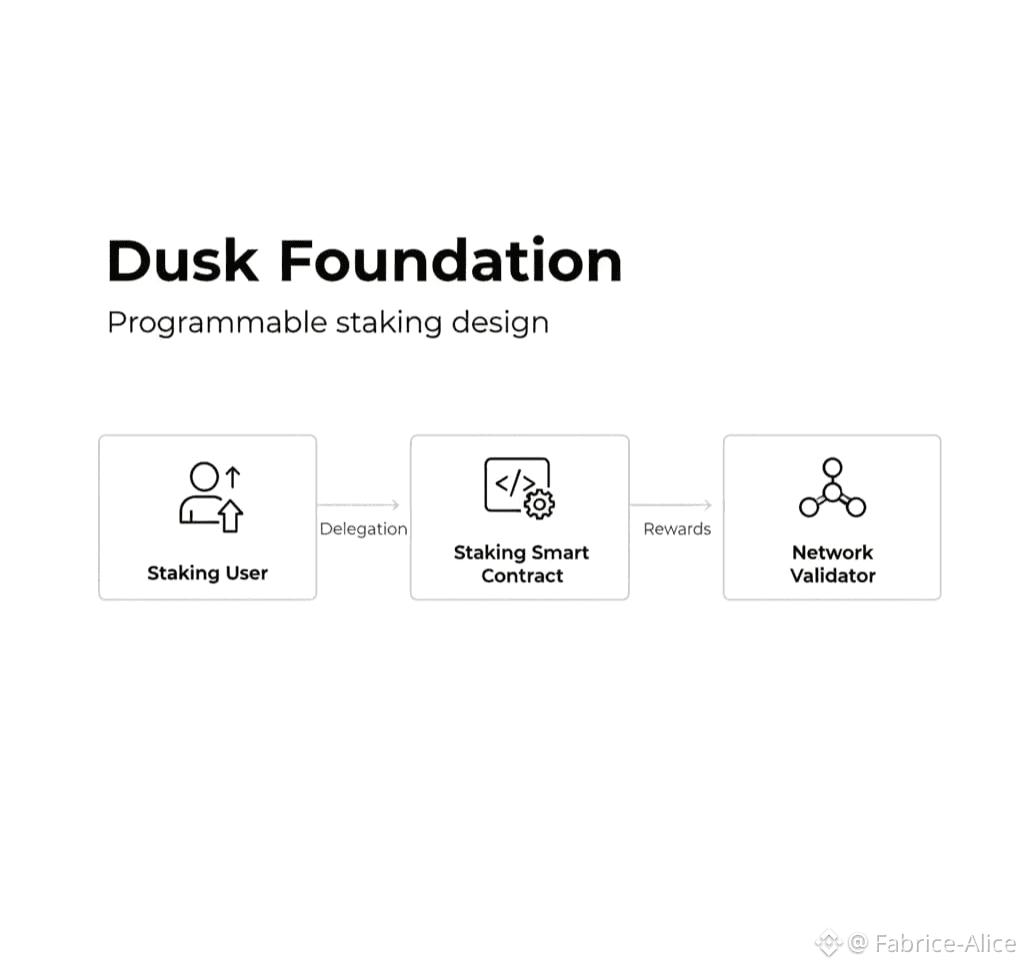
The DUSK token underpins the network’s economic model. It is used to pay transaction fees and smart contract execution costs, ensuring fair allocation of network resources. Validators must stake DUSK tokens to participate in consensus and secure the network. By committing economic value, validators face penalties for dishonest behavior, aligning security with financial incentives. In return, they receive staking rewards, encouraging long-term participation and reliability. Over time, the token’s value is intended to reflect genuine network usage, particularly activity related to asset issuance, trading, and settlement.
A key differentiator for Dusk is how closely its token economy is tied to real financial use rather than pure speculation. As regulated assets, compliant DeFi products, and institutional settlement flows increase on the network, demand for block space and security grows accordingly. This creates a structural feedback loop in which real-world adoption directly supports the network’s economic sustainability.
Rather than positioning itself in isolation, Dusk integrates with the broader blockchain ecosystem. Ethereum compatibility enables developers, assets, and ideas to move across networks more easily. Interoperability mechanisms allow value to flow between Dusk and other chains while preserving Dusk’s privacy and compliance guarantees. In this way, Dusk functions as a specialized component within a multi-chain landscape, focusing on use cases that general-purpose blockchains struggle to accommodate.
Real-world applications are central to Dusk’s value proposition. Tokenized securities represent a major focus area. Financial instruments such as equities and bonds can be issued directly on-chain with compliance rules encoded into their logic. Ownership transfers, dividend distributions, and eligibility restrictions can be enforced automatically. For institutions, this reduces operational friction and counterparty risk. For markets, it accelerates settlement while maintaining appropriate transparency without revealing sensitive data.
Institutional DeFi is another critical use case. While retail DeFi prioritizes openness, institutional participants require identity verification, risk management, and legal certainty. Dusk enables financial activities such as lending and trading in environments where participants are verified but their positions and strategies remain confidential. This allows banks, funds, and corporations to use blockchain infrastructure without breaching regulatory obligations.
Dusk also supports the issuance of regulated stablecoins and digital currencies. By aligning with compliance frameworks such as MiCA, the network enables legally recognized digital money issued by regulated entities. These assets can serve as settlement instruments within on-chain financial markets, bridging traditional finance and decentralized systems. Collaborations with licensed exchanges and financial institutions demonstrate that Dusk’s model is being tested within real regulatory contexts rather than remaining purely theoretical.
Despite its progress, Dusk faces significant challenges. Regulatory requirements vary widely across regions and continue to evolve, making global compliance difficult. Institutional adoption is slow, as trust and infrastructure changes take time. Competition from both public and permissioned blockchain platforms is intense. From a technical standpoint, maintaining secure and scalable privacy mechanisms is complex, and any failure could damage confidence in the network.
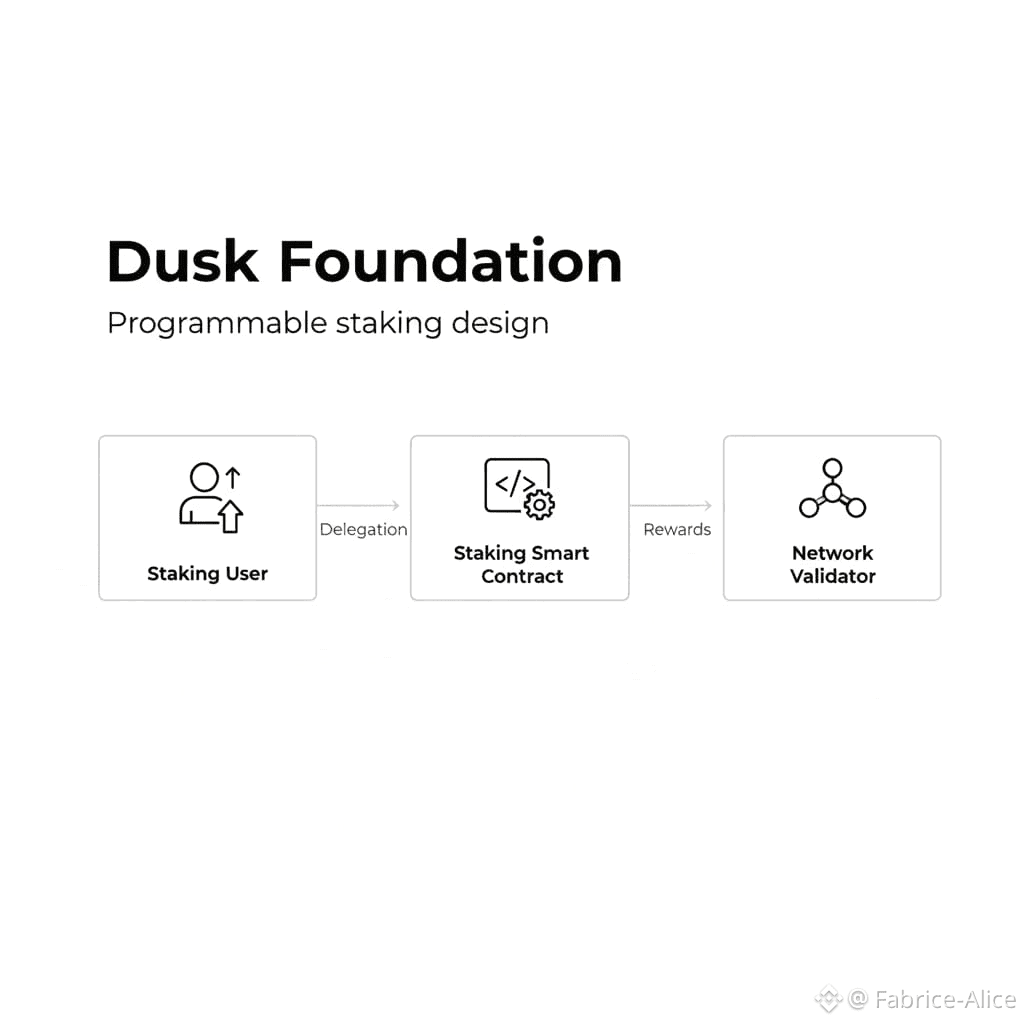
Ultimately, Dusk’s success will depend on execution. While the architectural foundations are established, long-term viability requires sustained developer engagement, deeper liquidity, and continued institutional participation. Improvements in governance, staking design, and developer tooling will be essential. If Dusk succeeds, it could emerge as a foundational layer for regulated digital finance—complementing existing systems rather than replacing them.
In an industry often driven by speculation and short-term trends, Dusk follows a more measured path. It prioritizes the constraints of law, regulation, and real financial operations instead of ignoring them. Whether it becomes a core pillar of future financial infrastructure remains uncertain, but its approach underscores a critical insight: for blockchain technology to have lasting relevance beyond crypto, it must align with how finance actually operates in practice, not just how it might work in theory.
