

People talk about stablecoins like they are just another crypto token. But most people do not use them that way. They use them like money. They save in them. They send them to family. They pay freelancers. They move funds between businesses. They do it because it feels like a digital dollar that travels fast.
Then the friction shows up. A user wants to send USD₮. The wallet asks for gas. The gas is not USD₮. It is a separate token. The user has none. The payment stops before it starts. Even when the user has gas, the network can feel slow. It can feel unpredictable. Fees can jump. Transactions can fail. This is fine for some crypto activity. It is bad for payments.
This is the reason people started asking a new question. What if stablecoins need their own chain. Not a chain that treats stablecoins as “one of many assets.” A chain that treats stablecoins as the main job. That is the idea behind Plasma.
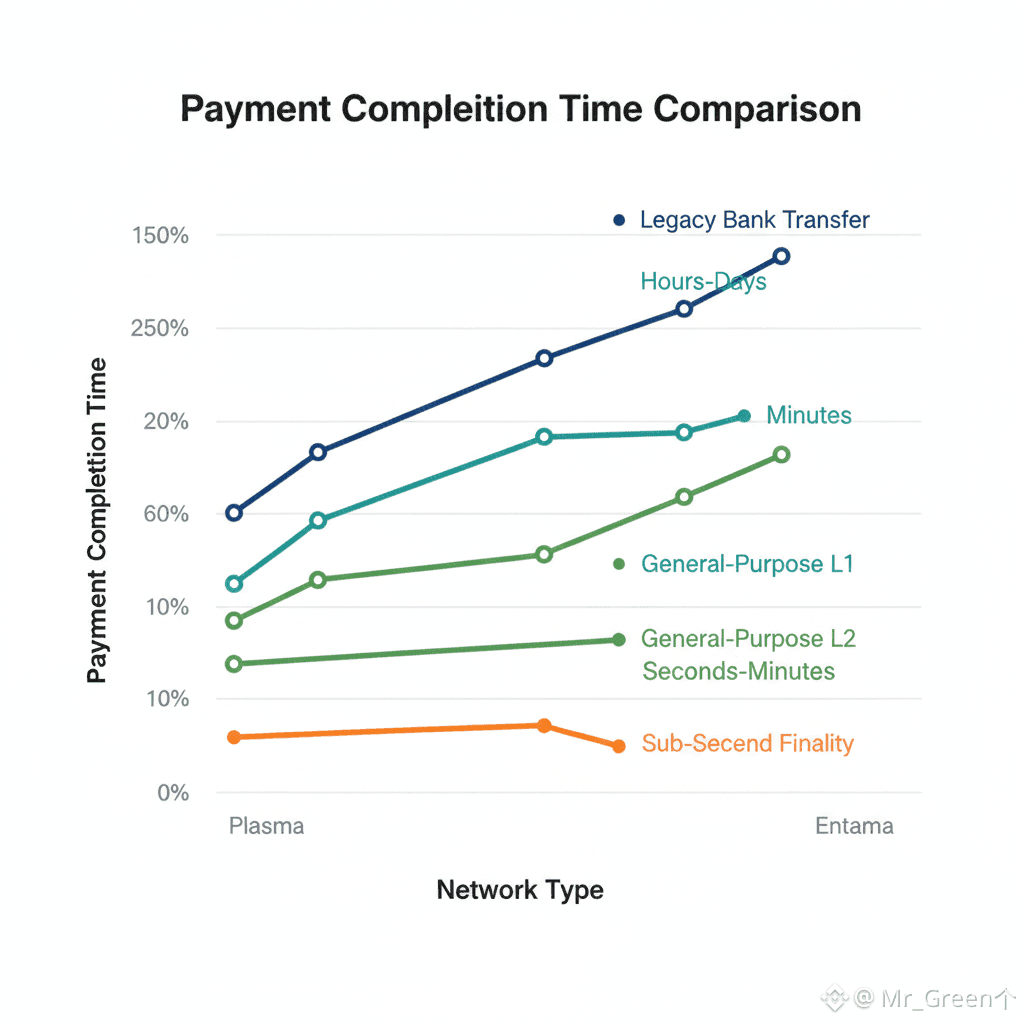
Plasma describes itself as a Layer 1 built for global stablecoin payments. It is not shy about the focus. It says it is purpose-built for stablecoin settlement and payment apps. It also says it is fully EVM compatible. That matters because it keeps the door open for builders. They can use the same Ethereum tools and the same smart contract patterns. Plasma points to tools like Hardhat and Foundry, and wallets like MetaMask, as part of the normal flow.
So Plasma is not trying to replace the EVM world. It is trying to give the EVM world a chain that behaves like a payment network. Binance Research frames Plasma in the same way. It calls Plasma a high-performance, EVM-compatible Layer 1 built for stablecoins. It highlights the big frictions Plasma wants to remove. It lists fees, failed transactions, latency, and rough UX. It also lists Plasma’s key features. Those include zero-fee USD₮ transfers, stablecoin-first gas, sub-second finality through PlasmaBFT, and Bitcoin-anchored security.
This is where the “own chain” argument becomes real. Stablecoins do not only need smart contracts. They need reliability. They need fast finality. They need a simple fee model. They need a path for mainstream users who never want to learn what “gas” is.
Plasma’s approach starts with speed and finality. In payments, waiting feels risky. Merchants do not love waiting. Users do not love waiting. Finality is the moment you can treat a transfer as done. Plasma uses a consensus model called PlasmaBFT. Binance Academy explains that PlasmaBFT provides fast finality and supports high throughput for payment-focused apps. This is not only a technical goal. It is a product goal. It is the difference between “I think it worked” and “it worked.”
Then Plasma tackles the gas problem. For beginners, gas is confusing. It is also a source of failure. Plasma’s story is simple. If you are sending stablecoins, the experience should feel stablecoin-native. Binance Research describes “stablecoin-first gas” as part of Plasma’s design. It says fees can be paid in USD₮ or BTC via an auto-swap mechanism. That is a big deal for onboarding. It reduces the need to buy a separate gas token before you can do anything.
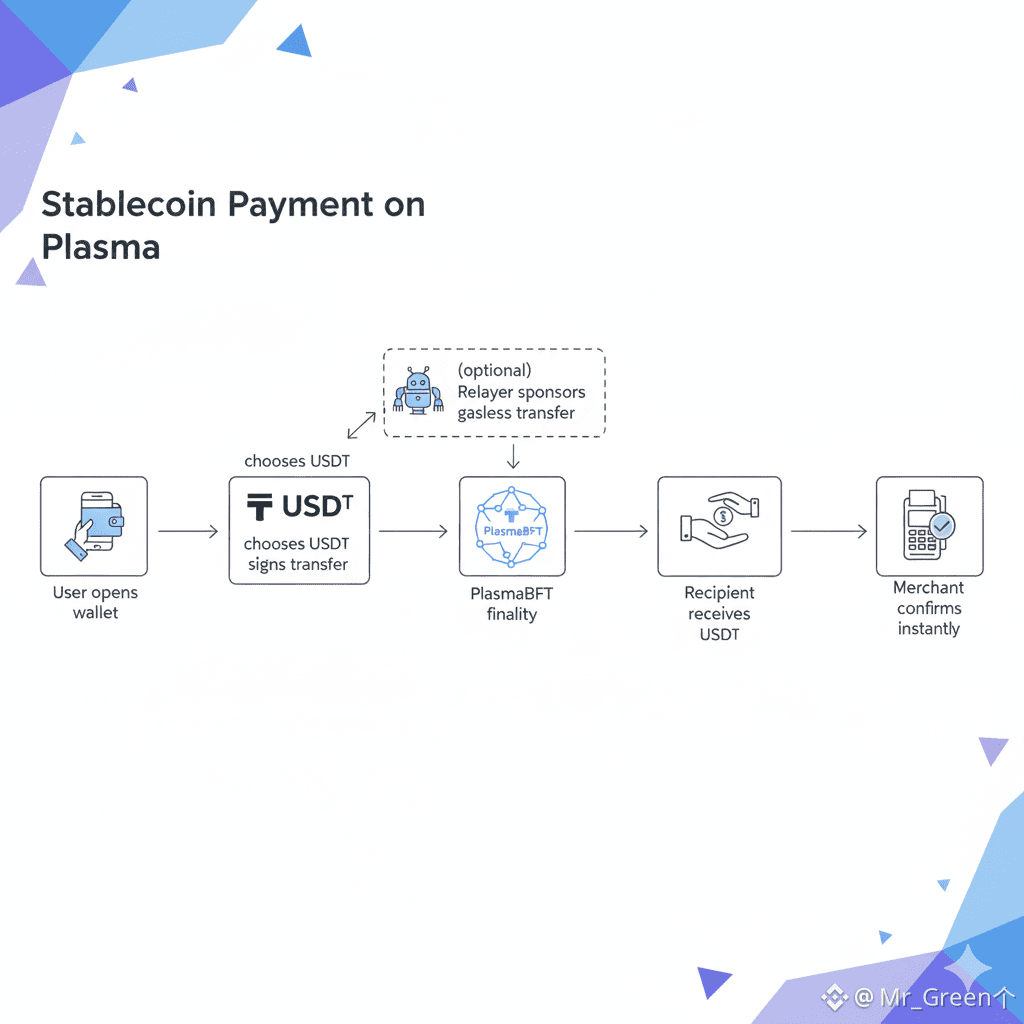
Plasma goes further with the idea of gasless transfers. “Gasless” can sound like magic. It is not magic. It is a sponsorship model. Plasma’s own documentation explains it in plain terms. It says Plasma enables gasless stablecoin payments using an API-managed relayer system for USD₮. It says the system is tightly scoped. It sponsors only direct USD₮ transfers. It also says it uses identity-aware controls to prevent abuse.
Think about what that changes for a normal user. A user can receive USD₮ and send USD₮. They do not need to first buy XPL just to move money. They do not need to understand gas routing. They just send. That is closer to how payment apps work today.
For developers, the same feature becomes a clean product tool. Plasma’s doc is written for teams that want to integrate the Plasma Relayer API for gasless USDT0 transfers. That means a wallet app or a fintech app can build a “send USD₮” flow that feels smooth. It can still be onchain. It can still be verifiable. The gas cost is handled by the sponsor path.
Plasma also keeps the builder story simple in another way. It stays EVM-compatible. Binance Academy states that Plasma is EVM-compatible and supports deploying Ethereum-based smart contracts with minimal effort. It also notes the execution side is built to support payment needs. Coingecko also summarizes Plasma’s execution layer as built on Reth, which supports Ethereum compatibility and contract reuse. This matters because payment apps need more than transfers. They need contracts for escrow. They need subscriptions. They need invoices. They need merchant logic. They need onchain settlement logic that can plug into offchain accounting.
There is also a trust and neutrality story. Payments are not only about speed. They are also about who can block you. Plasma positions “Bitcoin-anchored security” as part of the design. Binance Research includes it as a core feature, and ties it to neutrality and censorship resistance. For many readers, that matters because stablecoins are used globally. They are used in places where access can be fragile. A payment rail that aims to be neutral is a strong narrative.
Plasma also talks about extra stablecoin-native features beyond fees. Binance Academy mentions support for custom gas tokens and a native Bitcoin bridge. Bitfinex’s explainer adds two more points. It repeats the focus on stablecoin payments. It also mentions confidential transactions as part of Plasma’s design goals. This points to a broader theme. Payments often need privacy. Businesses do not want every vendor payment to be public. Users do not want every transaction to be a billboard. Privacy features can be legitimate payment features when designed responsibly.
Now let’s talk about the token for a moment, because beginners will see “XPL” and ask why it exists. In a stablecoin-first chain, the stablecoin is the money users move. The native token is often about security and network incentives. Plasma’s docs lay out XPL tokenomics clearly. The initial supply at mainnet beta is 10 billion XPL. Ecosystem and Growth gets 40%, and 8% unlocks at mainnet beta for launch needs like incentives and integrations. CoinDesk also reported this structure and repeated the 10 billion total supply and the large ecosystem allocation. This helps explain how Plasma plans to fund the early push for liquidity and apps, which is critical for any payments network.
So why do stablecoins “need” their own Layer 1. The honest answer is that they do not need it in theory. They can run on many chains. But at global scale, details become the product. A chain built for many use cases can still be great. Yet stablecoins have a special demand pattern. They need low friction for the smallest transfers. They need finality that feels instant. They need a fee experience that feels like money, not like a game.
Plasma’s bet is that specializing is worth it. It wants a chain where stablecoins are first-class. It wants a chain where sending USD₮ can be zero-fee in a controlled way. It wants a chain where fees can be paid in stablecoins. It wants a chain where developers can still use EVM tools. And it wants a chain that leans on Bitcoin’s neutrality story for added trust.
If Plasma succeeds, the change will feel boring in the best way. A stablecoin transfer will feel like sending a message. A merchant will not worry about waiting. A new user will not get stuck at “insufficient gas.” A developer will not need a new language. They will build a payments app with the same EVM foundation, but with a payment-first chain under it.


