I’m fascinated by projects that quietly reshape the way we handle money, and Dusk is one of them. Founded in 2018, they are building a layer 1 blockchain that puts privacy and regulation at its core. This is not a project chasing hype or viral attention. It’s designed to create a financial system where people and institutions can trust that their money and sensitive information are safe. When I think about Dusk, I feel like it is more than technology. It is a foundation that gives people confidence, a system that lets users participate in finance without fear of exposure or error.
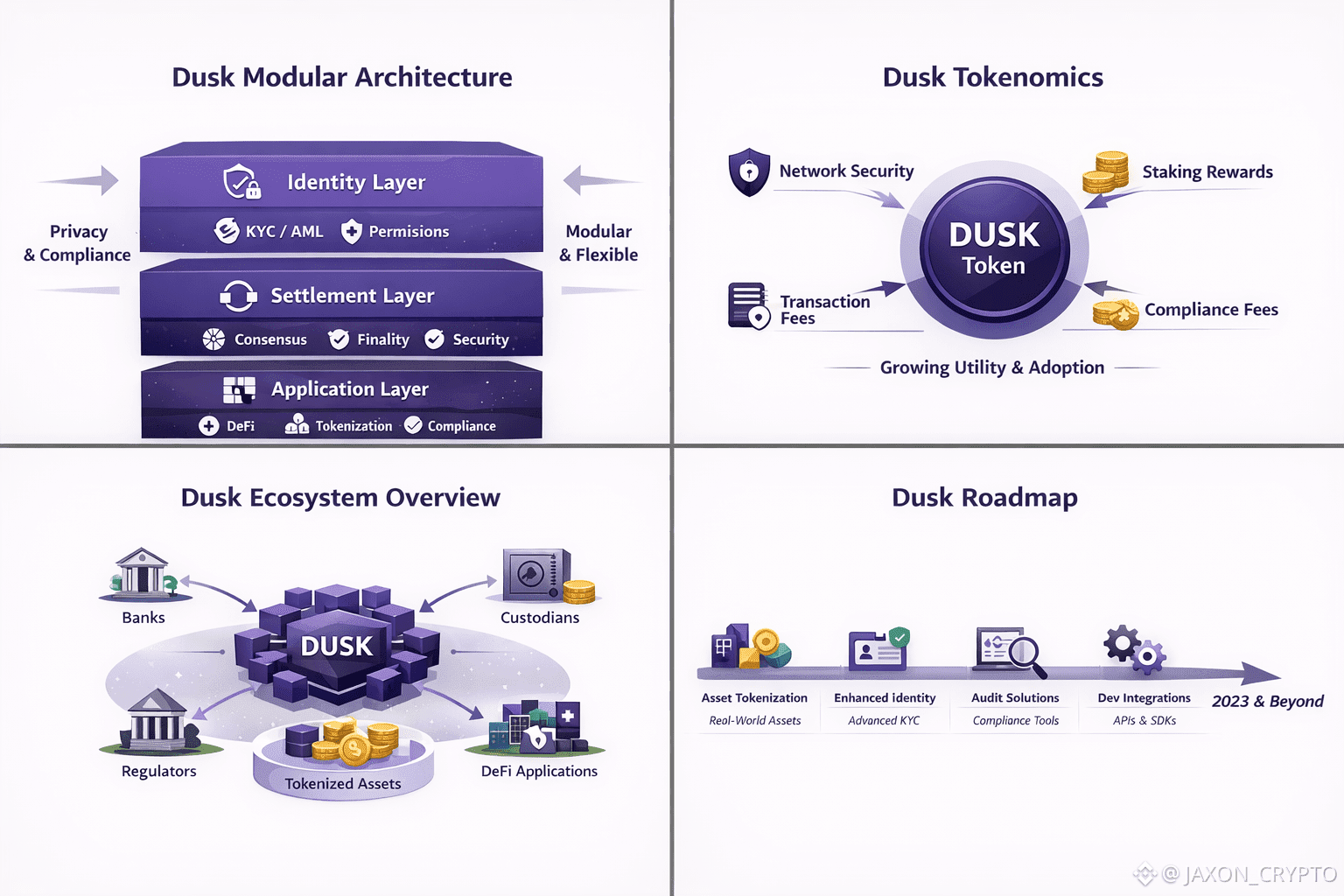
The vision behind Dusk is simple but deeply meaningful. Financial systems fail when they are either opaque or uncontrolled. If privacy is missing, trust erodes. If compliance is missing, regulators step in and confidence is shaken. Dusk solves this by combining both elements. Their modular architecture separates identity, settlement, and application layers so banks, custodians, and regulators can interact safely and transparently. This design allows tokenized assets, compliant DeFi, and institutional-grade applications to flourish without compromising privacy or security. I see it as a bridge between traditional finance and the future, where assets can be digital yet fully compliant.
What makes Dusk remarkable are the features they have built into the system. Privacy is not optional; it is the default. Zero knowledge proofs and selective disclosure allow auditors to confirm compliance without exposing sensitive information. Smart contracts are purpose-built for regulated assets and tokenized real-world securities. Identity and permissioning tools ensure that issuers can control who holds or transfers assets without revealing unnecessary data. The blockchain is optimized for fast finality and scalability, giving transactions the speed and predictability institutions require.
Tokens in the Dusk ecosystem play multiple roles. They secure the network, pay for services, and support staking to align validators with the long-term health of the network. Token utility grows as adoption increases, including fees for issuing tokenized assets, running compliance checks, and accessing privacy-enhancing services. The economic design is careful because stability is essential when people are entrusting real financial value to a blockchain.
The roadmap for Dusk is focused and forward-looking. They are building developer-friendly tools, institutional APIs, and compliance modules that make regulated blockchain adoption practical. Real-world asset tokenization, streamlined identity verification, and auditor-ready reporting are priorities. Everything is built to ensure that adoption is seamless for institutions while preserving security and privacy. I admire how they balance technical ambition with careful planning.
There are risks, of course. Regulations can shift and differ by jurisdiction. If governments require more transparency than Dusk currently plans for, they will need to adapt. Technical vulnerabilities are always possible, and adoption may take time because institutions often move cautiously. These challenges do not diminish the project; they highlight the care and thoughtfulness of the team behind it.
I feel optimistic about Dusk because they are building for long-term impact, not short-term hype. They are creating tools that make finance private, secure, and trustworthy. For anyone curious about tokenized assets, regulated DeFi, or institutional-grade blockchain applications, exploring Dusk’s developer resources and pilot programs is worth it. They are quietly creating a system that opens doors for people and institutions that have been left out of traditional finance, and I believe this kind of innovation has the potential to change lives while building a stronger, more inclusive financial future.