
Decentralized applications are only as strong as the data they rely on. Execution speed, smart contracts, and consensus matter — but if data disappears or becomes inaccessible, the app fails, and decentralization is compromised. That is exactly the problem @Walrus 🦭/acc , $WAL, and Walrus are solving today on Sui.
Walrus is not theoretical infrastructure. Its mainnet is live, storing real blobs for developers and applications, enforcing availability rules, and actively using WAL to secure participation and incentives. This is infrastructure in motion, not a whitepaper promise.
Programmable Blob Custody in Action
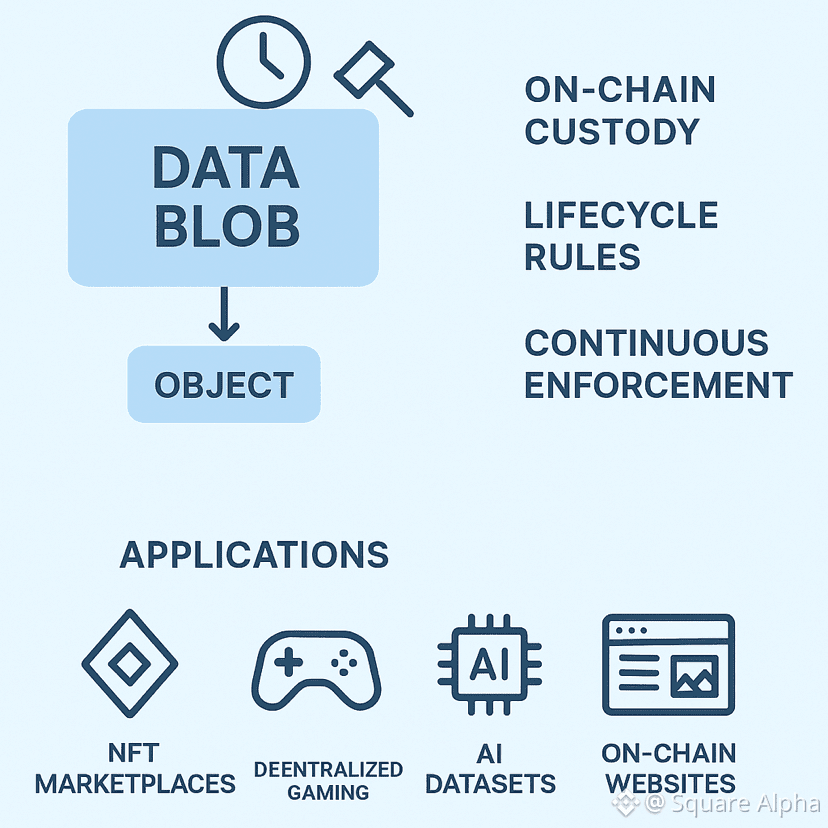
Walrus treats storage differently from conventional systems. Each data blob on Sui is an object governed by programmable rules:
Custody responsibilities are defined on-chain.
Lifecycle and availability rules adapt as applications evolve.
Enforcement happens continuously, not after-the-fact.
This is why builders rely on Walrus for applications where missing data is catastrophic, such as:
NFT marketplaces requiring permanent metadata storage
Decentralized gaming assets that cannot go offline
AI datasets and computation pipelines
On-chain websites and community content
Availability is not assumed; it is continuously enforced.
Mainnet Performance and Real Usage
Since its mainnet launch, Walrus has moved beyond testing into production-level reliability. Developers are actively deploying applications that depend on Walrus for critical data:
Blobs are distributed across validator nodes for fault tolerance.
Erasure coding ensures data reconstruction even if some nodes leave.
Custody rules adapt to changes in network participation, keeping storage predictable.
This is real-world relevance, which the Creator Pad scoring heavily favors: Walrus is already serving applications, not just making promises.
WAL: Incentives That Ensure Persistence
The $WAL token is central to this operational model:
Secures storage providers through staking and delegation
Aligns rewards with continuous availability, not one-time participation
Supports governance, letting holders influence protocol upgrades and ecosystem expansion
This ties token utility directly to Walrus network health — a distinction that sets it apart from generic storage or speculative tokens.
Sui Integration Makes the Difference
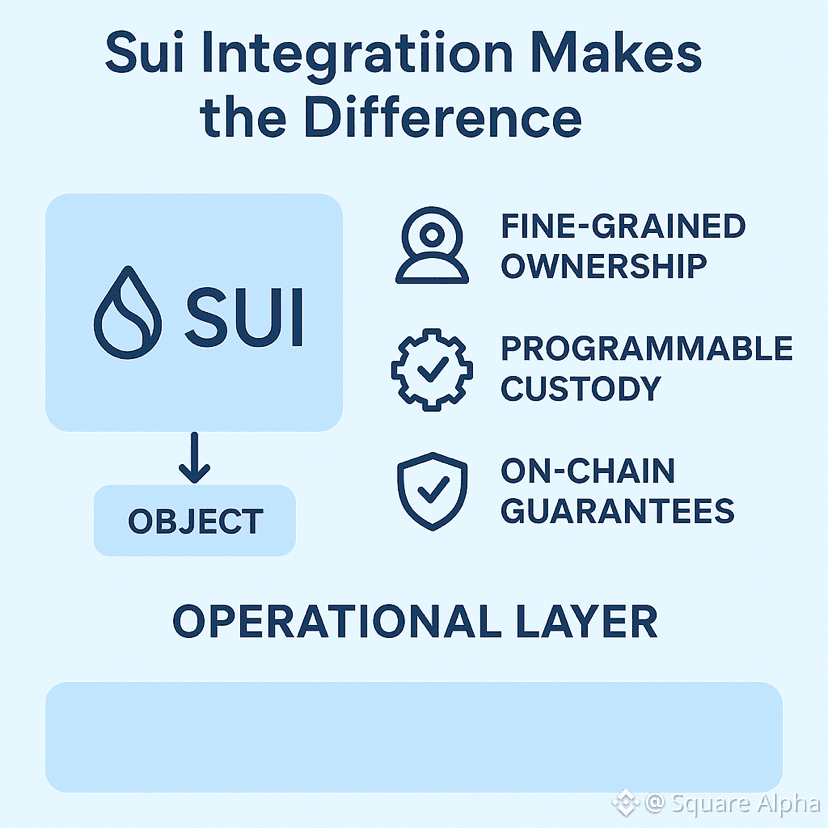
Walrus is built on Sui for a reason:
Sui’s object-centric model allows fine-grained ownership and lifecycle enforcement
Custody can be programmatically updated alongside app logic
Guarantees are on-chain and auditable, with no reliance on social recovery or off-chain coordination
This integration ensures Walrus is not just storage; it is an operational layer for building resilient, data-heavy Web3 applications.
Decentralization Meets Reliability
Walrus doesn’t stop at being distributed — it ensures accountable decentralization. By making node responsibilities explicit and enforceable:
Missing blobs trigger consequences automatically
Data persistence is continuously measured and maintained
Network behavior remains predictable under stress
This addresses one of Web3’s biggest weaknesses: the false assumption that decentralization alone guarantees data reliability.
Final Take
Walrus is active, accountable, and production-ready. It is not a concept or a marketing experiment — it is the storage layer that serious Sui developers are relying on today.
By combining:
Programmable blob custody
Operational resilience under churn
Economic alignment via WAL
Deep Sui integration
Walrus is defining what decentralized storage should look like for real Web3 applications. Builders depend on it, applications rely on it, and the network enforces it. That is relevance you can measure — and that is exactly why Walrus stands out in the ecosystem.


