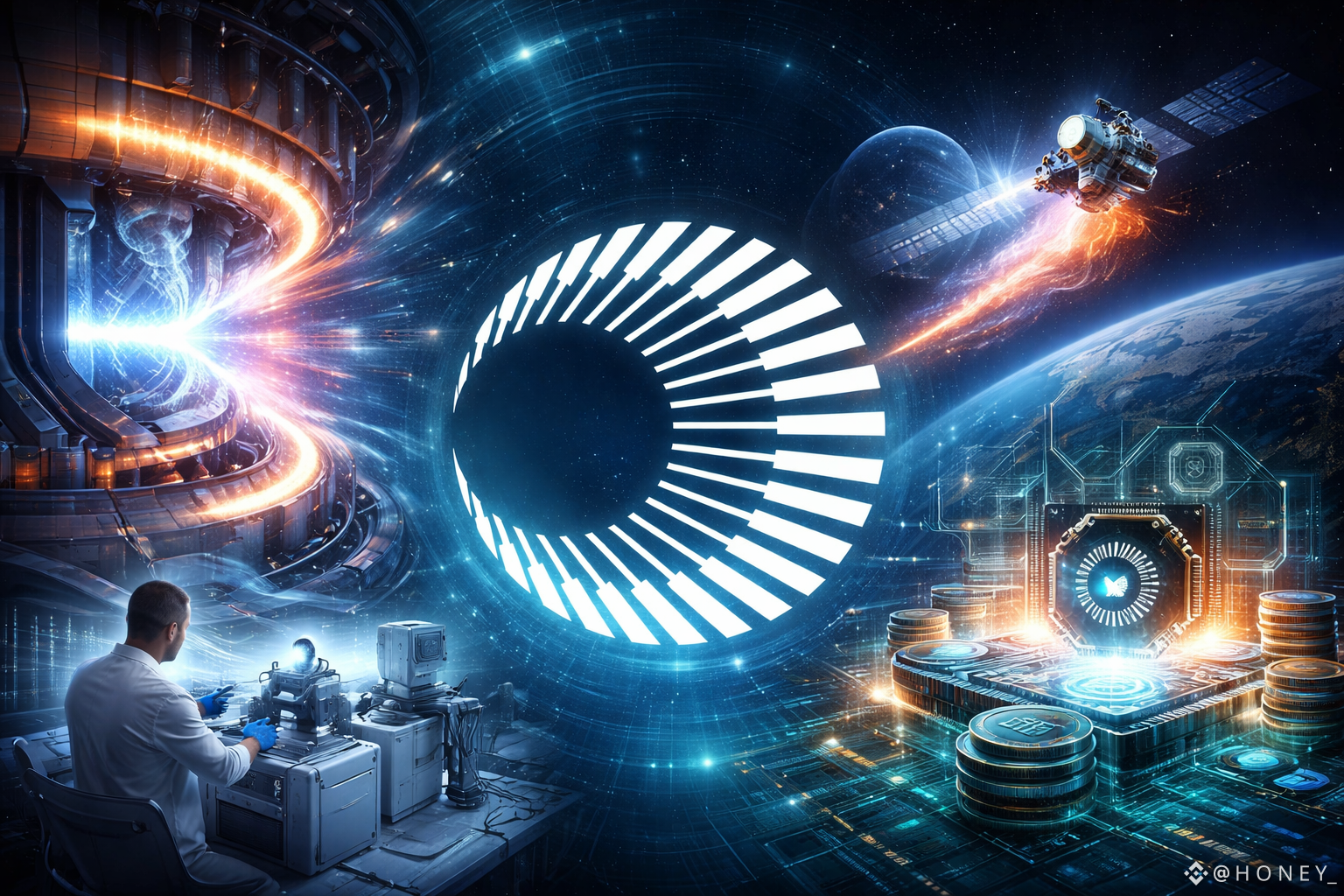
I want to talk about Plasma in a simple and natural way. Something that feels like a conversation instead of a technical lesson. Plasma is usually described as the fourth state of matter and people often imagine it inside stars or inside giant research machines. But the truth is that Plasma has moved out of the scientific bubble and into real industries that are shaping our world. Energy companies, research labs, medical teams, aerospace startups, industrial facilities and even blockchain projects like Plasma XPL are using Plasma in different ways. I have been watching the flow of announcements and updates and the speed of progress feels faster than ever.
Plasma is no longer a secret topic that only scientists care about. It has entered a stage where it influences energy production, advanced manufacturing, computing environments, medical tools and digital payments. The more I read about it, the more I feel that we crossed an invisible boundary. Plasma is now a practical tool, not just an experiment. I want to break everything down in a clean and friendly way and explain what is happening across different fields.
Let me start with the area that gets the most attention today. Fusion energy. This part of Plasma research has been growing quickly. China has a major project called the EAST reactor. This machine recently crossed something called the Greenwald limit. I know that name sounds very scientific, but let me explain it in a simple way. Think of the Greenwald limit as a point where the density of Plasma becomes so high that old science believed the machine would not be able to handle it. But EAST managed to go past this point and keep the Plasma stable. That matters because higher Plasma density increases the chance of creating real fusion conditions. Fusion is the same process that powers the sun and if we manage to control it on Earth, we get an almost unlimited clean power source. It is one of the biggest scientific goals of our time.
Another strong development came from Israel. A company called nT Tao built a compact fusion prototype named C3. They assembled it fast and produced stable Plasma inside it in less than three months. This is a very impressive result because fusion projects normally take years to prepare. Their design approach is different from traditional fusion reactors and allows them to test ideas quickly. This could lead to a future where smaller and portable fusion systems serve remote areas or regions that cannot build huge reactors.
There is also constant improvement in Plasma physics research. Scientists are testing new laser methods, new confinement ideas and new shockwave techniques. These discoveries help fusion reactors, particle accelerators and high energy devices work better. Most people never see this research, but it quietly drives the evolution of almost every major physics machine in the world.
Now let me take you to a totally different world. Software. Most people know KDE Plasma as a powerful and customizable desktop environment in the Linux ecosystem. The community behind it has been extremely active. Plasma version six point five point five arrived with strong stability improvements and smoother performance. There is also a Plasma six point six beta release that brings fresh modules and better keyboard management. It may not sound as dramatic as fusion energy, but in the software world KDE Plasma has become an example of clean design and high performance. It shows how open source communities can innovate at a fast and consistent pace.
Now let me move to something that feels almost futuristic. Plasma in space. A company in the United Kingdom called Space Forge created high temperature Plasma in space using their ForgeStar satellite. That alone is a big achievement. But here is the important part. Microgravity allows certain materials to grow with better purity and better structure compared to Earth. By creating Plasma in orbit, they opened the door to manufacturing high quality semiconductor crystals and other advanced materials in space. Imagine factories floating in orbit, producing materials that cannot be manufactured easily on Earth. Plasma will play a major role in that future.
There are also strong updates in industrial and medical usage. Plasma sterilization is becoming popular because it cleans tools without using chemicals or heat. Hospitals are testing Plasma treatment devices for safer operations. Industrial facilities are using Plasma arcs to break down hazardous waste. One company even developed a new Plasma furnace for handling radioactive waste in a safer way. This is important because the world needs cleaner methods to manage industrial byproducts.
Now let us come back to the part that matters a lot in the digital world. Plasma in blockchain. Plasma XPL is becoming one of the most interesting stablecoin settlement chains. It is fully EVM compatible. It offers very fast finality. It allows users to pay transaction fees with stablecoins like USDT. This is a very big advantage for everyday adoption because new users do not like handling two different tokens. Plasma is also using Bitcoin anchored security which adds neutrality and makes the network harder to censor. This is especially useful for countries that rely on stablecoins for daily payments.
A major update was the introduction of USDT on Plasma through Local Pay Asia. This connects Plasma to real payment users and high adoption regions. When a blockchain starts getting integrated into everyday financial flows, it moves beyond hype and becomes something real. Plasma is also working on a Bitcoin bridge and deeper validator decentralization. If they continue delivering, the project can become a powerful settlement layer in the global stablecoin economy.
Awareness around the project also grew after the CreatorPad campaign on Binance Square. The campaign allocated millions of XPL tokens for creator tasks and community engagement. This helped bring more visibility to the network and encouraged people to explore the technology. When marketing and technical updates move together, the narrative becomes stronger.
When I look at all these developments from different industries, I see one powerful idea. Plasma is not one technology. It is a force that exists across energy, computing, medical tools, space manufacturing, industrial processing and blockchain settlement. In every field, it is solving problems that traditional methods could not solve easily. That is why I keep saying that Plasma represents a quiet revolution. It is not loud. It is not hyped. It grows layer by layer across different sectors until one day people realize how deeply it shaped the world around them.
Plasma feels like that kind of revolution. Steady, practical and full of potential. It is becoming part of the next decade in ways that are only now becoming visible. This is why I enjoy following these announcements. They show a future where Plasma continues to power new breakthroughs in energy, new materials in space, new precision in medicine, new performance in software and new stability in digital finance. The story of Plasma has moved far beyond science labs. It has become a foundation for the technologies of tomorrow.