
Everyone assumes storage should be cheap. Cheap means “just toss it on some cloud and forget it.” Nah. That’s not storage. That’s a ticking liability.
Cheap means fragile. Nodes flake. Fragments vanish. Your backups are only as solid as the weakest participant. Everyone smiles and calls it “redundancy.” Exactly. Until 3 AM when a node fails, and you realize redundancy wasn’t stress-tested.
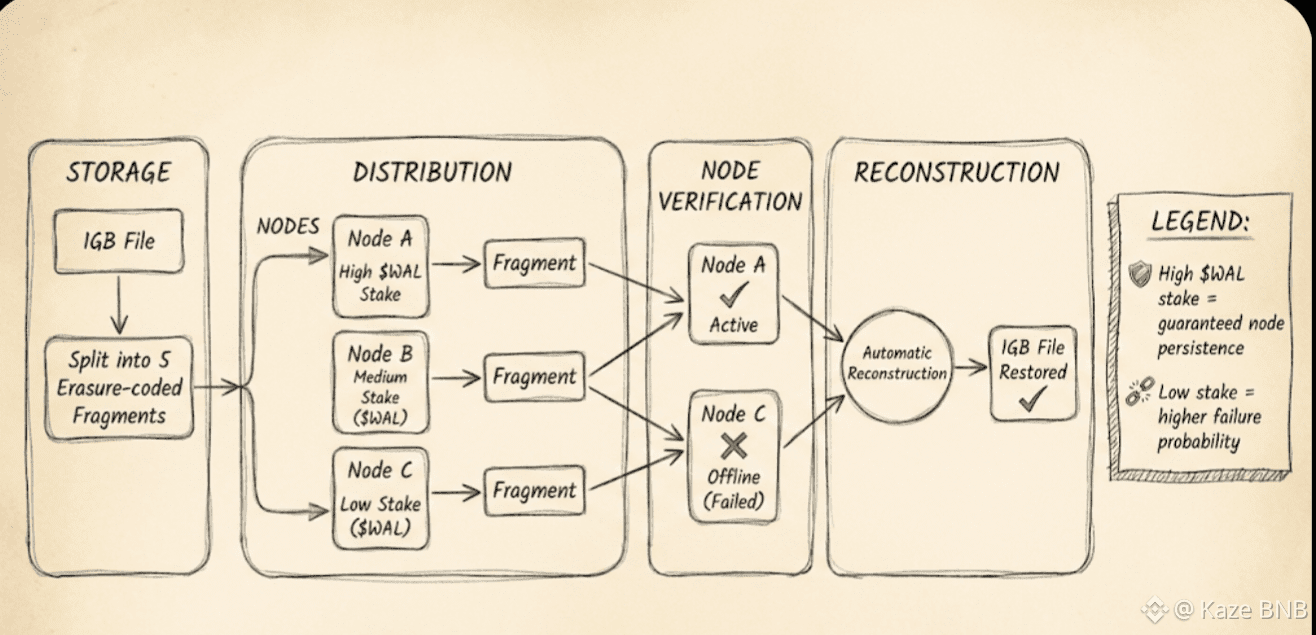
Walrus (@Walrus 🦭/acc , $WAL ) isn’t cheap. It isn’t supposed to be. Price is a filter for quality. You’re paying for staked nodes, governance enforcement, and erasure-coded fragments that actually reconstruct when things break. No hype. No magic. Just survival.
The system distributes your data across multiple nodes. Missing pieces? Rebuilt automatically. $WAL tokens aren’t decoration, they’re accountability. Nodes with stake actually care about staying online. If they fail, they lose. That’s incentive. That’s boring. That’s effective.
Cheap storage networks brag about low costs until disaster strikes. Then your “redundancy” shows up as gaps, silent failures, and panicked engineers scrambling spreadsheets that never add up. Walrus trades excitement for predictability. Downtime is minimized. Responsibility is visible. That’s not flashy. It’s functional.
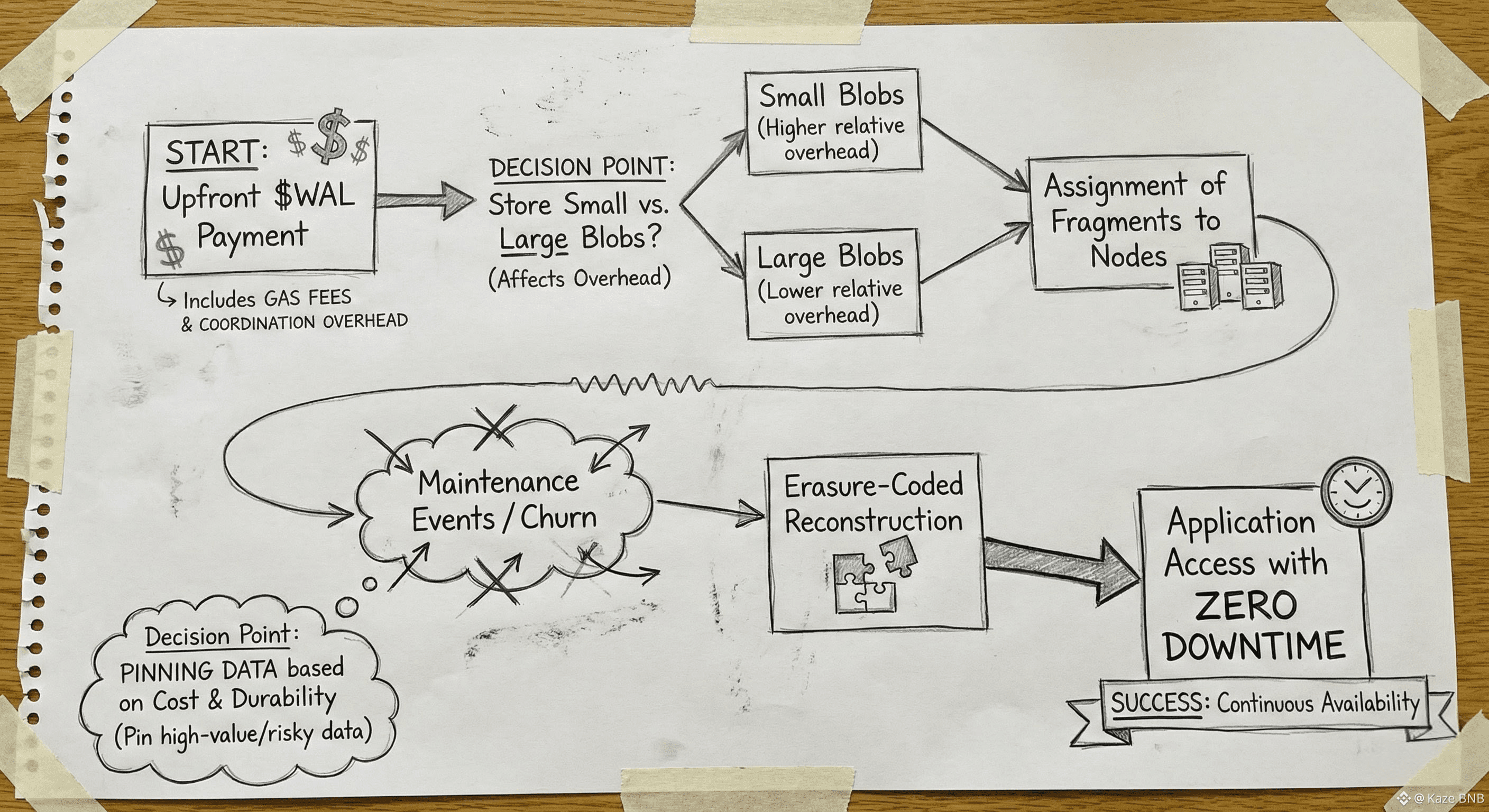
Let’s talk retention. Buy a term upfront. Decide what actually matters. Don’t pin every temp file, log, or dump “just in case.” Small, meaningless blobs cost disproportionately in gas and coordination. Overhead doesn’t scale down just because the payload is tiny. Efficiency on Walrus comes from treating storage like a product requirement not a hobby.
The boring week is the point. Maintenance happens. Nodes churn. Erasure-coded fragments rebuild silently. The system survives without fanfare. No alerts. No heroics. Just persistence.
Let’s be honest: your files don’t need a revolution. They need to exist when someone clicks fetch. Pay the price. Sleep at 3 AM. Your data will still be there.

