


The release controller does not need a dashboard to know something is wrong. They need the opposite actually.
Execution finished. On Dusk, that means the state is final. Funds moved exactly where the transaction said they would. Under normal conditions... that is the moment the release clears and the book closes.
This time it doesn't. No outage to blame.
The transfer completed under confidentiality on Dusk, under credential-scoped disclosure. No ambient trail. No broadcast context. Just a correct state transition and a narrow set of people entitled to know why it was allowed to happen. That is fine, until release time... when the one question that matters shows up and nobody in the room can answer it without overstepping their authority.
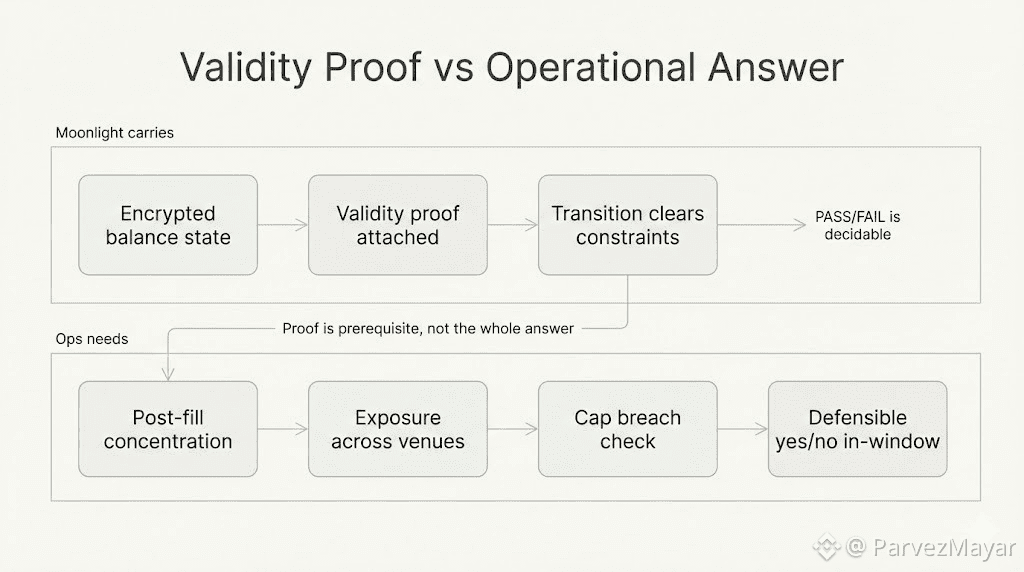
The controller needs to classify the transfer. Not philosophically. Operationally. Is this safe to release now, under the Dusk disclosure scope we committed to before execution?
They don't have the sentence.
I've seen this at 5:47pm, ten minutes before cutoff. The evidence existed. The Dusk-safe release note did not. So everyone waited for the one person allowed to say it out loud.
Not because the chain is unclear. Because the reason the transfer was permitted lives inside a Dusk disclosure boundary that has not been authorized for circulation yet. The rule that mattered is known, but who is allowed to see that fact... and in what form is still undecided.
This is where Dusk gets uncomfortable in real conditions. Finality is fast. Authorization is nott though.
You can not widen visibility just to get a release out the door. On Dusk, disclosure scope isn't a knob you turn under deadline pressure. If you expand it now, you don't just close this trade—you set a precedent that future disputes will demand again. Someone has to own that decision. Nobody does.
So the release stalls after execution.
The controller is staring at a finished Dusk state that behaves like open exposure. Holding isnt free, but shipping without classification is worse. Meanwhile, the disclosure owner is doing the only thing Dusk allows: refusing to improvise authority where none was granted.
Nothing is broken. That's the problem. No incident to escalate. No "fix" to ship.
Dusk did what it promised—confidential execution with bounded visibility. What it didn't promise is that organizations would be ready to classify outcomes at the speed finality arrives. Under Dusk constraints, classification has a dependency chain: entitlement, scope, rule attribution. Miss one, and release becomes discretionary in the worst possible moment—after the state is irreversible.
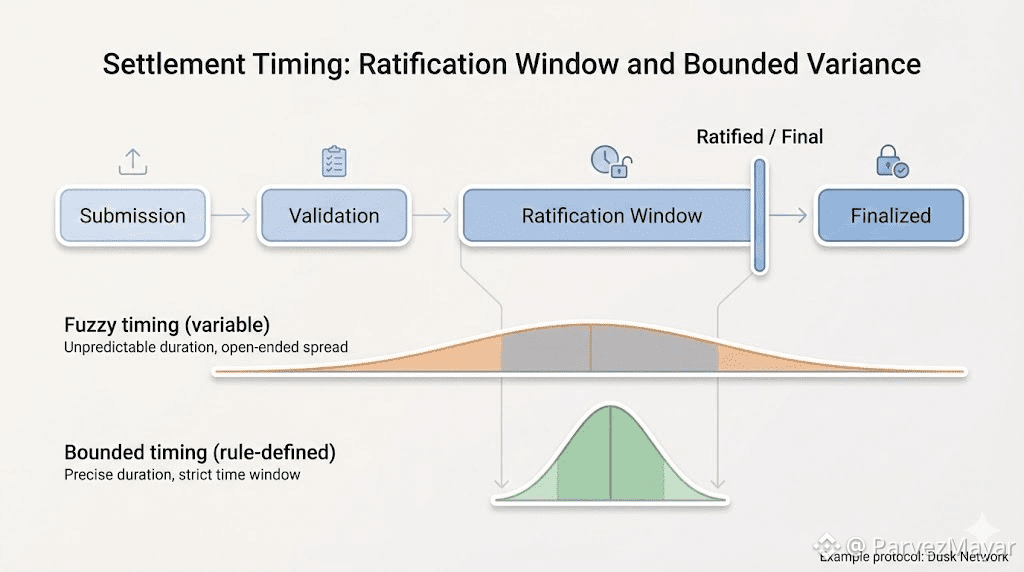
What changes next isn't the protocol.
The change happens upstream. Release paths that require post-execution classification stop running near cutoffs. Transfers that depend on discretionary disclosure authority get rerouted or downsized. New gates appear before execution, forcing teams to settle @Dusk disclosure questions early, when pausing is cheaper and nobody has to justify a hold on a finalized state.
Flow slows. Then it stays slow.
The release doesn't fail. It waits.
And the next time, they'll move the decision earlier.. because after execution, Dusk won't widen scope just to give you better words..
