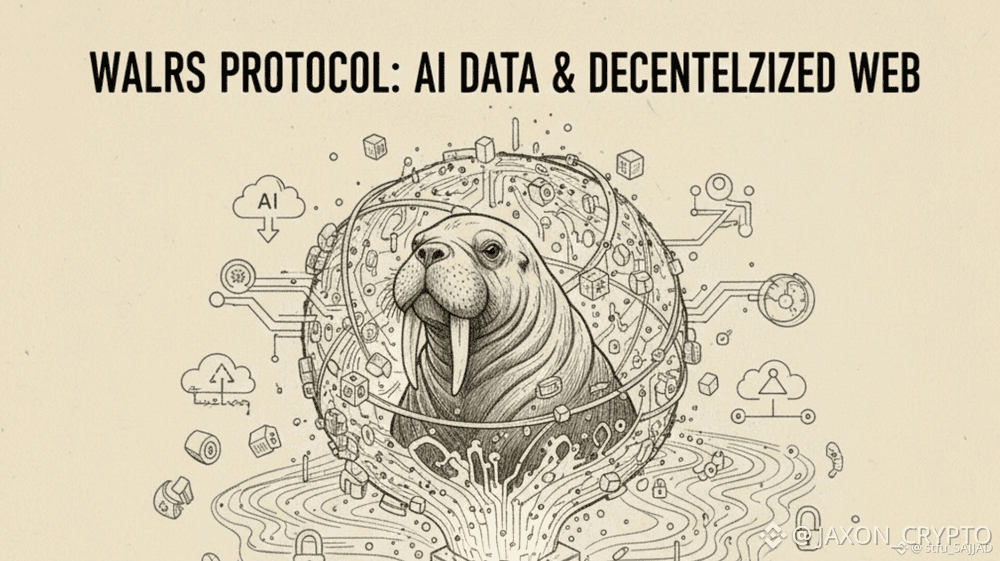
I’m genuinely amazed by what Walrus is building. When I first learned about it, I thought about all the photos, videos, and documents I’ve trusted to big companies and how easily they could disappear or be misused. It made me realize how fragile our digital lives really are. Walrus isn’t just another cryptocurrency or blockchain project. They’re creating a system that gives people real control over their data while keeping it private, secure, and accessible. They’re building on the Sui blockchain, and the way they handle storage is brilliant. Files are broken into coded pieces and spread across a decentralized network. Even if some nodes go offline, your data can still be restored. That means your memories, your work, and your most valuable files are safe and censorship-resistant.
What excites me the most is their core idea that data belongs to people, not corporations. Your photos, AI datasets, or business documents should not be trapped on someone else’s server. Walrus makes it possible to take back that control. The technology behind it may sound complex with terms like erasure coding and blob storage, but it’s really about giving people freedom and security. They can store massive amounts of data without wasting space, and the network is built to be reliable, efficient, and cost-effective.
The features of Walrus are designed for both individuals and businesses. They allow developers to integrate storage into apps with simple APIs, making it easy for decentralized applications to access and manage data. Optional encryption ensures that private files remain truly private. Storage payments are predictable so costs do not suddenly spike. They thought carefully about real-world needs, balancing practicality with decentralization. You can store large files like videos, AI models, or sensitive business information safely and confidently.
The WAL token is central to the network. You use it to pay for storage, stake to secure the network, and participate in governance. WAL is not just a token for trading. Every token is connected to the network’s growth and functionality. The supply is limited which helps maintain value over time. If you want to trade or acquire WAL, Binance is the main exchange that supports it. The tokenomics are designed to align incentives between users and storage providers, encouraging a reliable and active network.
Of course, there are risks. The network depends on active nodes, software bugs or economic misalignments could affect data availability, and token values can fluctuate. Regulatory changes could also have an impact. If you store important data, you should treat Walrus as part of a backup plan rather than relying solely on it.
What inspires me is their roadmap. They are rolling out mainnet features, onboarding new nodes, building better developer tools, and expanding partnerships to grow the ecosystem globally. If Walrus succeeds, it could redefine how we think about digital storage, turning our files into true personal infrastructure instead of rented space on someone else’s server. That is more than technology. That is freedom, privacy, and hope for a decentralized future.