

Walrus is emerging as a decentralized storage protocol built to solve one of Web3’s most persistent problems: how to store large volumes of data securely, efficiently, and without relying on centralized infrastructure. At its core, Walrus powers decentralized storage by distributing data across a network of independent nodes, removing single points of failure and censorship risks. This architecture ensures that data remains available and verifiable even if individual nodes go offline. Unlike traditional cloud storage providers that depend on trust in centralized companies, Walrus is designed around cryptographic guarantees and economic incentives, making storage trust-minimized and permissionless by default.
The $WAL token plays a central role in this ecosystem and benefits directly from real network demand. Storage on Walrus is not an abstract promise; it is a service consumed by users, developers, and decentralized applications that need reliable data availability. Every time data is stored, retrieved, or maintained on the network, $WAL is used as the medium of exchange. This creates a direct link between network usage and token utility. As more data flows into Walrus, demand for $WAL increases organically, tying the token’s relevance to actual adoption rather than speculation alone.
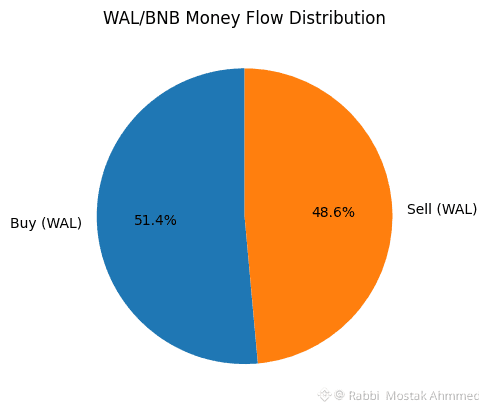
One of the defining strengths of Walrus is its focus on scalable, high-throughput storage suitable for modern Web3 use cases. Decentralized applications increasingly rely on large datasets such as NFTs with rich media, on-chain games, AI model data, and archival blockchain records. Walrus is designed to handle these demands efficiently, enabling developers to store large files without sacrificing decentralization. In this context, $WAL functions not only as a payment token but also as a coordination tool that aligns incentives between storage providers and users. Storage nodes earn $WAL for reliably hosting data, while users pay in $WAL for guaranteed availability and redundancy.
The tokenomics of $WAL are structured to reflect real economic activity on the network. Instead of relying purely on emissions or inflation-driven rewards, Walrus channels value through usage. When the network grows, more storage providers are incentivized to join, earning $WAL by contributing resources such as disk space and bandwidth. This creates a feedback loop where higher demand attracts more supply, strengthening network resilience. At the same time, users gain confidence that their data is protected by a robust and economically motivated infrastructure.
$WAL also has governance relevance within the Walrus ecosystem. Token holders can participate in decisions related to protocol upgrades, economic parameters, and long-term development priorities. This ensures that stakeholders who are economically invested in the network’s success have a voice in its evolution. Governance tied to a utility-driven token strengthens decentralization, as decisions are guided by participants who actively use and support the protocol rather than external interests.
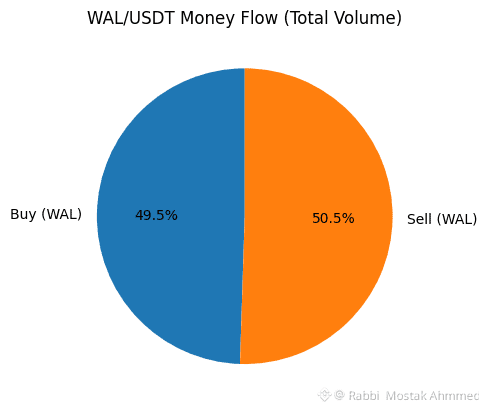
From an investment and ecosystem perspective, the importance of $WAL lies in its connection to real-world utility. Decentralized storage is a foundational layer of Web3, and demand for it is expected to grow as more applications move on-chain. Walrus positions itself as infrastructure rather than hype, and $WAL reflects that philosophy. Its value proposition is grounded in actual network demand, usage-based economics, and long-term relevance. As decentralized applications scale and data needs expand, Walrus and the $WAL token stand to benefit directly from the fundamental growth of decentralized storage itself.

