
Plasma breaks refunds.
Not because you can’t send money back. You can. The problem is that PlasmaBFT finality closes the first payment before your org has even agreed on what “wrong” means.
The transfer lands. Done. No “pending” to hide behind.
Then the real mess starts.
Customer pays a stablecoin. Seconds later: wrong amount, wrong wallet, wrong SKU, whatever. The ticket pops up while the cashier is still talking. Support is already typing “we’ll refund.” Ops is still asking for the tx hash. Treasury hasn’t even pulled the batch view yet.
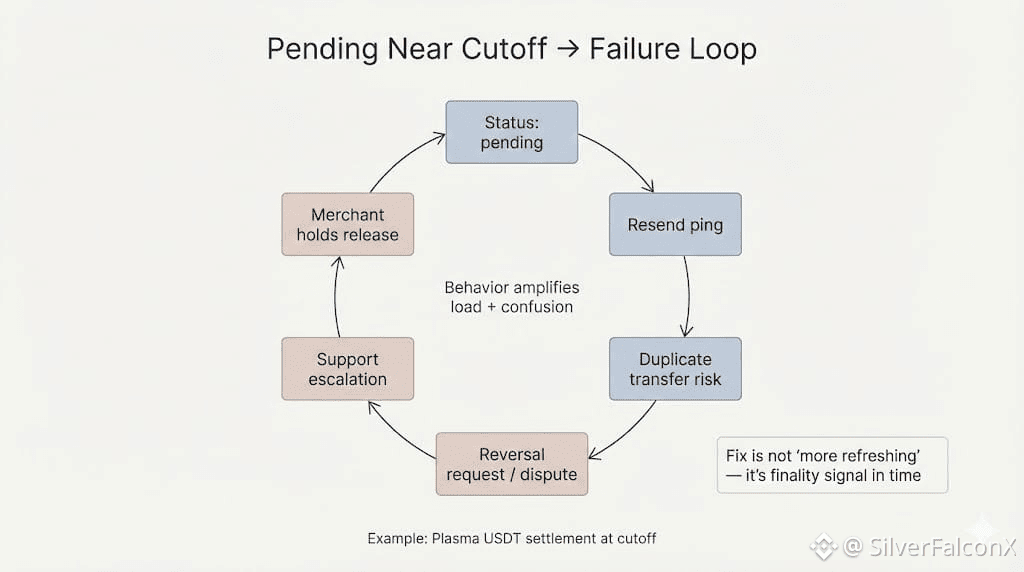
But the chain has already finished the only part it controls.
So the refund turns into a second payment with politics attached.
Who is allowed to authorize it? Support? The shift lead? The treasury approver who only signs twice a day? What’s the max amount before it needs a second set of eyes? Do you log it as “refund,” “adjustment,” “manual payout,” “customer compensation”? Those labels sound boring until the finance report is due.
I’ve watched a team freeze right here. The payment was correct on-chain. The business outcome wasn’t. Everyone’s instinct was the card-world move: reverse it. Make it disappear. But there’s nothing to reverse. There’s only a new transfer that has to be justified in plain language, inside your own controls.
And the clock doesn’t pause.
Support promised a refund inside five minutes. Ops wanted a screenshot and a reason code. Treasury pushed back because “refunds” weren’t part of the day’s release plan and the batching window was closing. Nobody was being malicious. They were protecting their slice of the process. The customer just saw silence.
This is the Plasma-shaped failure: finality arrives faster than your decision rights.
PlasmaBTF Sub-second settlement doesn’t reduce mistakes. It locks them in sooner. The error that used to float in a “maybe” zone now hardens immediately, and you feel every missing policy you never wrote because you never had to.
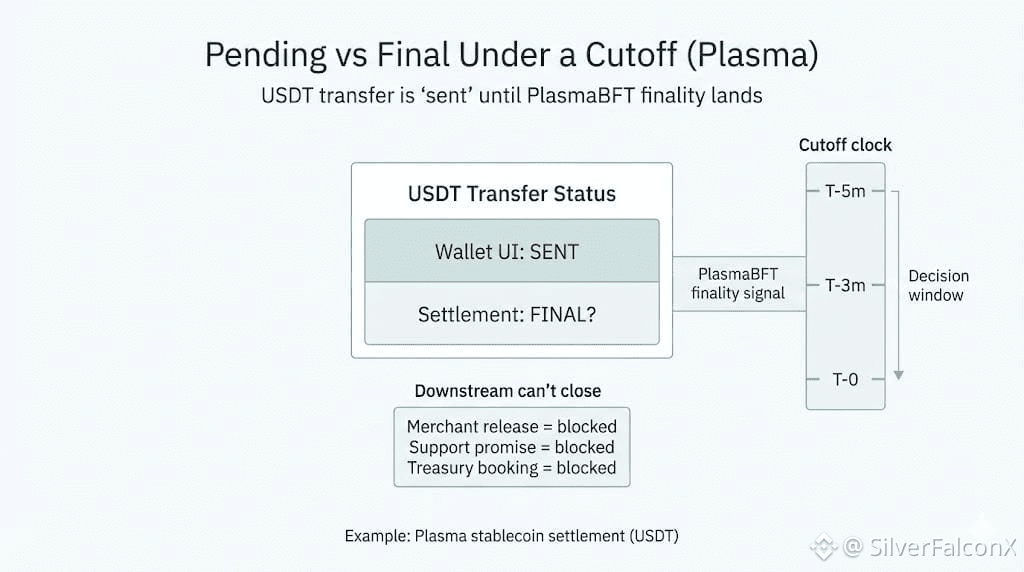
Teams that survive this don’t “get better at refunds.” They pre-wire the second-payment path. A small set of allowed reasons. A clear signer. A hard SLA that matches reality, not vibes. If it’s over the threshold, it waits. If it’s under, it clears. Ugly, but predictable.
Otherwise you end up doing the worst version: improvising in public while the ledger is already closed.

