
Recent surveys show that less than 20% of tokenized asset pilots in regulated institutions move beyond proof-of-concept. The problem isn’t blockchain technology it’s infrastructure that can’t reconcile privacy, compliance, and verifiable execution simultaneously. Many pilots succeed in isolated tests, but when regulators or auditors enter the picture, these systems falter. The tools exist, but most platforms force trade-offs that enterprises cannot accept.
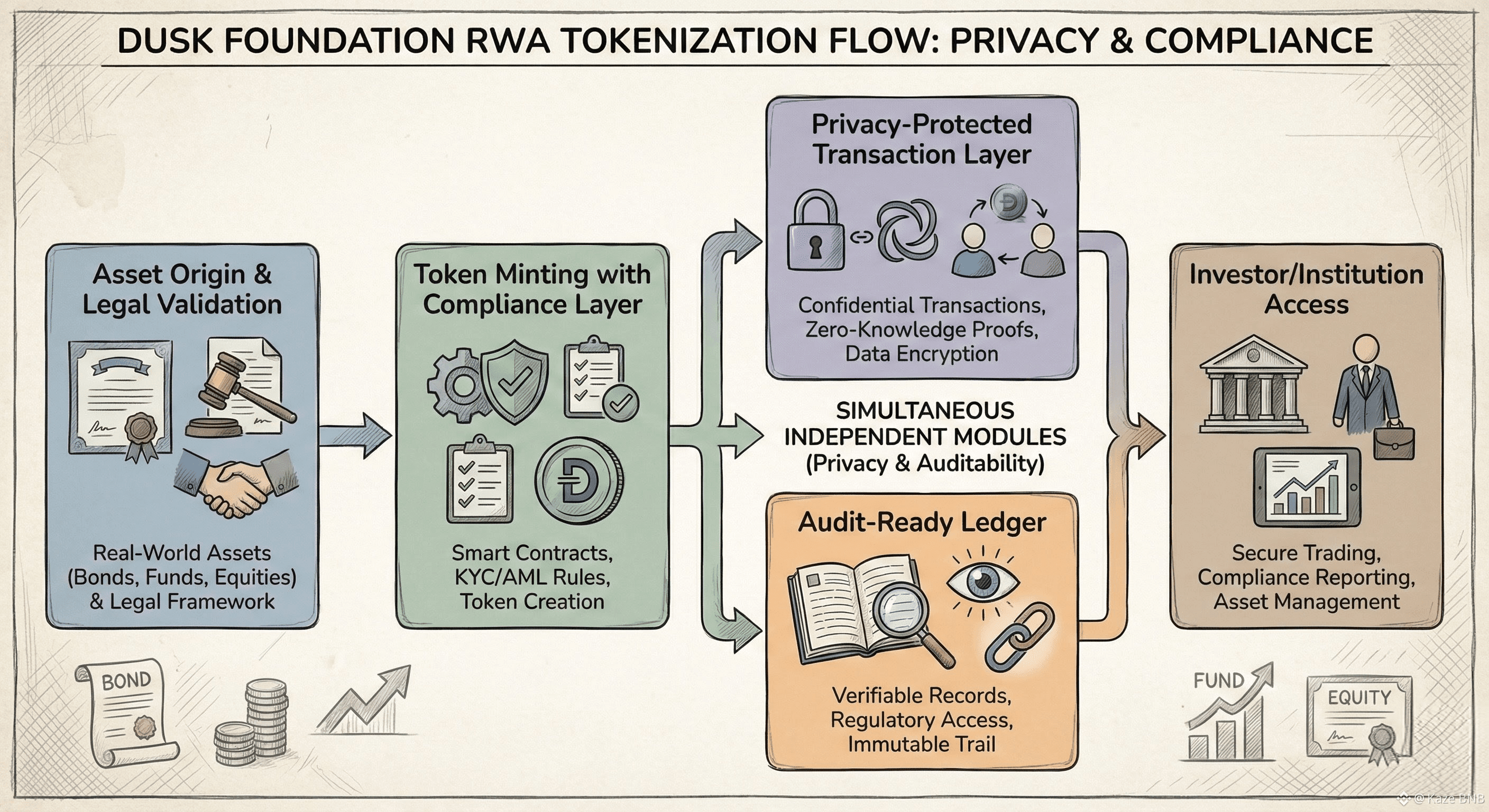
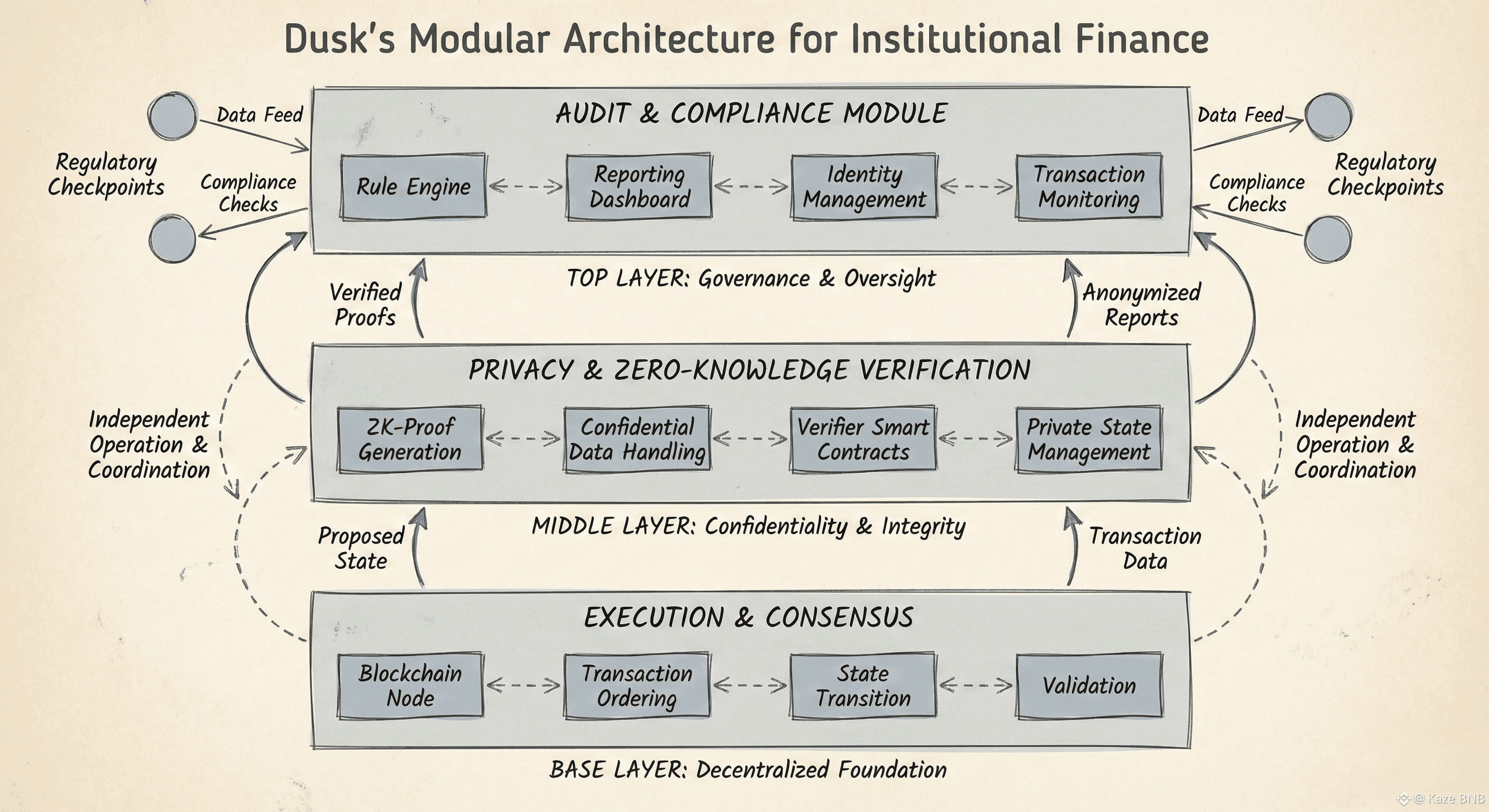
Dusk Foundation addresses this head-on. Its architecture separates execution, privacy, and audit layers, allowing each to operate independently while maintaining tight coordination. Updates in one module, whether adjusting reporting protocols, upgrading privacy parameters, or responding to new compliance regulations, don’t disrupt the other components. That separation ensures operational continuity, which is critical when financial applications manage real assets with real consequences.
DeFi for institutions isn’t about flashy dashboards or speed metrics it’s about transactions that can be verified, audited, and legally defended without exposing sensitive client information. Dusk’s smart contracts integrate audit-ready proofs, zero-knowledge verification, and regulatory-safe transaction logs, allowing firms to deploy DeFi solutions and tokenized products without worrying that the next audit will reveal weaknesses.
Tokenizing real-world assets (RWAs) is the ultimate test. Bonds, funds, equities, and other regulated financial instruments carry legal obligations; mistakes are not just technical they are contractual and reputational. Dusk’s approach embeds compliance and verifiability directly into the token’s lifecycle. Each asset maintains privacy while proving correctness, and on-chain behavior mirrors off-chain legal requirements. This ensures that institutions can operate confidently without exposing sensitive holdings or breaking regulatory mandates.
Operational resilience is built into the design. Gas efficiency, modular execution, and robust reporting prevent minor technical issues from cascading into major disruptions. The chain adapts seamlessly as regulations change, audits are requested, or operational demands increase, avoiding costly forks or network halts. The system isn’t flashy, it’s dependable, predictable, and precise.
Dusk Foundation also reduces integration friction for enterprise applications. Legal teams, auditors, and compliance officers can interact with the blockchain directly through the modular audit layer, without needing to trust third-party bridges or complex workarounds. Firms can scale operations across multiple asset types while maintaining consistent security, privacy, and compliance standards.
So yeah, Dusk Foundation isn’t designed to attract headlines or hype. It provides infrastructure that just works, designed for enterprises that require correctness under scrutiny. Deploy, audit, and operate with confidence. That combination of engineering discipline, compliance alignment, and privacy assurance is what differentiates Dusk in a crowded, experimental blockchain ecosystem.
