
Dusk Foundation exists because regulated finance has a contradiction it can’t ignore anymore: transactions must be private, but outcomes must be provable. Most blockchains pretend this tension can be solved later. In production environments, “later” becomes an audit failure.
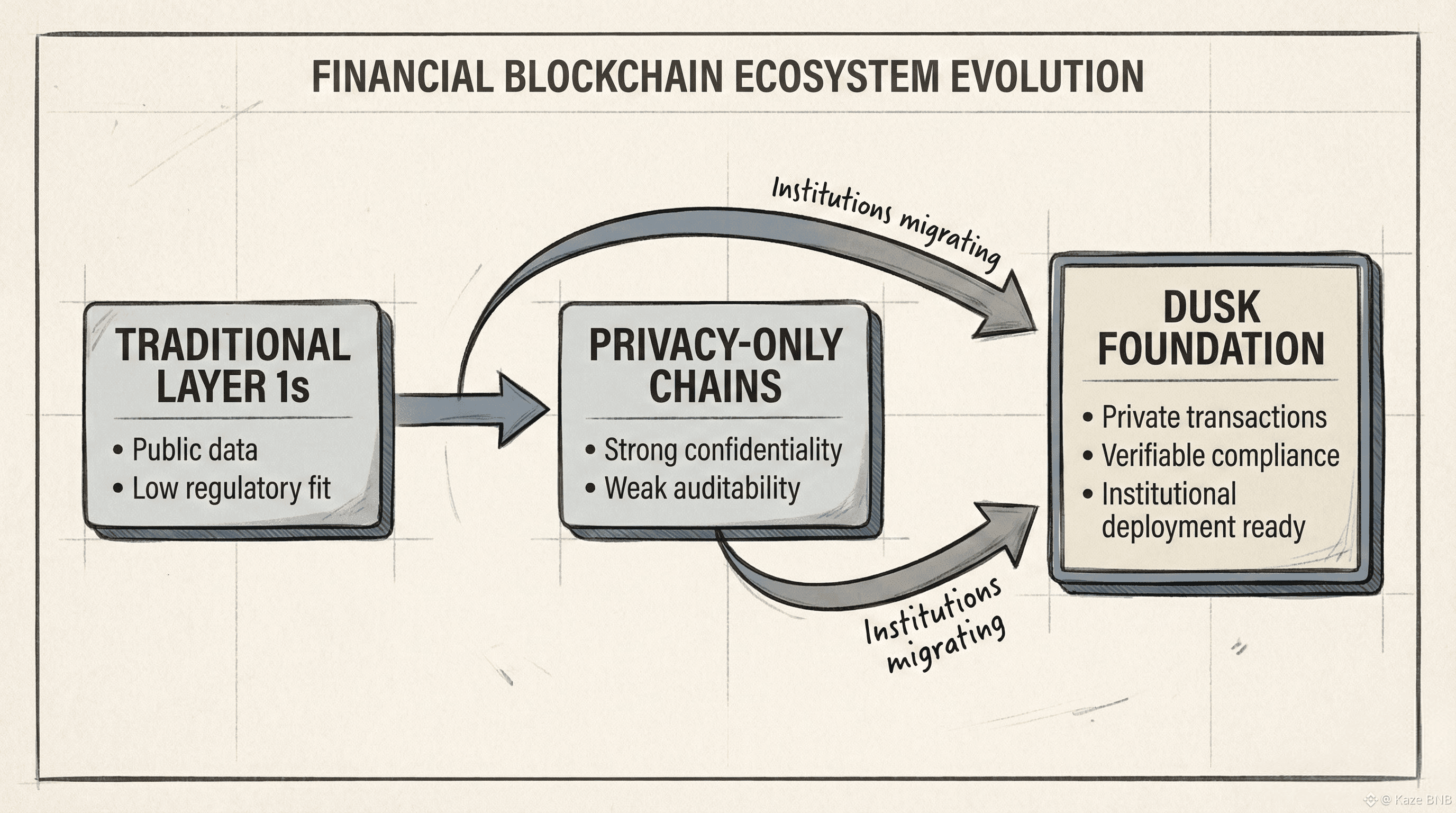
Privacy, in real financial systems, is not about hiding activity. It’s about limiting exposure. Counterparties don’t want competitors, validators, or infrastructure providers learning sensitive details, but regulators still need to confirm that rules were followed. Traditional chains leak too much by default. Privacy-first chains hide too much to be useful. Dusk sits in the uncomfortable middle where both sides can operate without compromising their requirements.
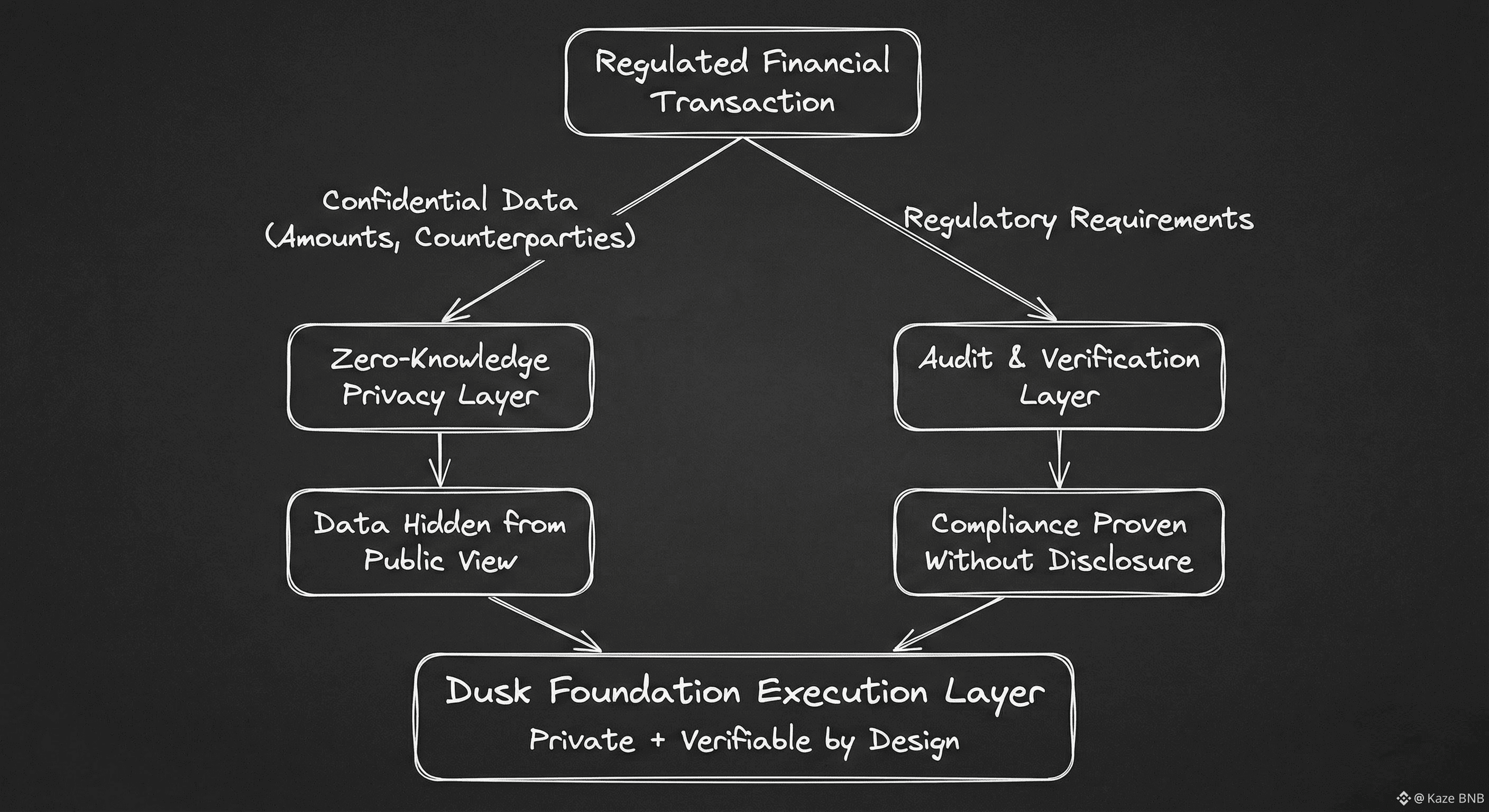
The key distinction is that verification on Dusk is not tied to disclosure. Transactions can be checked for correctness, compliance, and rule adherence without revealing underlying data. That matters because institutional oversight doesn’t work on trust it works on evidence. When regulators request confirmation, the system responds with proofs, not explanations. That difference determines whether a platform can move beyond sandbox trials.
This balance changes how DeFi behaves at scale. Most institutional DeFi concepts collapse when compliance enters the conversation. Either controls are bolted on externally, or privacy is weakened to satisfy reporting demands. Dusk avoids that trade-off by making verifiability native. Applications don’t need to choose between confidentiality and accountability. They inherit both by default.
That design choice also explains Dusk’s position in the broader financial blockchain ecosystem. It doesn’t compete with general-purpose chains on raw throughput or retail experimentation. Its role is narrower and more durable: supporting compliant financial activity where mistakes carry legal consequences. This is where asset tokenization either matures or fails.
Real-world assets expose every weakness in infrastructure. Bonds, funds, and equities don’t tolerate ambiguous settlement or unverifiable state. Dusk treats these instruments as regulated objects first and digital assets second. Privacy protects participants. Proof protects institutions. The chain becomes an execution layer for obligations, not just transactions.
As regulatory clarity improves globally, systems that require redesigns or compromises will struggle. Platforms built with auditability as an afterthought will face friction. Dusk is positioned differently. Its value isn’t speculative adoption it’s alignment with how finance already operates under law, oversight, and enforcement.
That’s why Dusk fits where others don’t. Not as a universal blockchain, but as infrastructure for financial activity that must remain private, provable, and defensible long after deployment.
