


I went back to Walrus the way I go back to systems I half-trust.
Not curious. Just checking if anything feels off.
Nothing obvious changed.
Capacity still around 4 petabytes.
Utilization still sitting near a quarter full.
That number stuck longer than it should have. Overbuilt networks usually look empty for a while. Seems like Walrus does not. Something keeps taking space. Something keeps renewing. Quietly.
I tried not to think in terms of 'apps'.
That word hides decisions.
Someone choosing how long data is allowed to live. deciding whether it is worth paying again. Someone noticing the timer instead of assuming permanence.
That is where Walrus feels a bit more different. Or maybe just stricter.
Blobs on Walrus Protocol do not sit politely. They age. They cost. They either get renewed or they disappear exactly when they are supposed to. No grace period. No "we meant to". Optimism doesnot carry weight here. Specificity does.
Availability on Walrus is not just assumed though. It is rented, timed... and either provable or gone.
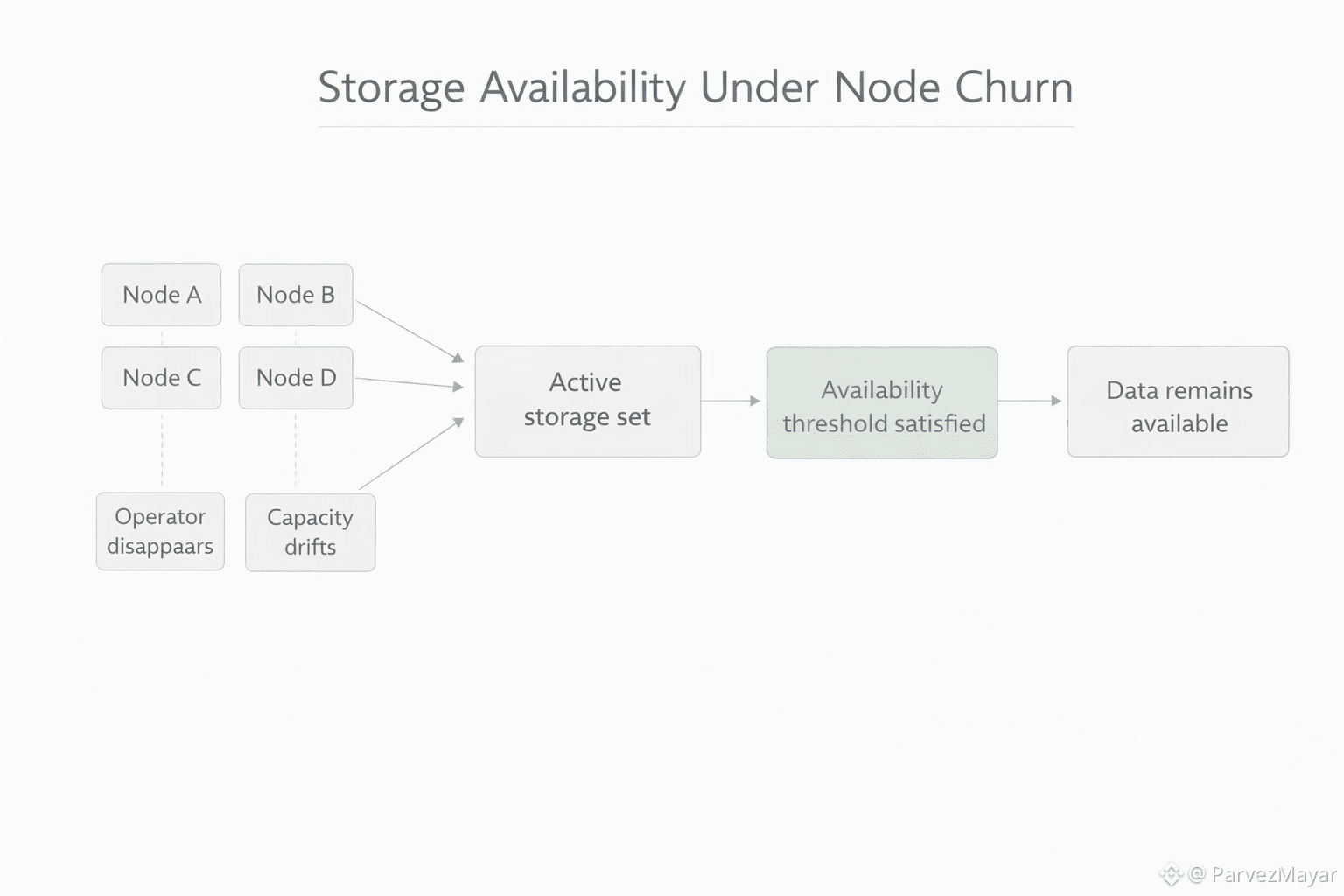
If a blob can not be retrieved inside its window... nothing else matters.
Operator spread looks similar. Hundreds of operators. North of a hundred nodes. Enough that failures don't announce themselves with alarms. They show up as delays. Accounting questions. Proofs that arrive a little later than you'd like. The boring kind of failure. The expensive kind, if ignored for long though.
One dataset about Walrus keeps looping in my head... millions of credentials from Humanity Protocol, stored as blobs. Not demos. Not placeholders. Identities with expiry and replication rules attached. Miss the window and it is not theoretical anymore.
Somewhere around there, storage stops feeling like infrastructure. It starts feeling like responsibility.
I do not see Walrus "driving adoption". I see it removing excuses earlier than teams expect. Retention gets shorter. Ownership gets named.
"Let’s clean this later" quietly dies, because later is priced.
When I closed the dashboards, everything looked calm.
That is usually fine.
Until it is no... and by then the pressure has already decided where it wants to surface.

