
Everyone believes the same delusion.
Stablecoin transfers should be cheap, simple, and invisible.
Nah. That’s how you end up debugging money.
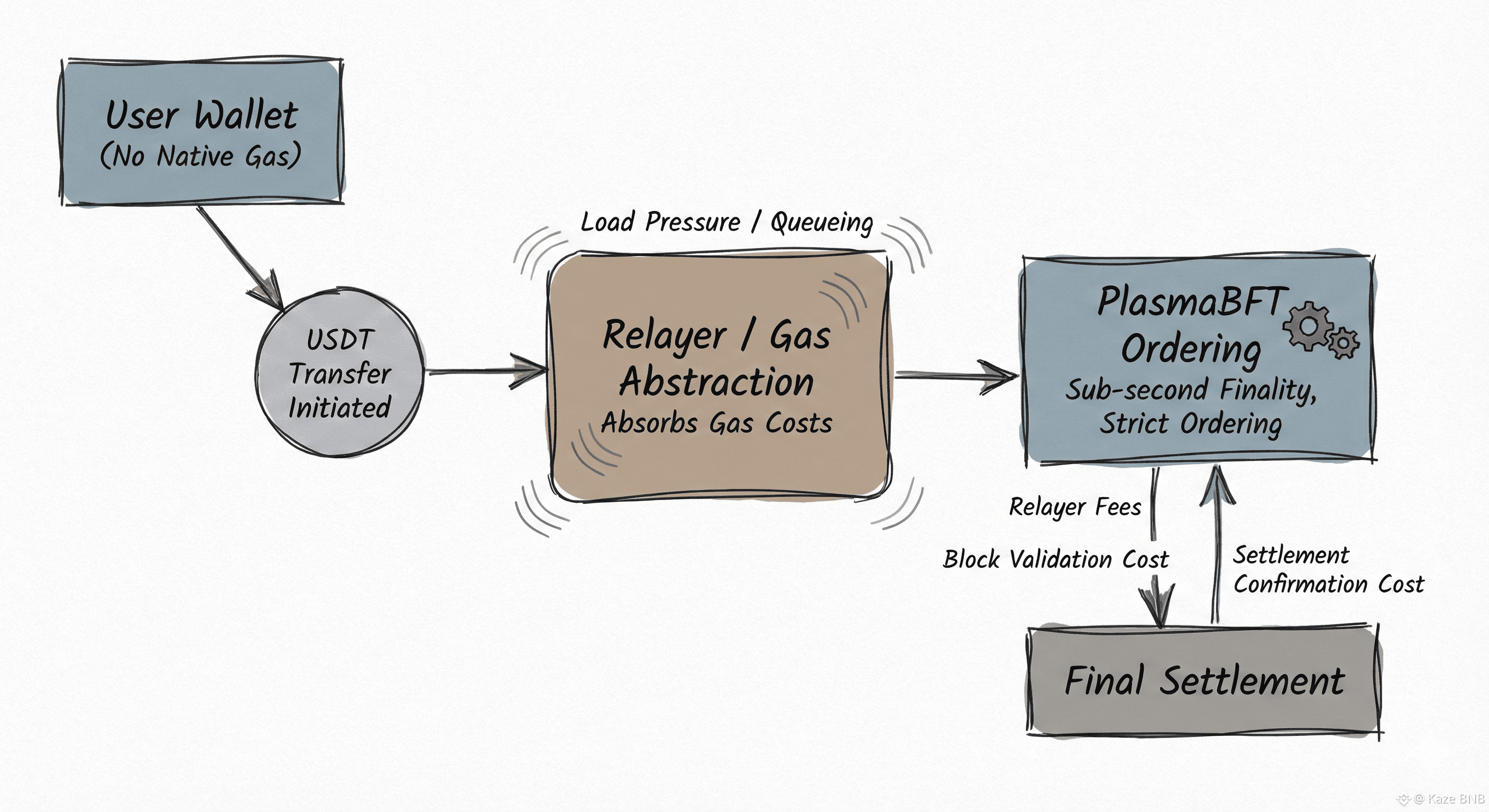
Gasless USDT sounds like marketing until you run operations in markets where users don’t hold native tokens and never will. Plasma’s stablecoin-first gas model isn’t generosity. It’s admission. If your users need a separate asset just to move dollars, your system is already leaking friction. Gas abstraction doesn’t remove cost. It moves it to the place that can actually manage it.
Then the bill arrives.
Someone pays for that gas. Someone maintains relayers. Someone absorbs spikes. Plasma makes that explicit instead of pretending fees disappeared. That honesty matters when volume ramps and subsidies stop being cute.
Now security.
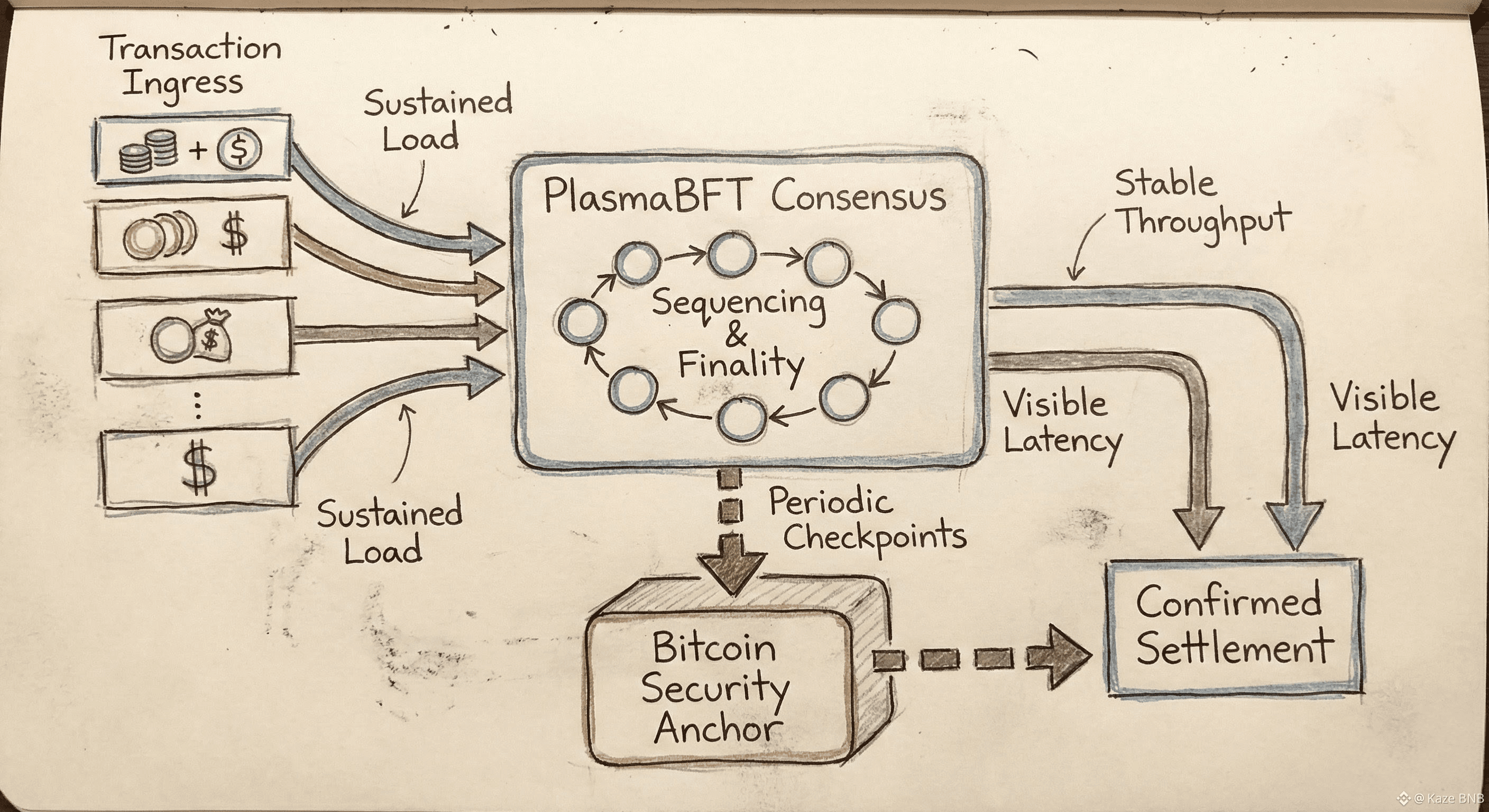
People love saying “decentralized” without explaining who actually anchors trust. Plasma borrows gravity from Bitcoin because neutrality is expensive to fake. Bitcoin anchoring isn’t about speed. It’s about not having to explain later why reorgs, censorship, or governance pressure suddenly matter. Bitcoin doesn’t care who you are. That’s the feature.
Is it free? Of course not.
Anchoring has latency. It has operational overhead. It has monitoring costs.
Exactly. Price is a filter for quality.
Scalability is where fantasies usually die. High throughput is easy in demos. Sustained throughput with predictable behavior is not. Plasma doesn’t chase peak TPS charts. It focuses on repeatable settlement. Blocks land. Ordering holds. Finality doesn’t wobble when traffic spikes. That’s boring. That’s the point.
When systems get “exciting,” it usually means queues are backing up and someone is hiding it behind UI optimism.
Plasma doesn’t hide it.
If the chain slows, you see it. If ordering matters, you feel it. That transparency is annoying until you’re responsible for reconciliation. Then it’s relief.
As for users, Plasma isn’t pretending everyone is the same. Retail in high-adoption markets cares about one thing: stablecoins that move without friction or surprises. Institutions care about different pain: settlement guarantees, neutrality, and behavior that holds under scrutiny. Same chain. Different tolerances. Plasma doesn’t optimize for vibes. It optimizes for not being the reason a transfer needs explaining.
Cheap systems optimize for entry.
Plasma optimizes for staying power.
Boring costs more.
But boring is what survives when volume, regulation, and real money show up.
That’s not a narrative.
That’s infrastructure.


