
Most blockchains talk about speed and scale, but Plasma is built around one simple goal: make stablecoins usable in real life. That means payments that feel instant, cost almost nothing, and work globally without needing permission or middlemen. When you read Plasma’s “Use Cases” page, it becomes clear that this chain is designed for everyday money movement, not just trading.
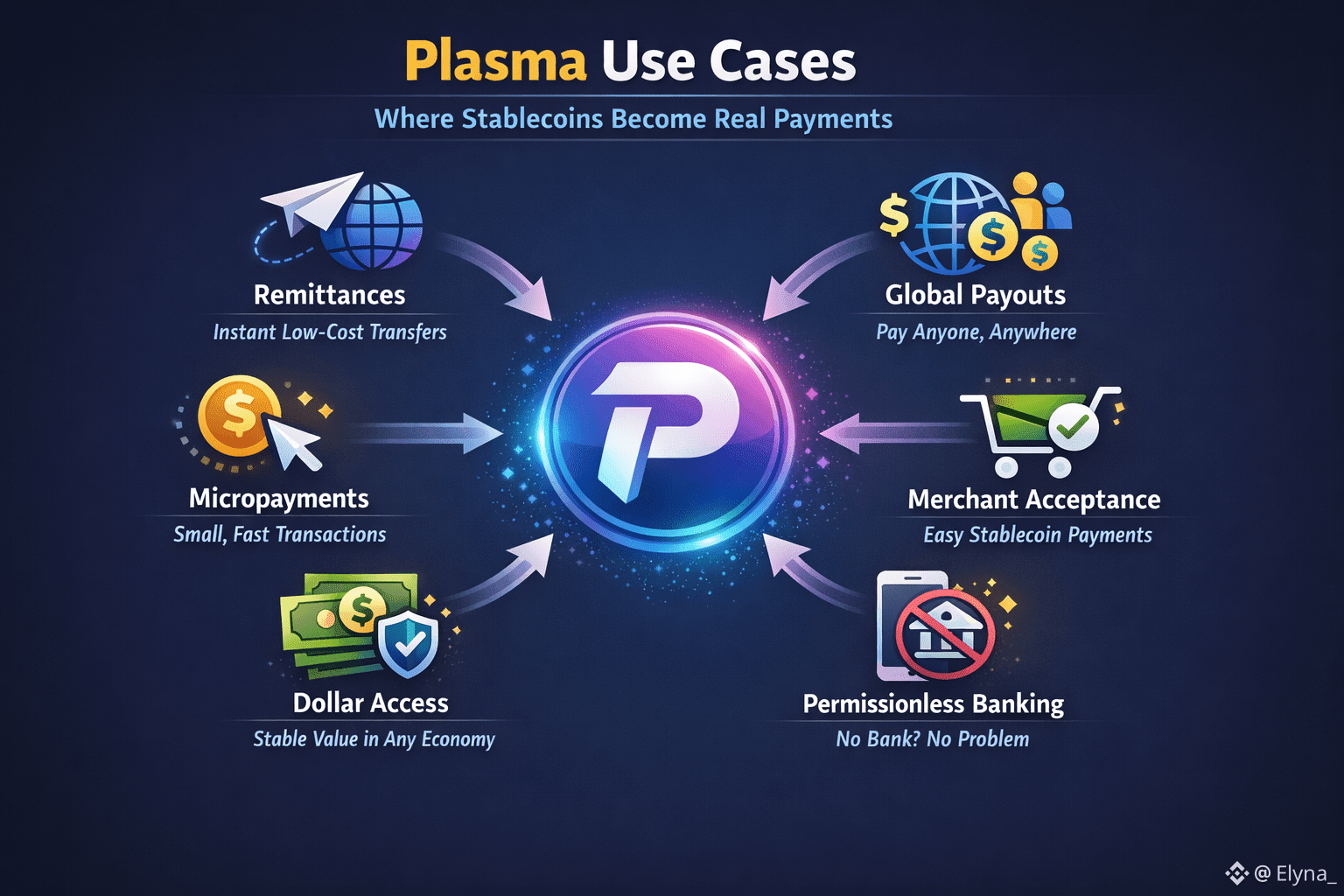
One of the strongest use cases is remittances. Millions of people send money home every month, and traditional systems often charge high fees and take hours or even days. Plasma supports low-cost cross-border transfers that move instantly, cutting out unnecessary layers in the process. For people who depend on fast payments, this isn’t just “better crypto tech.” It’s a real improvement in how families survive and plan.
Another key area is micropayments. Small payments usually fail on normal rails because fees destroy the economics. Plasma makes low-fee payments practical, which opens the door for internet-native businesses: pay-per-view content, streaming subscriptions that charge by the second, gaming rewards, API usage billing, and more. When fees drop enough, entirely new product models become possible.
Plasma also highlights global payouts, which matters for the modern workforce. Teams are remote, contractors are everywhere, and companies need a way to pay people instantly across borders. Instead of relying on slow bank transfers, Plasma supports fast payouts to workers, creators, affiliates, and partners. It’s the kind of financial utility that feels boring—until you need it at scale.
For everyday commerce, merchant acceptance is another major use case. Merchants want payments that settle quickly, avoid chargeback risk, and reduce processing costs. Plasma focuses on instant settlement and lower fees, which can make stablecoin payments more attractive than traditional card networks in certain markets. The goal is simple: make paying with stablecoins feel normal.
Then there is dollar access, especially in unstable economies. Plasma describes stablecoins as permissionless access to dollars, helping users hold value in a currency they trust when local money is losing purchasing power. This use case is already happening globally, and Plasma positions itself as the rail that makes it smoother and cheaper.
Finally, Plasma frames all of this as permissionless banking: saving, spending, and earning without needing a bank account. That concept sounds big, but the real meaning is simple—anyone with internet can participate, even if the local system blocks them.
Plasma’s use cases aren’t speculative. They are daily financial problems—solved by making stablecoins act like real money.

