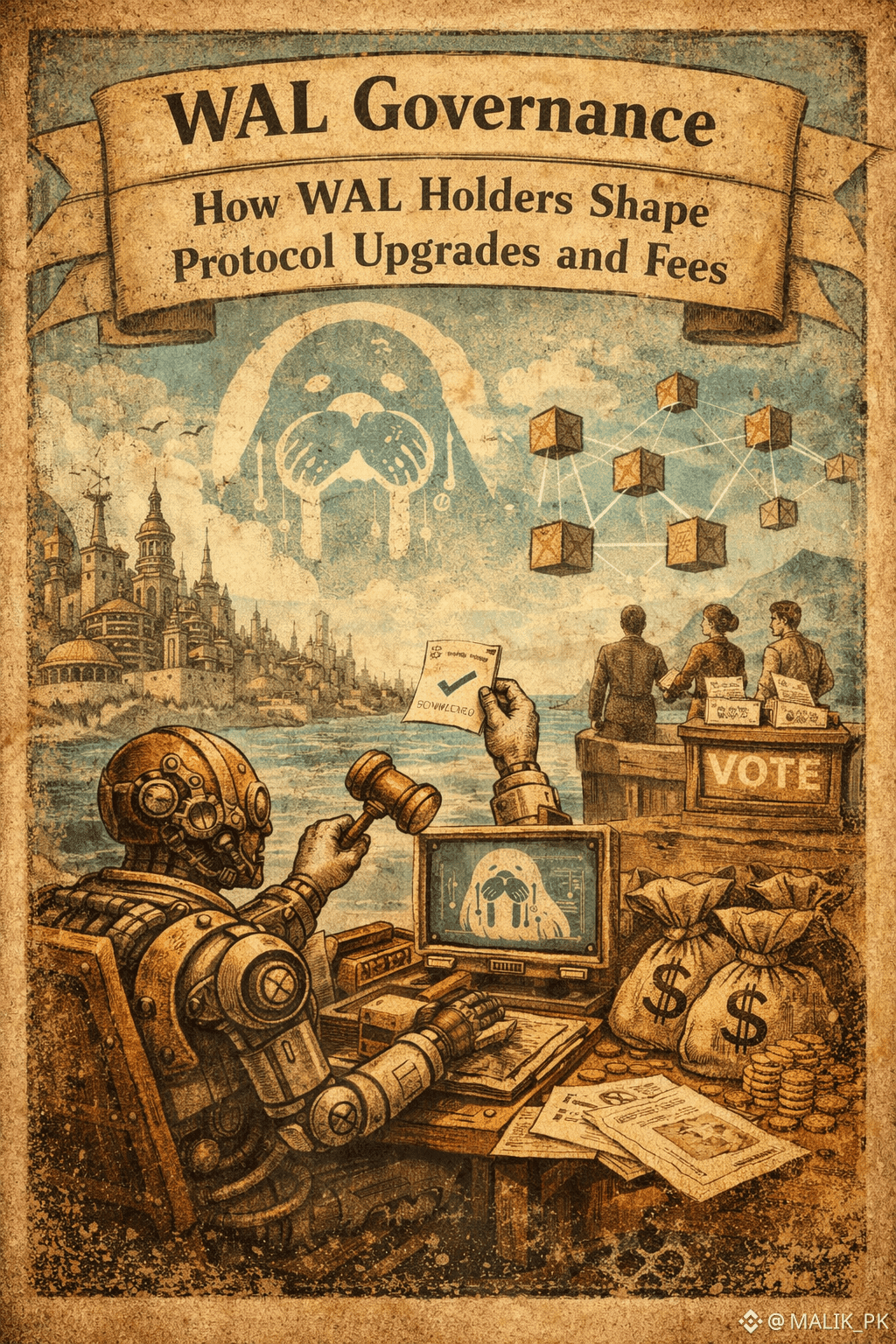
In decentralized networks governance is one of the most critical mechanisms for ensuring that the community has a voice in how the protocol evolves walrus places governance power directly in the hands of wal holders allowing them to vote on upgrades fee structures and other key decisions this system creates a shared sense of responsibility and encourages long term participation and engagement
wal holders participate in governance by submitting proposals discussing potential changes and casting votes on decisions that affect the entire network every token represents a voice ensuring that those who are invested in the ecosystem have influence over its future the voting process is transparent and auditable providing confidence that decisions are made collectively and fairly without centralized control
one of the main aspects of wal governance is protocol upgrades these upgrades can include technical improvements network optimizations or changes to how transactions are processed by allowing holders to vote on upgrades the network ensures that development aligns with the community’s priorities rather than the agenda of a small group of developers this helps prevent centralization and promotes a more resilient and adaptable ecosystem
fees are another important area where wal holders have influence governance allows the community to propose adjustments to transaction costs staking requirements or reward structures for participants this means that economic incentives within the network can be tuned collectively creating a system where costs and benefits reflect the preferences and needs of the majority rather than being set arbitrarily
participation in governance also fosters accountability and engagement among both developers and users when holders actively vote on decisions it encourages transparent communication about upcoming changes and creates feedback loops that improve protocol design over time this collaborative process ensures that the ecosystem evolves in a way that is both technically sound and aligned with the interests of those who rely on it
the governance framework on walrus also includes mechanisms for discussion and debate proposals can be reviewed, critiqued and refined before a vote is held this deliberative process strengthens the quality of decisions and allows the community to anticipate potential risks or unintended consequences ensuring that upgrades or fee changes are considered carefully before implementation
in addition to voting wal holders can delegate their voting power to trusted representatives creating a system of liquid democracy this allows smaller holders to participate indirectly and ensures that even those who do not have the time or expertise to vote on every proposal can still influence outcomes by choosing delegates who reflect their values and priorities
by integrating governance directly into the protocol walrus creates a self reinforcing ecosystem where community engagement and technical development go hand in hand holders are incentivized to participate because their votes directly shape the rules and the future of the network and because active participation improves the overall health security and sustainability of the ecosystem
in conclusion wal governance empowers wal holders to be active participants in the evolution of the network giving them control over protocol upgrades fees and other key decisions this ensures that development is aligned with community priorities and that economic incentives remain fair and balanced the system fosters accountability transparency and collaboration creating an ecosystem where the community is not just a user base but a driving force shaping the future of walrus