
Dusk gets uncomfortable when the deadline isn’t “ops time” anymore.
A clock hits the line and the system treats it as a new execution window. Eligibility posture changes. Dusk's Disclosure scope changes. Whatever was valid earlier isn’t automatically valid now, even if nothing “happened.” That’s the trap. People expect continuity because most infrastructure rewards it.
A transfer is staged. It looked clean in the afternoon: credentials live, access boundary satisfied, the Moonlight path is fine, proofs check out, everyone assumes settlement will land inside the same reporting window. The last mile is treated like logistics.
Then finality doesn’t land before the cutoff.
On Dusk, that matters in a way it usually doesn’t elsewhere. If the window flips, the state transition is evaluated under the new constraints. Not reinterpreted. Evaluated. Different window, different posture. If the disclosure conditions that were sufficient at 16:58 aren’t sufficient at 17:01, the chain doesn’t keep the earlier version in its pocket as a courtesy.
It just doesn’t clear.
Nothing is “wrong” with the transaction in the sloppy sense. No malicious behavior. No broken consensus. DuskDS keeps finalizing blocks, validators keep attesting, the network stays alive. The problem is simpler and more annoying: the transfer didn’t qualify at the moment deterministic finality was supposed to stamp it.
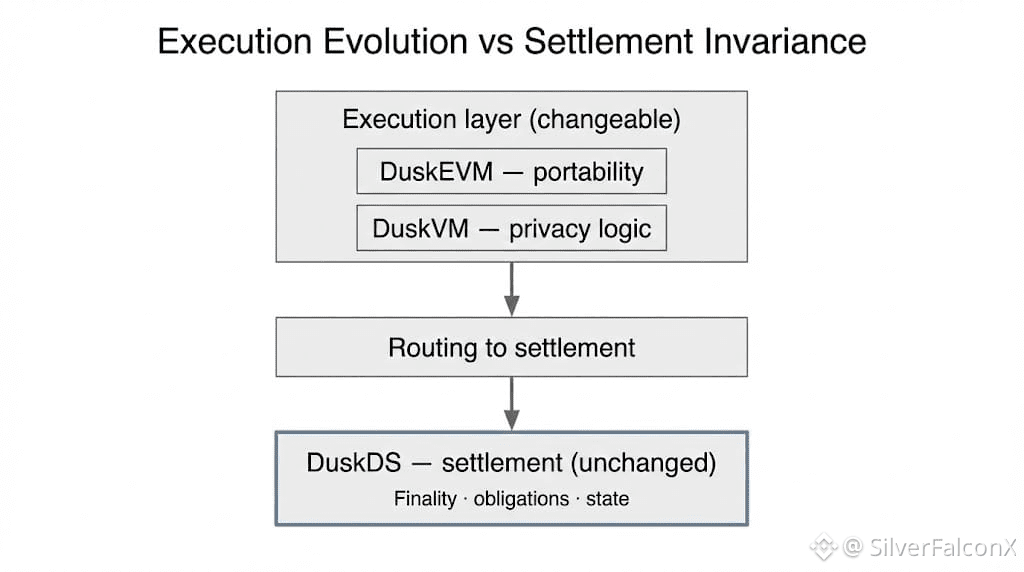
Near misses don’t have a category.
This is where teams notice what privacy changes operationally. There’s no public trace showing you were almost there. No mempool noise to read as progress. From outside, it looks like quiet. Inside, it’s already decided: window changed, conditions changed, settlement didn’t land.
Then the expensive part starts and it’s not technical.
Positions roll into the next window. Reporting buckets shift. Counterparties ask why something they treated as done is now in a different period. The answer isn’t a story about congestion or delay. It’s a timestamp. A hard one. And because disclosure is scoped, you can’t widen visibility on the fly just to make the conversation easier.
People try anyway.
That habit—temporal forgiveness—works on systems that allow “submitted before” logic or let settlement inherit legitimacy from earlier checks. Dusk doesn’t. Preparation isn’t a substitute for finality. Intent doesn’t outrank the active rule set.
If a cutoff is real, it’s real at execution.
And when it’s missed, the chain doesn’t soften it into process. It leaves everyone holding the same fact, at the same time, with less room to negotiate what “should have counted.”
