
In most Web3 ecosystems, infrastructure adoption doesn’t announce itself. It happens quietly, through dependency. That is exactly the phase @Walrus 🦭/acc is entering on Sui right now. Walrus is no longer being evaluated as “a storage option” — it is increasingly being used as the storage layer for applications that cannot afford data failure.
This shift matters because storage defaults shape ecosystems more than narratives do.
Why Sui Applications Are Choosing Walrus
Sui’s design encourages high-throughput, object-based applications. That creates immediate pressure on storage. Apps on Sui are not static contracts; they are data-heavy systems that evolve continuously. Walrus fits this environment because it treats blobs as managed objects with enforceable guarantees.
For developers, this translates into practical advantages:
predictable data availability
no reliance on centralized hosting
on-chain accountability for storage failures
smoother upgrades as applications evolve
These are not theoretical benefits. They directly reduce operational risk for live applications.
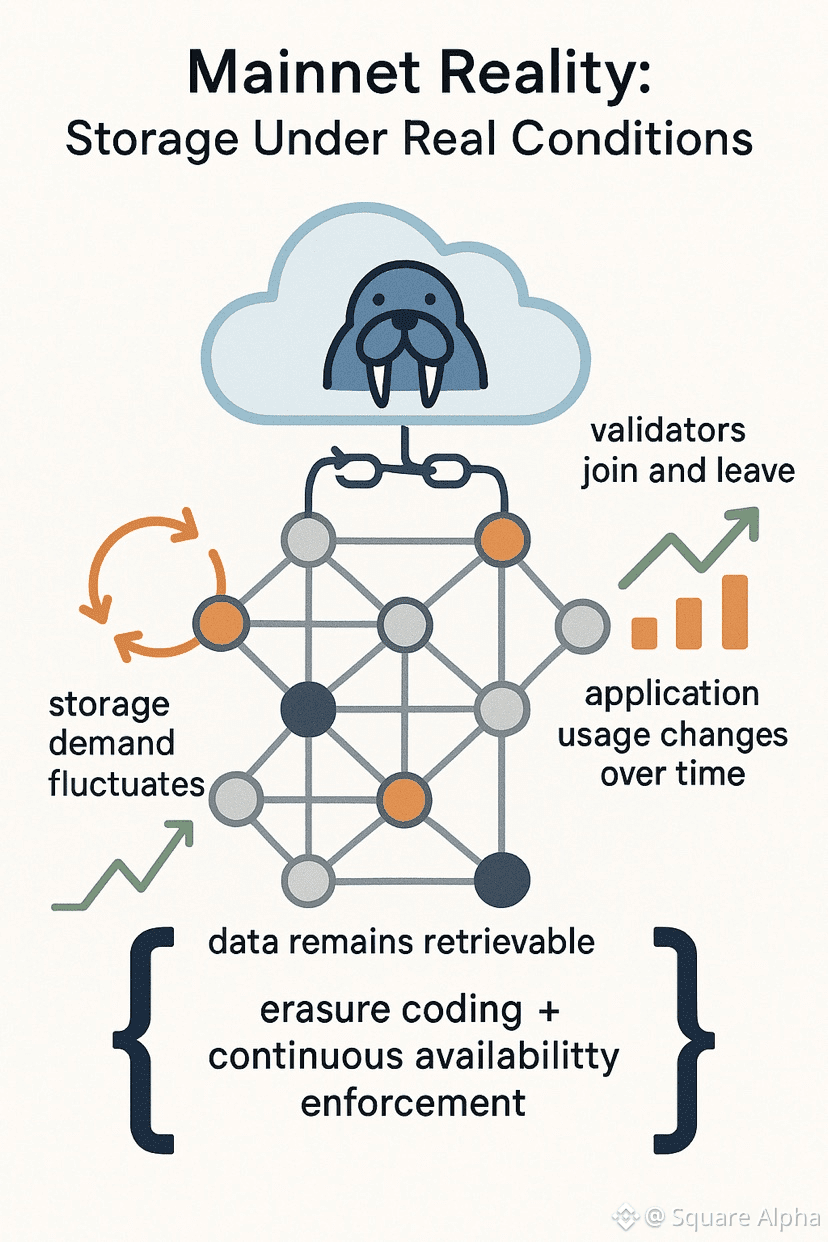
Mainnet Reality: Storage Under Real Conditions
Walrus mainnet is already operating under real network conditions:
validators join and leave
storage demand fluctuates
application usage changes over time
Instead of breaking under these conditions, Walrus is designed to absorb them. Through erasure coding and continuous availability enforcement, data remains retrievable even when parts of the network churn.
This is the difference between demo-ready infrastructure and production infrastructure. Walrus is proving it can handle the latter.
WAL Is Actively Coordinating Network Behavior
The relevance of $WAL comes from its current role, not future speculation.
Right now, WAL:
secures storage providers through staking
incentivizes long-term availability rather than short-term capacity
aligns validator behavior with data persistence
enables governance over protocol parameters
This keeps the Walrus network stable as usage grows. Storage networks fail when incentives weaken under pressure. WAL exists specifically to prevent that decay.
Decentralization Without Blind Spots
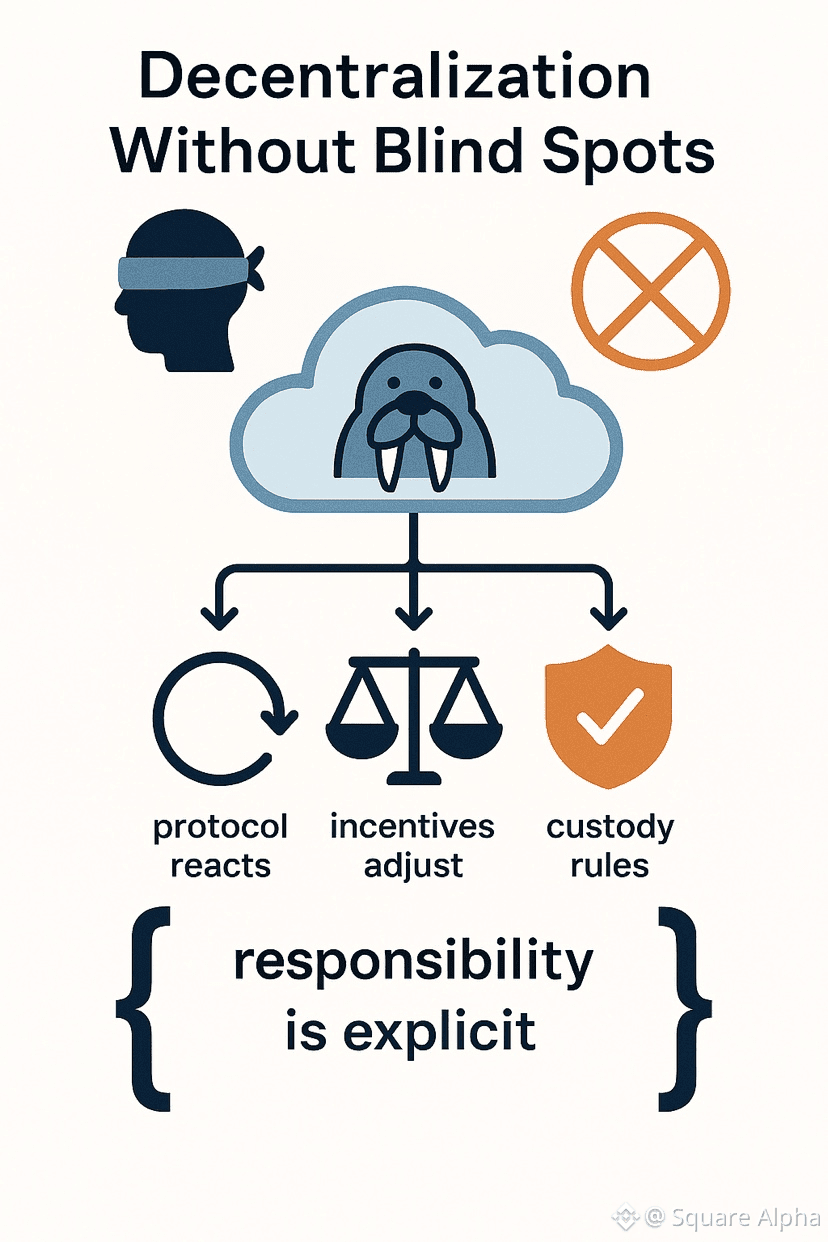
Many decentralized storage systems decentralize responsibility so widely that accountability disappears. Walrus takes the opposite approach. Responsibility is explicit, enforced, and measurable.
If availability guarantees are not met:
the protocol reacts
incentives adjust
custody rules resolve responsibility
This makes Walrus legible under failure — an underrated but critical property for infrastructure.
What This Means for the Sui Ecosystem
As more applications deploy on Sui, storage becomes a shared dependency. When one reliable solution exists, coordination naturally forms around it. That is how infrastructure consolidates.
Walrus is positioning itself at that consolidation point:
trusted by builders
aligned with Sui’s object model
optimized for live application data
Once an ecosystem standard emerges, displacement becomes difficult. Switching storage layers is expensive, risky, and disruptive.
Final Take
Walrus is not trying to dominate headlines.
It is trying to eliminate storage as a point of failure on Sui.
With mainnet live, applications actively relying on it, and $WAL securing real network behavior, Walrus is transitioning from “promising protocol” to ecosystem backbone.
Infrastructure that reaches this stage rarely reverses.


