
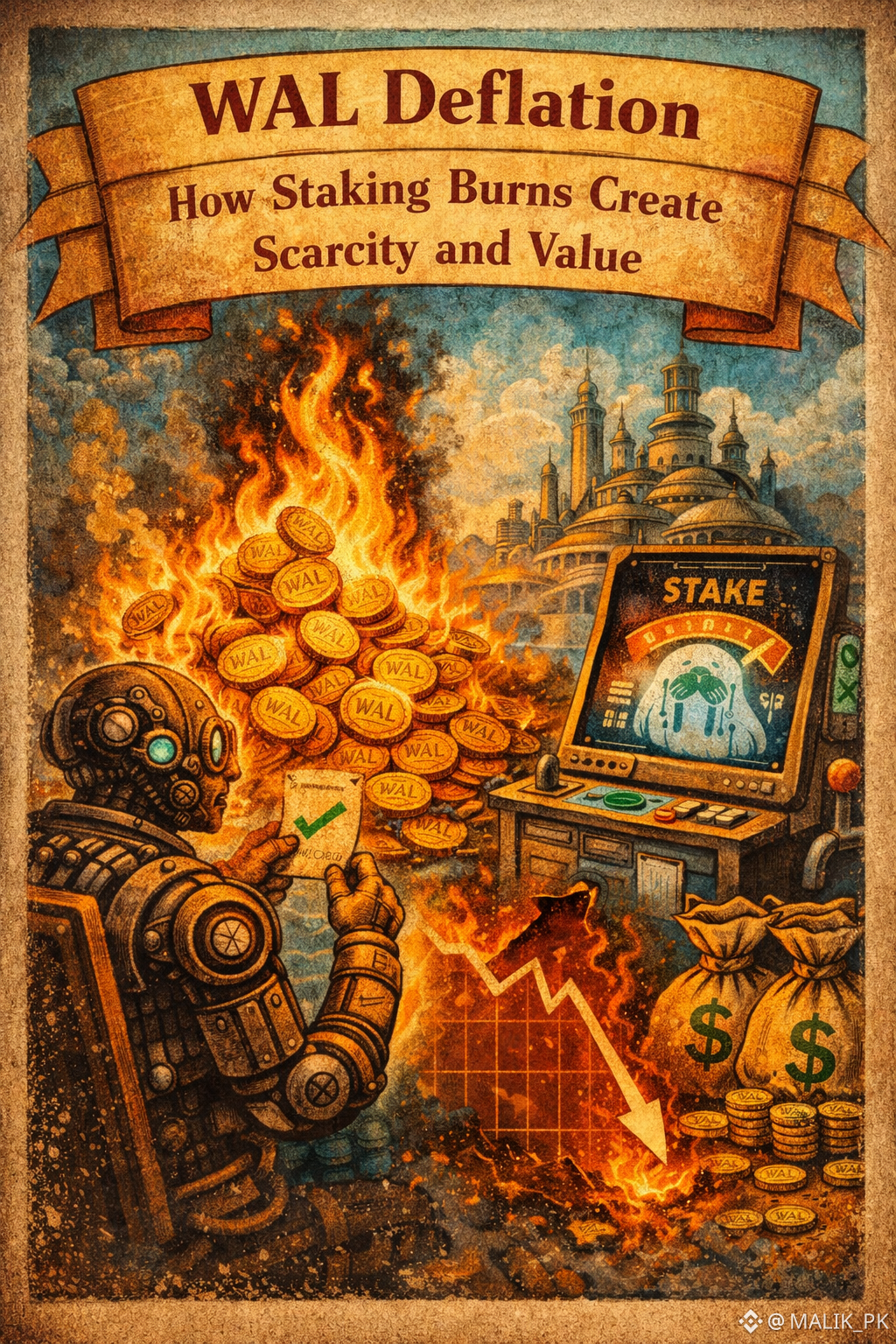
in decentralized finance the design of token economics plays a critical role in shaping value and incentivizing participation walrus introduces a burn mechanism linked to staking that creates deflationary pressure by reducing the total supply of wal tokens over time this mechanism aligns the interests of holders and the network creating scarcity that can support long term value appreciation while encouraging active engagement
staking is at the core of this process when users stake wal tokens to secure the network participate in governance or provide liquidity a portion of the staked tokens is burned permanently removing them from circulation this means that the more users engage with the protocol the fewer tokens remain in the supply creating a natural deflationary effect that rewards long term participants and helps balance token distribution across the ecosystem
the burn mechanism also acts as an economic incentive for holders to stake their tokens rather than leaving them idle by tying deflation directly to participation walrus ensures that engagement is mutually beneficial holders contribute to network security and governance while simultaneously supporting token value through scarcity this creates a positive feedback loop where active users are aligned with the growth and health of the ecosystem
in addition to creating scarcity the burn mechanism provides transparency and predictability for the network economics every burned token is recorded on the blockchain making the process auditable and verifiable this allows the community to track deflationary trends and understand how staking behavior impacts supply and potential value over time it also reinforces trust in the system by ensuring that token burns are executed fairly and according to protocol rules
deflationary staking also helps stabilize the network by discouraging excessive selling pressure if holders know that staking not only contributes to network security but also reduces overall supply they are more likely to retain tokens and participate actively this can reduce volatility and create a more resilient economic model that supports sustainable growth and long term stability
the wal burn mechanism is flexible and can adapt as the network evolves staking requirements burn rates and deflationary parameters can be adjusted through governance proposals allowing wal holders to collectively decide on the optimal balance between scarcity and liquidity this community driven approach ensures that economic incentives remain aligned with the needs and goals of the ecosystem while providing a dynamic mechanism for value creation
by integrating a burn mechanism into staking walrus demonstrates a sophisticated approach to tokenomics that combines engagement incentives with scarcity management this design encourages participation rewards long term holders and supports the sustainable growth of the network over time holders are empowered to influence both governance and economic outcomes creating a system where individual actions contribute to collective value
in conclusion the wal deflation mechanism through staking burns is a key feature that drives scarcity supports value and aligns incentives across the network it encourages participation rewards active users and creates a transparent predictable system for managing token supply the design reflects a thoughtful balance of economic and technical considerations and positions walrus as a network where engagement and value creation go hand in hand promoting long term sustainability and resilience

