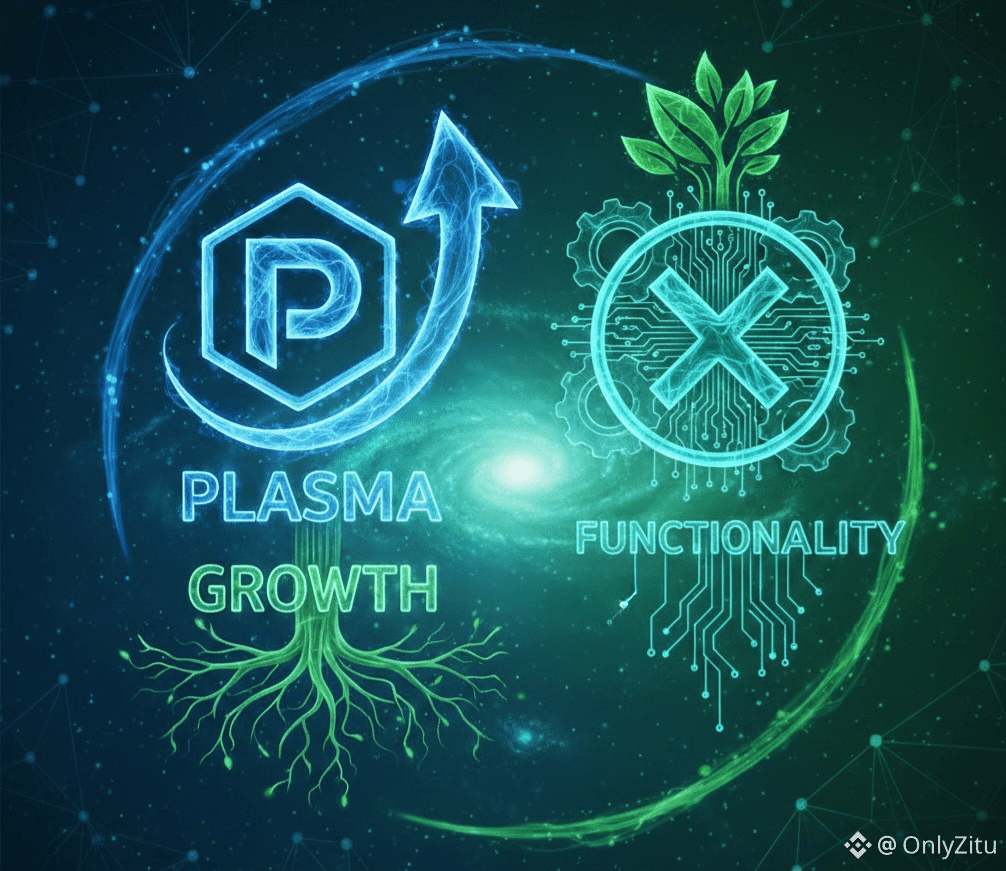
$XPL & The Plasma Ecosystem: Why Investors Are Betting on This Unique Crypto?
In the ever-expanding universe of cryptocurrency, where new projects emerge daily, @Plasma token has carved out a distinctive niche, attracting a growing base of strategically strong investors. Their interest is not driven by hype alone, but by a clear value proposition built on technological uniqueness, real-world utility and the compelling scalability.
Why Are Investors Buying XPL Tokens?
Investors are primarily drawn to XPL for its foundational role within the #Plasma ecosystem, which is designed to bridge blockchain technology with practical, scalable computing solutions. Several key areas:
1. Backing a Decentralized Supercomputer: Plasma’s flagship project, Plasma Chain, aims to create a decentralized network for high-performance computing. Investors are buying XPL as the essential element for this network. It is used to pay for computational resources like CPU, GPU, and storage, positioning XPL as a utility token with consistent, demand-driven use cases similar to how ETH powers Ethereum transactions.
2. Access to a Dual-Token Economy: The ecosystem features a unique dual-token model with XPL and DLP (Data Loyalty Points). XPL acts as the main transactional and staking token, while DLP rewards network participation and usage. Investors see value in holding #XPL to participate fully in this economy, potentially benefiting from staking rewards and the growth of the entire network.
3. Commitment to Tangible Products: Unlike many abstract crypto projects, #Plasma is focused on delivering tangible software solutions like PlasmaDAO and PlasmaOS. This focus on building usable infrastructure for decentralized applications (dApps) and computing attracts investors who favor projects with demonstrable progress and clear roadmaps over mere speculation.
Uniqueness and Scalability: The Core Strengths
XPL’s uniqueness is its bedrock. It is not just another DeFi or meme token, it is integral to a decentralized cloud computing platform. This solves a critical market need: providing scalable, affordable computing power in a decentralized manner, challenging giants like Amazon Web Services (AWS) and Google Cloud.
Its scalability is engineered through:
· A Custom Blockchain (PlasmaChain): Built using Tendermint and the Cosmos SDK, it’s designed for high transaction throughput, avoiding the congestion and high fees of networks like Ethereum.
· The Plasma Computing Protocol: This protocol efficiently distributes computational tasks across a global network of nodes, scaling resources horizontally as more providers join the network.
· Interoperability: By leveraging Cosmos’s Inter-Blockchain Communication (IBC) protocol, PlasmaChain can communicate with other blockchains, allowing it to scale its utility and access liquidity across the crypto ecosystem.
Plasma Tokens: Positive Sides and Strengths
The strengths of the Plasma token ecosystem comes in multiple ways:
· Real-World Utility: The direct link to purchasable computing power creates inherent, non-speculative value.
· Strong Community & Governance: XPL holders can participate in governance via PlasmaDAO, giving investors a direct voice in the project’s future.
· Experienced Team: The project is backed by a team with deep expertise in blockchain, efficient software engineering, and business development, lending credibility and execution capability.
· Early-Mover Advantage: In the decentralized physical infrastructure (DePIN) and computing niche, Plasma is a recognized pioneer, giving it a significant competitive edge.
Future Forecast: A Calculated Ascent
Forecasting the future of any cryptocurrency involves uncertainty, but the trajectory for XPL is tied to identifiable factors. Its success is fundamentally linked to the adoption of the Plasma computing network.
Short-to-Mid Term (1-3 years): Growth will likely hinge on onboarding more computing providers and clients onto the network. Successful partnerships with dApp developers, AI startups, or rendering farms needing cheap computing power could drive significant demand for XPL tokens. Price action may correlate with major platform milestones, mainnet upgrades, and exchange listings.
Long-Term Vision: If PlasmaChain achieves its goal of becoming a go-to decentralized infrastructure layer, XPL could evolve into a cornerstone asset within the broader Web3 stack. Its value would be underpinned by a thriving economy of computational resource trading. The growing demand for decentralized cloud solutions, AI training, and complex simulations presents a vast addressable market.
Conclusion
Investors are not merely trading XPL; they are investing in the infrastructure of a decentralized digital future. Its uniqueness as the lifeblood of a scalable computing network, combined with its strong utility foundations and clear roadmap, sets it apart in a crowded market. While risks inherent to the crypto space remain, Plasma’s focus on solving a real-world problem with blockchain technology positions XPL as a token with the potential for sustained, utility-driven growth in the years to come. Lastly I can say this token price will increasing year by year if their backend going sustainable and strong.