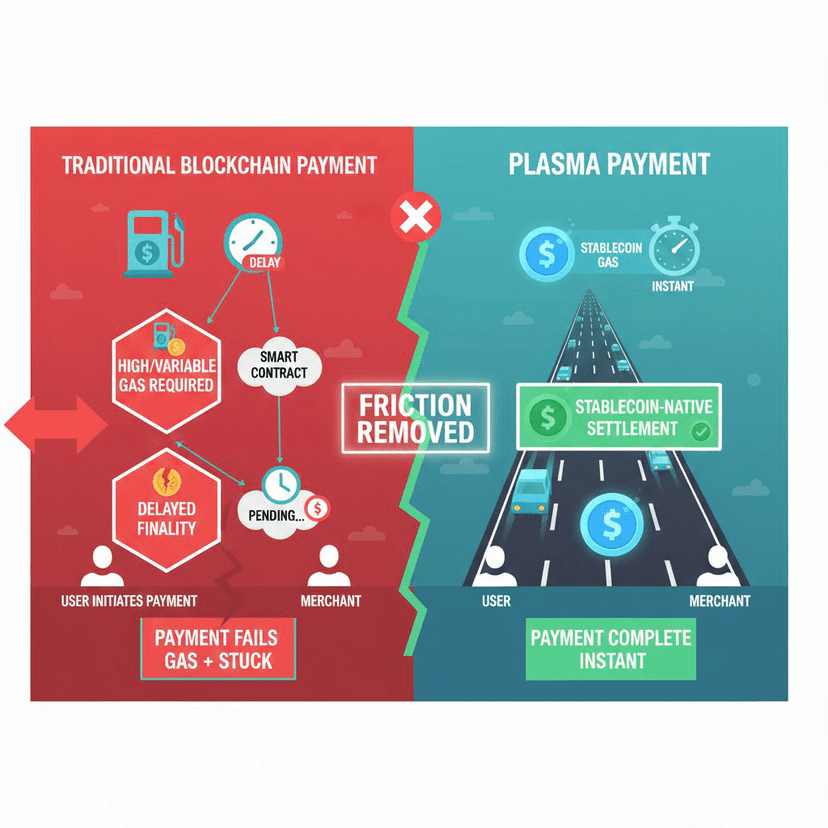
Większość blockchainów działa dobrze tylko wtedy, gdy warunki są idealne. Opłaty są niskie, sieci są spokojne, a użytkownicy już posiadają odpowiednie tokeny. Płatności nie istnieją w tym świecie.
Prawdziwym testem sieci płatniczej jest to, co się dzieje, gdy ktoś po prostu chce wysłać pieniądze. Żadne samouczki. Żadne żonglowanie saldami. Żadne czekanie. To jest miejsce, w którym większość łańcuchów cicho zawodzi.
Plasma to warstwa 1 zbudowana wokół tego dokładnego punktu nacisku: płatności stablecoinów w rzeczywistych warunkach. Zamiast traktować stablecoiny jako gości w sieci, Plasma traktuje je jako domyślne. Ten wybór projektowy zmienia wszystko.
Na Plasma wysyłanie USDT nie wymaga myślenia o opłatach za gaz. Transfery bez gazu usuwają jeden z największych powodów, dla których płatności nie działają. Gazowy priorytet stabilnej waluty usuwa kolejny. Nie musisz się zatrzymywać i zdobywać oddzielnego tokena tylko po to, aby przenieść wartość. Płatność albo działa, albo nie — a Plasma jest zaprojektowana tak, aby działała.
Prędkość ma tutaj znaczenie, ale nie z powodów hypesowych. Finalizacja w czasie krótszym niż sekunda oznacza, że płatność jest zakończona, gdy użytkownik tego oczekuje. Brak oczekiwania na to, czy „przyklei się”. Brak mentalnego obciążenia. Tak powinny wyglądać płatności.
Bezpieczeństwo często jest omawiane abstrakcyjnie, ale Plasma wiąże swoje bezpieczeństwo z Bitcoinem z prostego powodu: neutralności. Kiedy budujesz sieć płatniczą, opór przed cenzurą nie jest opcjonalny. To fundament. Wiązanie z Bitcoinem to sygnał o długoterminowej niezawodności, a nie marketing.
To, co interesujące w Plasma, to nie to, że dodaje więcej funkcji. Usuwa wymówki. Usuwa małe tarcia, które zamieniają prawdziwe płatności w zgłoszenia wsparcia i nieudane transfery. To skupienie czyni go użytecznym zarówno dla codziennych użytkowników na rynkach o wysokiej adopcji, jak i dla instytucji, które dbają o rzeczywiste zakończenie transakcji.
Plasma nie stara się zdobyć narracji. Stara się uczynić płatności stabilnymi walutami nudnymi — a nudne to dokładnie to, czego potrzebuje prawdziwe pieniądz.