
A stunning new reality is reshaping North America. For generations, the U.S.-Canada relationship was described as the world's most extensive and friendliest. Today, that bedrock of trust is cracking under the weight of tariffs, rhetoric, and a profound shift in Canadian public sentiment. The data reveals a nation deeply disillusioned with its southern neighbor and, for the first time, beginning to look elsewhere. But does looking elsewhere mean running into China's arms? Let's analyze the numbers and the nuance.
🇺🇸 The Record-Shattering Canadian Chill: By the Numbers
The sentiment shift is not subtle; it is a seismic change captured by multiple authoritative polls.
Historic Lows in Favorability: Only 34% of Canadians now hold a favorable view of the United States, the lowest level recorded since tracking began over two decades ago. This collapse in goodwill is widespread, cutting across ideological lines.
A Crisis of Confidence in Leadership: The disapproval is personified in President Donald Trump. A mere 15% of Canadians approve of U.S. leadership under his current term, a rating statistically on par with their view of Russian leadership. Furthermore, a staggering 76% hold an unfavorable opinion of Trump personally. His characteristic traits are viewed overwhelmingly negatively, with 91% of Canadians describing him as "arrogant" and 76% as "dangerous".
From Ally to Threat: The most dramatic finding is perceptual. A majority of Canadians (59%) now name the United States as the top threat to their country, a complete reversal from 2019 when China held that position. This isn't abstract fear; most who see the U.S. as a threat believe it poses a "great deal" of a threat to both their economy and national security.
Why Such a Rapid Deterioration? Analysts point to Trump's second-term actions as the immediate catalyst: the imposition of steep tariffs, the suspension of trade talks, and rhetoric suggesting Canada could become the "51st state". This approach is seen as rooted in a transactional foreign policy doctrine and a nostalgic view of 19th-century territorial expansion, treating allies not as partners but as potential liabilities or acquisitions.
📊 The Contradiction: Sentiment vs. Strategic Reality
Here is where the analyst must look beyond the headline emotion. While feelings toward the U.S. have cratered, cold, hard strategic and economic realities tell a different story.
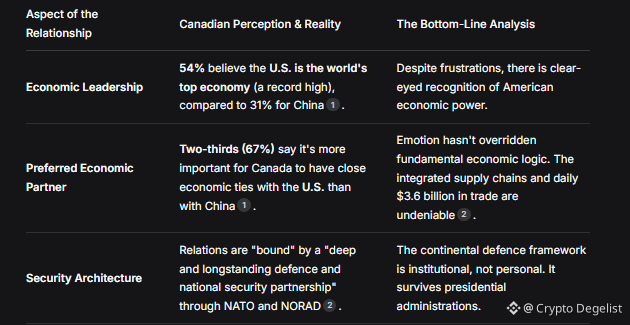
This creates the core paradox: Canadians are "fed up" with the U.S. leadership but remain inextricably tied to the U.S. system.
🇨🇳 So, Are Canadians "Choosing China"? A Nuanced Verdict
The idea of a wholesale pivot to China is overstated, but the shifting sentiment has opened strategic space that Beijing is likely watching closely.
The "China Option" Gains Relative Appeal: Approval of China's leadership among Canadians has risen to 23%, significantly higher than the U.S.'s 15% and its highest since 2018. This is less an endorsement of China and more a byproduct of record-low U.S. ratings.
It's About Diversification, Not Replacement: The significant 20-point drop since 2021 in the number of Canadians prioritizing U.S. economic ties suggests a strong desire to reduce dependency, not necessarily to crown a new primary partner. This is a pragmatic hedge against volatility.
The Left-Right Divide: The shift is most pronounced on Canada's ideological left, where only 58% now prefer close U.S. ties. This indicates the "China question" is becoming a more active part of domestic political debate.
🔮 The Analyst's Outlook: Fractured Feelings, Enduring Foundations
The headline captures a vital truth: the era of automatic, warm Canadian allegiance to the U.S. is over. The relationship has become politicized, contested, and fragile. This emotional fracture has real-world consequences, making diplomatic negotiations harder and creating an opening for other global powers to increase their influence in Ottawa.
However, the foundational pillars of the relationship—geography, integrated economics, and shared security—remain immovable objects. Canada is not about to abandon NORAD, dismantle its supply chains, or cede its largest energy market. The current sentiment is a powerful corrective to American actions, not a blueprint for a new geopolitical alignment.
The future of the relationship hinges on one factor: American leadership. As Gallup's data shows, Canadian approval of U.S. leadership averaged 61% under Obama and 41% under Biden, proving the damage is not permanent. For now, Canada is navigating a historic rift, driven not by love for China, but by a profound loss of faith in its oldest friend.


