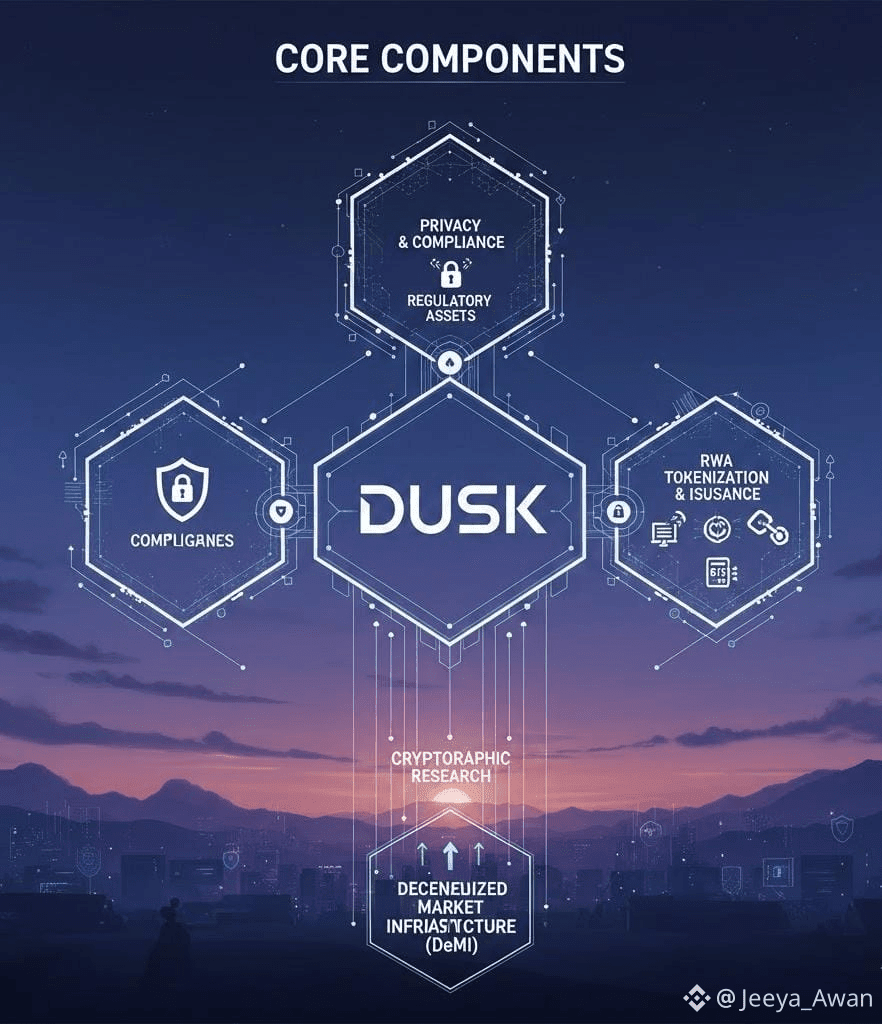
Dusk is built with a modular architecture, leveraging the tools and components, specifically designed to meet institutional standards for privacy, regulatory compliance, and secure interactions with regulated assets. These components enable Dusk to support not only the tokenization of real-world assets (RWAs) but also native issuance.
What sets Dusk apart from other blockchains is its tailor-made architecture, driven by continuous cryptographic research to ensure compliance, privacy, and robust network security, providing a reliable foundation to be a Decentralized Market Infrastructure (DeMI).
1. DuskDS:
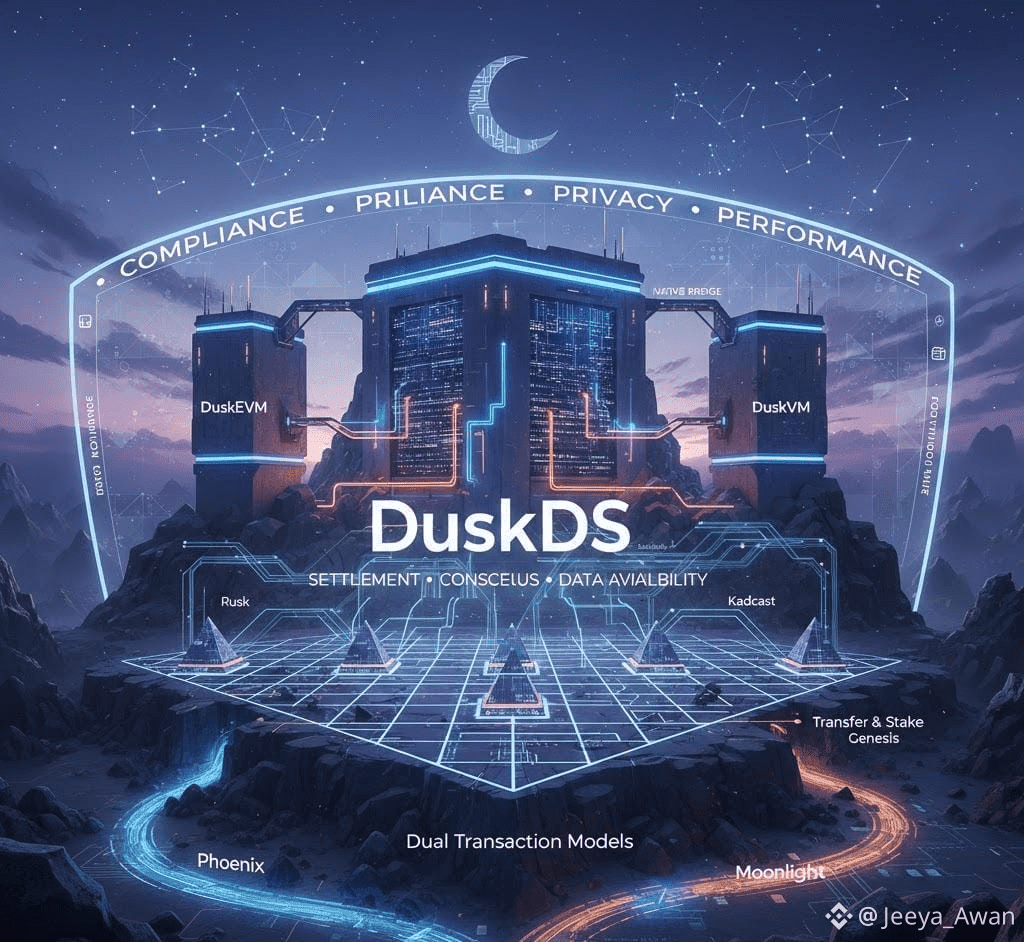
DuskDS is the settlement, consensus, and data availability layer at the foundation of the Dusk architecture. It provides finality, security, and native bridging for all execution environments built on top, including DuskEVM and DuskVM. By modularizing the protocol stack, DuskDS is built to meet institutional demands for compliance, privacy, and performance.
DuskDS includes Rusk (the node implementation) which is powered by Succinct Attestation (PoS-based consensus), Kadcast (P2P networking layer), and the Transfer and Stake Genesis contracts. Together, these elements form a secure, compliant, and composable environment for regulated financial applications.
Through its dual transaction models (Phoenix and Moonlight), it provides a secure settlement and data availability layer for compliant execution environments (such as DuskEVM and DuskVM). For seamless, trustless transfers between execution layers, DuskDS exposes a native bridge.
2. Rusk:
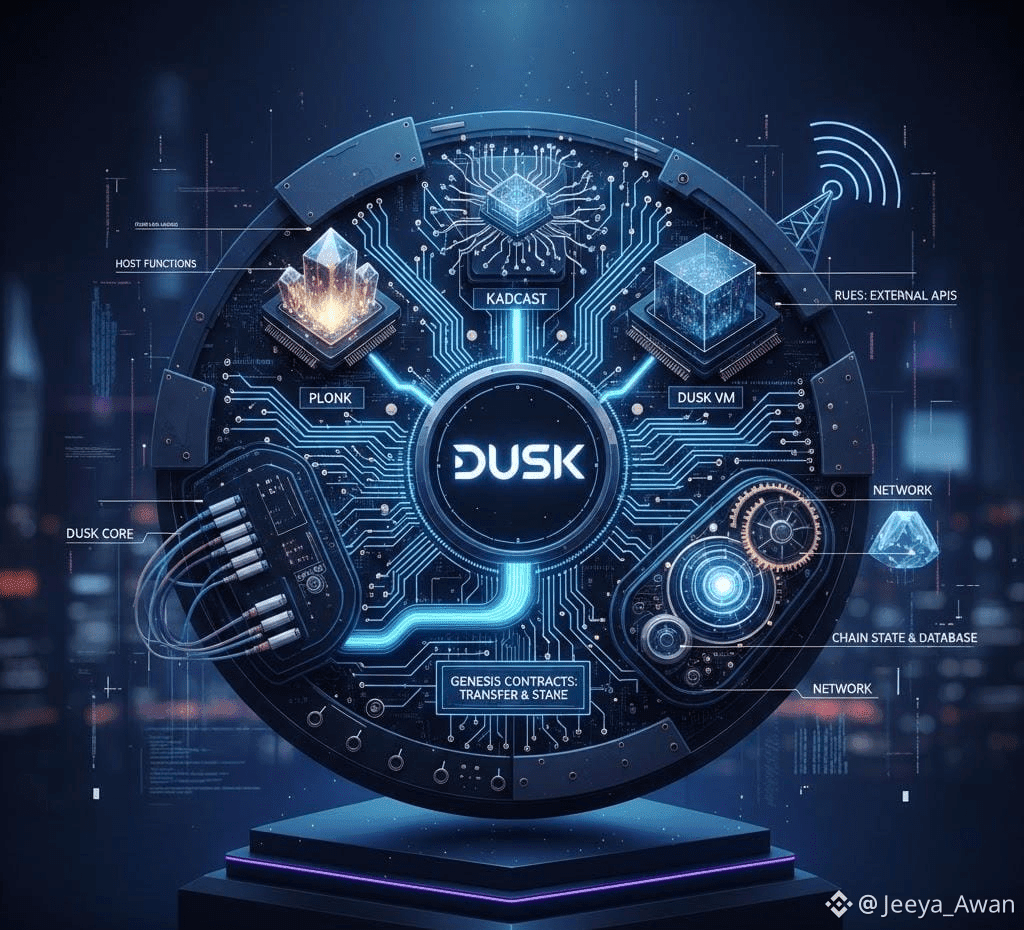
Rusk can be thought of as the technological heart of the Dusk protocol, similar to the motherboard of a computer. It is the reference implementation of the Dusk protocol in Rust. Rusk serves multiple critical functions. It includes foundational elements like the genesis contracts, such as the transfer and stake contract. It integrates key components such as Plonk, Kadcast and Dusk VM, and supplies host functions to smart contract developers through Dusk Core. Beyond that, Rusk houses the consensus mechanism and node software, maintaining the chain state, database and network. It also provides crucial external APIs through the Rusk Universal Event System (RUES).
3 Succinct Attestation:
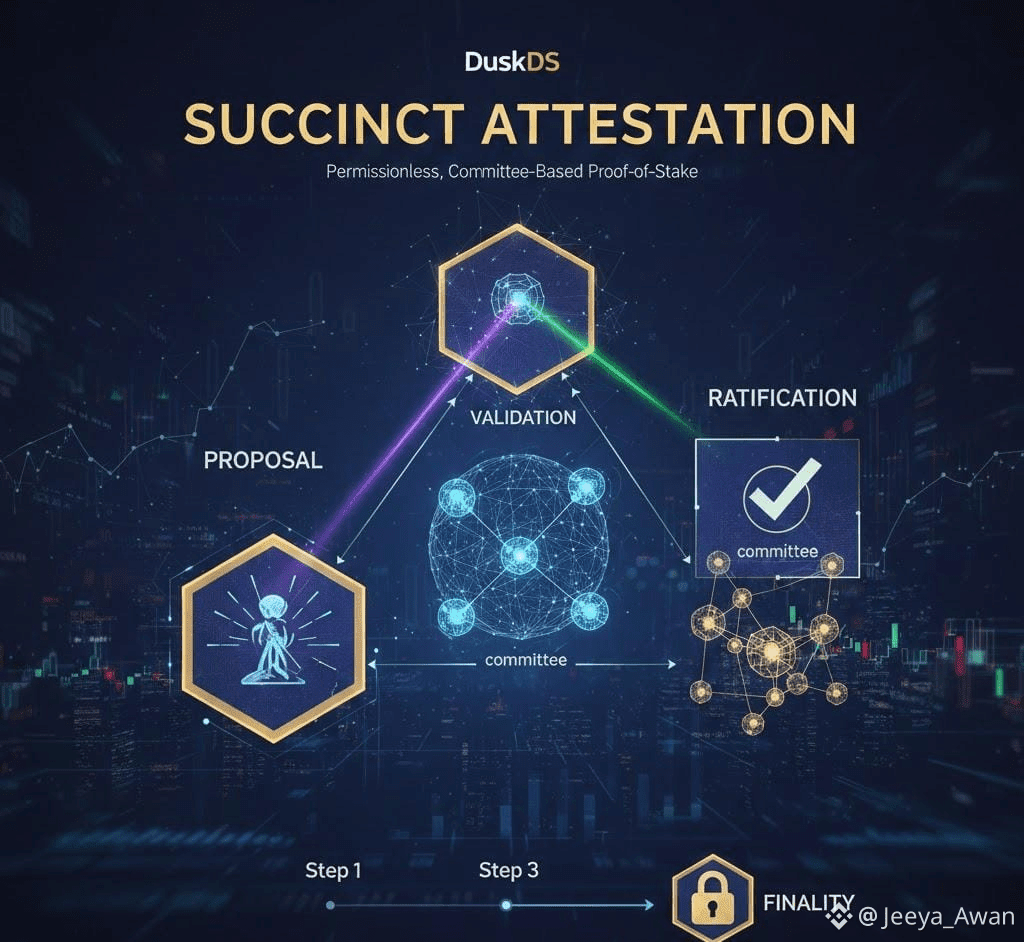
Succinct Attestation (SA) is DuskDS’s permissionless, committee-based proof-of-stake consensus protocol. It uses randomly selected provisioners to propose, validate, and ratify blocks, providing fast, deterministic finality suitable for financial markets.
At a high level, each round goes through three steps:
✓ Proposal – a provisioner creates and broadcasts a candidate block.
✓ Validation – a committee checks the block’s validity.
✓ Ratification – another committee confirms the validation outcome and finalizes the block.
4. Transactions in DuskDS:
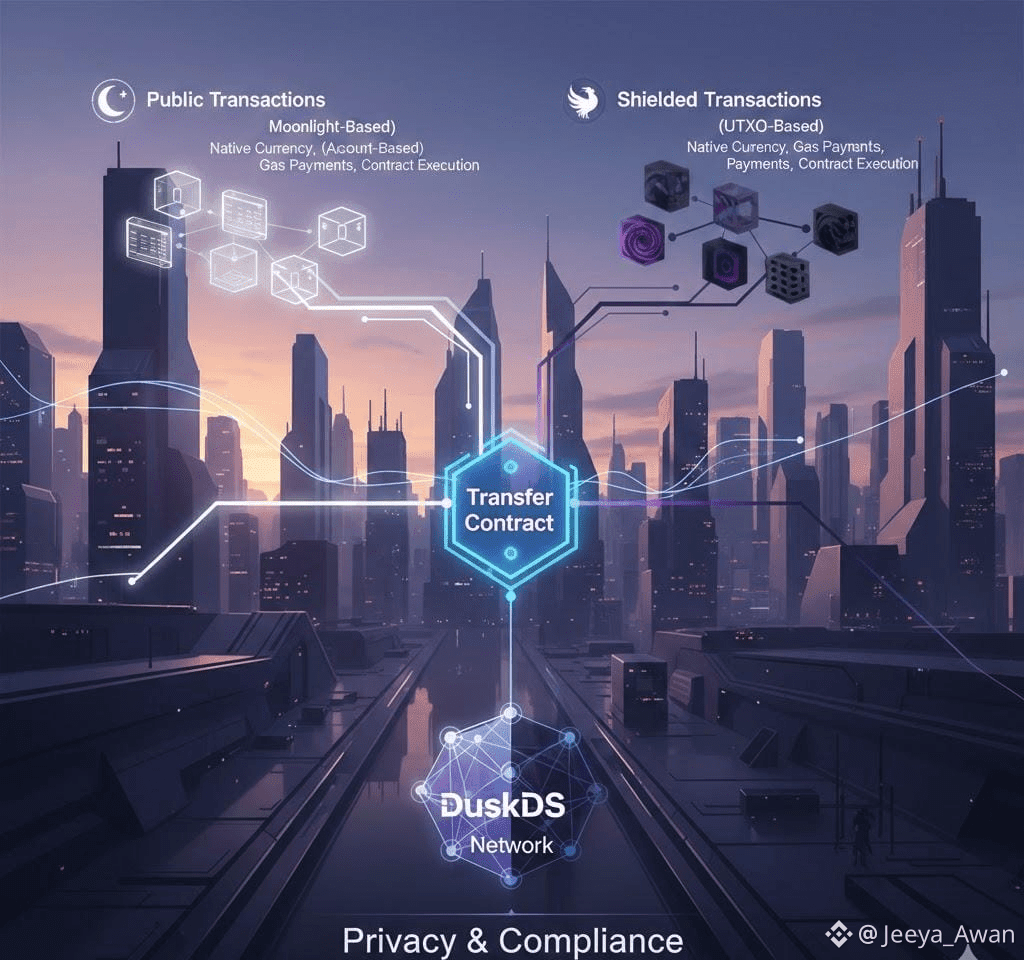
Transactions in DuskDS are managed by the Transfer Contract. The Transfer Contract oversees the handling of both transparent and obfuscated transactions within the network.
The Transfer Contract supports both a UTXO and account-based model through Phoenix and Moonlight to handle transfers of the native currency, gas payments, and serve as a contract execution entry point.
Moonlight provides public transactions, while Phoenix enables shielded transactions. The flexibility of this dual-model allows users to take the best from both privacy and compliance features.