
Plasma XPL starts from something most blockchains quietly ignore. Stablecoins aren’t a side feature anymore. They’re how value actually moves on-chain today. Plasma is built around that reality from day one, not retrofitted later.
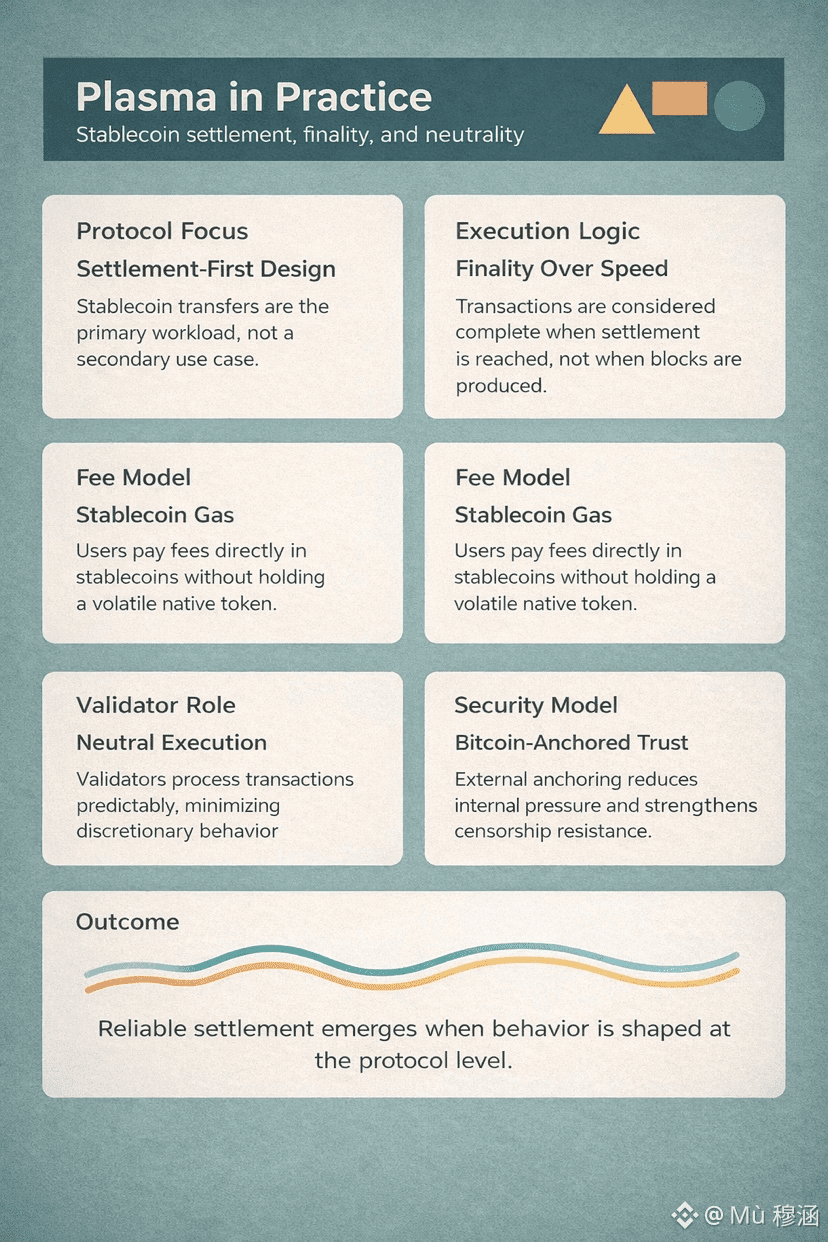
The network behaves primarily as a settlement layer. It assumes that the majority of activity will be stablecoin transfers and designs everything around that assumption. That changes how performance is measured. Speed isn’t about how fast blocks are produced. What matters is how quickly a transaction reaches a point where it’s effectively final and can be treated as settled. On Plasma, that happens almost immediately, which is far more relevant for payments than raw throughput metrics.
Fees are handled differently as well. Stablecoin transfers, including USDT, don’t force users to hold a volatile native token just to move value. Gas is abstracted into a stablecoin-first model. From the user’s point of view, sending funds feels closer to sending money than interacting with a blockchain system. In places where stablecoins already function as everyday currency, this distinction matters.
Plasma remains compatible with Ethereum tooling. EVM-based applications can run without friction, using familiar developer workflows. But compatibility isn’t positioned as the core achievement. It’s simply a practical choice to support payment and settlement use cases without introducing unnecessary standards or forcing rewrites of systems that already function well.
Validators have a narrow and defined role. They process transactions and maintain network integrity, with fewer opportunities for discretionary behavior or prioritization games. That predictability is intentional. A settlement network benefits more from neutrality and consistency than from flexibility or expressiveness.
Security leans on Plasma’s Bitcoin-anchored design. By tying parts of its trust model to an external network known for neutrality, Plasma reduces internal pressure and censorship risk. For stablecoin settlement, where on-chain transactions often connect directly to real-world obligations, this kind of structural resistance matters. The goal isn’t excitement. It’s durability.
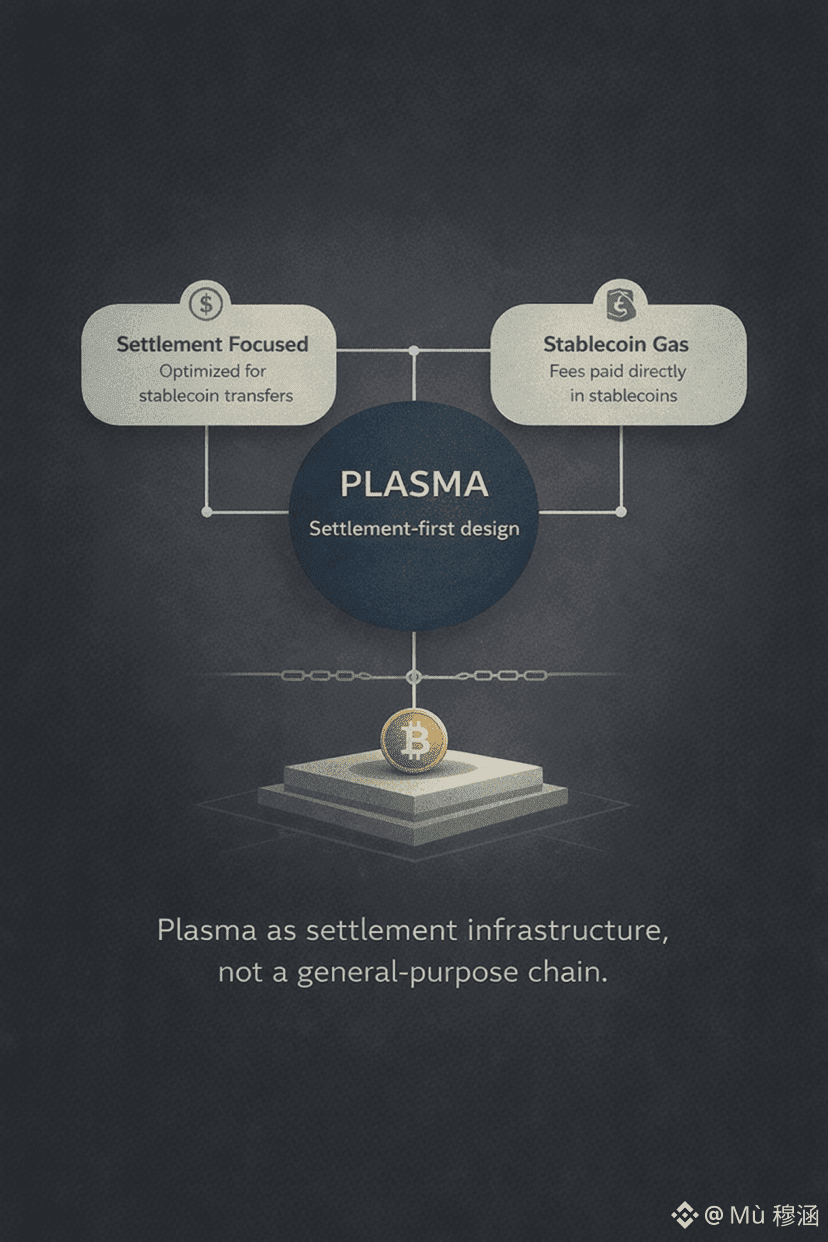
Plasma doesn’t try to be a universal base layer. Its scope is deliberately narrow. Stablecoin settlement, clean transaction flow, fast finality, and minimal friction. That focus allows the system to behave predictably for both everyday users and institutions moving large amounts of value.
In practice, Plasma feels less like an experiment and more like background infrastructure. Transactions move. Settlement completes. Nothing asks for attention. In a market where stablecoins already dominate real usage, Plasma is designed to match how crypto payments actually work today, not how blockchains once imagined they might.

