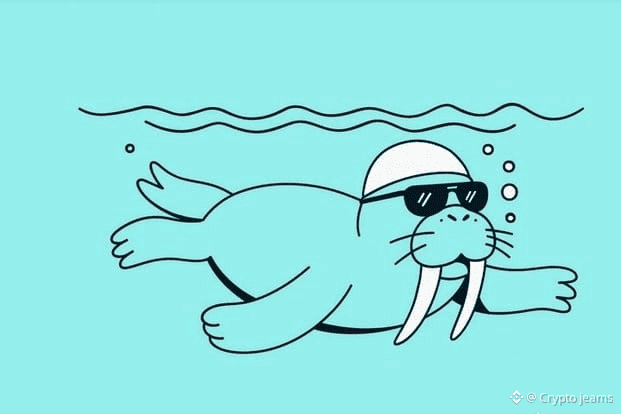
I'll never forget the first time I really saw a walrus—not at a zoo, not in a documentary, but truly saw one for what it was.
It was hauling itself onto a rocky outcrop somewhere in the Bering Sea, visible through binoculars from a research vessel I was lucky enough to be on. The creature moved with what I can only describe as determined exhaustion, like someone lugging groceries up four flights of stairs after a twelve-hour shift. Flippers slapping, body heaving, tusks scraping against stone. And when it finally made it to the top, it didn't pose majestically or survey its kingdom.
It collapsed into a blob and immediately fell asleep.
I laughed. But then I felt something unexpected: kinship.
The Beauty of Being Awkward
Here's what nobody tells you about walruses—they're phenomenally awkward on land. Evolution designed them for water, where they're surprisingly graceful swimmers, capable of elegant twists and dives. But on shore? They're basically living beanbags with tusks, flopping around with all the coordination of a person trying to run in a dream.
And yet, they don't seem embarrassed. They don't apologize for taking up space. A walrus doesn't suck in its stomach or try to appear smaller. It exists fully, unapologetically, in whatever form it takes.
There's something almost revolutionary about that in our age of filters and carefully curated lives. The walrus refuses to be anything other than exactly what it is: large, whiskered, often covered in barnacles, occasionally drooling, utterly magnificent.
The Loneliness of Letting Go
Female walruses are devoted mothers in a way that transcends species. For three years, sometimes longer, a mother carries her calf through life—teaching it to dive, showing it where clams hide in the seafloor mud, protecting it from predators. The bond is so intense that mothers have been observed grieving calves that don't survive, carrying their small bodies through the water for days.
But eventually, every mother walrus must do the hardest thing: let go.
Researchers have documented the process. The calf, now a teenager in walrus years, keeps trying to stay close. The mother, gently but firmly, creates distance. There are no dramatic goodbyes in nature, no graduation ceremonies or tearful airport departures. Just a mother who knows her child must find independence, and a young walrus who doesn't quite understand why they can't stay together forever.
Anyone who's ever watched a child leave home, or been that child, knows this particular ache.
The Tyranny of the Tusk
Male walruses carry weapons on their faces: tusks that can grow over three feet long. They use them to haul themselves onto ice (hence the name—"walrus" comes from a Norse word meaning "whale horse" or possibly "tooth walker"). They use them to dig breathing holes. They use them in dominance displays and occasional fights.
But mostly? The tusks determine social hierarchy.
Bigger tusks mean higher status. Better resting spots. First access to food. The respect of the herd. A male walrus born with smaller tusks—through no fault of his own, just genetic lottery—will spend his entire life as a subordinate. He'll eat last. Sleep on the margins. Watch other males with their impressive ivory get the prime territories.
The unfairness is almost human in its arbitrariness. We like to think we've evolved beyond judging others by superficial features, but have we really? The walrus with small tusks didn't choose them any more than a person chooses their height, their face, their body. And yet, hierarchy persists.
The Ones Who Don't Fit
In every walrus colony, there are loners. Males who, for whatever reason, don't quite mesh with herd dynamics. Maybe they lost a crucial fight. Maybe they're just temperamentally solitary. Maybe the noise and jostle of hundreds of bodies is too much.
These walruses haul out on distant rocks, away from the crowd. They forage alone. They rest in solitude.
Scientists used to think they were sick or outcast. But long-term studies suggest some walruses simply prefer solitude. They're not suffering; they're just different. They've opted out of the constant social negotiation that herd life demands.
I think about these walruses more than I probably should. In a world that constantly tells us connection is everything, community is essential, isolation is death—here are creatures proving that sometimes, some individuals genuinely thrive in quieter waters.
When the World Changes Too Fast
The tragedy unfolding in the Arctic is the walrus story I wish I didn't have to tell.
As sea ice vanishes, walruses lose their traditional resting platforms. Mothers and calves, who once safely dozed on ice floes between feeding sessions, now must swim exhausting distances to shore. The beaches become overcrowded. Panic spreads easily. In the chaos, mothers and calves become separated, sometimes permanently.
Some walruses, disoriented and desperate for rest, attempt to scale cliffs. Walruses. Climbing. Cliffs. It's as absurd and heartbreaking as it sounds. They're not built for it. Many fall.
When I see footage of these climbs, I don't see stupidity. I see desperation. I see creatures doing something completely contrary to their nature because their world has fundamentally changed and they're just trying to survive.
I see us, honestly. All of us, trying to adapt to a rapidly shifting world, sometimes making choices that seem irrational to others but feel like the only option available.
The Walrus at Rest
But let me end with the image that stays with me most.
A group of walruses, piled together on a sun-warmed beach. The sound is extraordinary—a symphony of snores, grunts, and sighs. Every few minutes, one shifts position, disrupting neighbors, triggering a wave of grumpy repositioning that eventually settles back into communal sleep.
They're touching. Always touching. Flippers draped over backs. Heads resting on bellies. Tusks occasionally clicking together in sleep. Even the largest bulls, when they're not posturing or competing, seek this contact. This warmth. This assurance that they're not alone.
In our hyper-individualistic culture, we sometimes forget how much we need this. Physical presence. The comfort of others breathing nearby. The knowledge that someone's got your back, literally, while you rest.
Walruses understand something we keep forgetting: vulnerability shared is vulnerability halved. Sleep deeper when you're surrounded by those who'll wake if danger comes. Rest easier when you're not carrying everything alone.
What the Walrus Knows
The walrus doesn't have Instagram or a mortgage or existential dread about the meaning of life. But it knows exhaustion. It knows the relief of finally reaching solid ground after a long swim. It knows the warmth of bodies pressed together against the cold. It knows loss, fear, hunger, safety, comfort, connection.
It knows that life is sometimes awkward and undignified, and that's okay.
It knows that asking for space or seeking solitude doesn't make you broken.
It knows that the world changes, sometimes cruelly, and all you can do is adapt as best you can.
Most of all, the walrus knows this: there is no shame in being exactly what you are—tusks or no tusks, grace or no grace, surrounded by hundreds or resting alone on a distant rock.
The walrus simply exists, fully and completely, in whatever form survival takes.
And maybe, just maybe, that's the most human thing of all.#walrus @Walrus 🦭/acc $WAL