
Walrus (WAL) is quietly positioning itself as one of the more interesting infrastructure projects emerging in the crypto space — not through hype, but through a very real and growing need: decentralized data storage at scale.
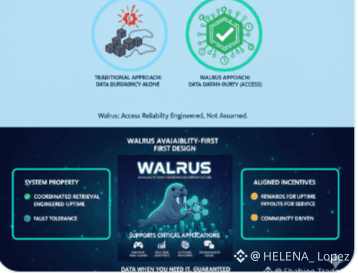
At its core, Walrus is a decentralized storage protocol built directly on the Sui blockchain, designed to handle massive datasets efficiently and securely. Think far beyond simple file storage. Walrus is optimized for large files such as videos, images, AI training datasets, and even full blockchain histories, making it especially relevant in an era where data is becoming the most valuable digital asset.
What makes Walrus stand out is its focus on performance and cost efficiency. Compared to traditional cloud storage providers, Walrus can reduce storage expenses by 80–100x, a game-changer for developers, startups, and AI-focused projects that deal with enormous data volumes. Instead of relying on centralized servers, Walrus distributes data across a decentralized network, making it more resilient, censorship-resistant, and cost-effective.
The ecosystem runs on the WAL token, which plays a central role in keeping the network functional and secure. WAL is used to pay for storage, participate in staking, earn rewards, and take part in governance decisions. Validators lock up WAL tokens to compete for the right to store data, helping maintain reliability while strengthening network security. This staking mechanism aligns incentives across users, builders, and validators, ensuring long-term sustainability.
From a market perspective, Walrus has been gaining noticeable attention. The project’s market capitalization currently sits in the range of $190–240 million, with approximately 1.6 billion WAL tokens in circulation and a maximum supply capped at 5 billion. Recent price action shows increasing momentum supported by healthy trading volume, indicating growing interest rather than short-term speculation.
One of Walrus’ most compelling strengths is its relevance to the AI economy. As artificial intelligence models demand massive, verifiable datasets, Walrus provides a solution that makes data trustworthy, programmable, and monetizable. Developers can build applications using flexible data blobs, unlocking use cases across AI, DeFi, gaming, and decentralized infrastructure.
Interoperability is another key advantage. Walrus is not confined to a single ecosystem — it integrates with multiple chains including Ethereum, Solana, and others, expanding its reach and potential adoption. This cross-chain compatibility makes it attractive to builders looking for scalable storage without ecosystem lock-in.
Behind the project is Mysten Labs, the team responsible for Sui, bringing strong technical credibility and long-term vision. Since mainnet launch, Walrus has continued to expand steadily, with growing developer interest and an increasingly active community.
Of course, like all crypto projects, Walrus is not without risk. Market volatility remains high, and adoption takes time. However, its real-world utility, strong technical foundation, and alignment with future data and AI trends make it a project worth watching.
For anyone interested in decentralized storage, AI infrastructure, or next-generation blockchain utilities, Walrus represents a compelling case study in how data can become both usable and valuable in a decentralized world.
As always — do your own research, understand the risks, and invest wisely.

