

I took a good look at the Dusk Foundation's protocol economics, focusing on the DUSK token. This token isn't just some digital asset; it's central to keeping the network secure, settling transaction fees, letting people participate in staking, and making sure everyone involved—like provisioners and delegators—are all working toward the same goals. What you'll find here is based on official documents from Dusk Network and the Dusk Foundation.
### The Many Hats of the DUSK Token
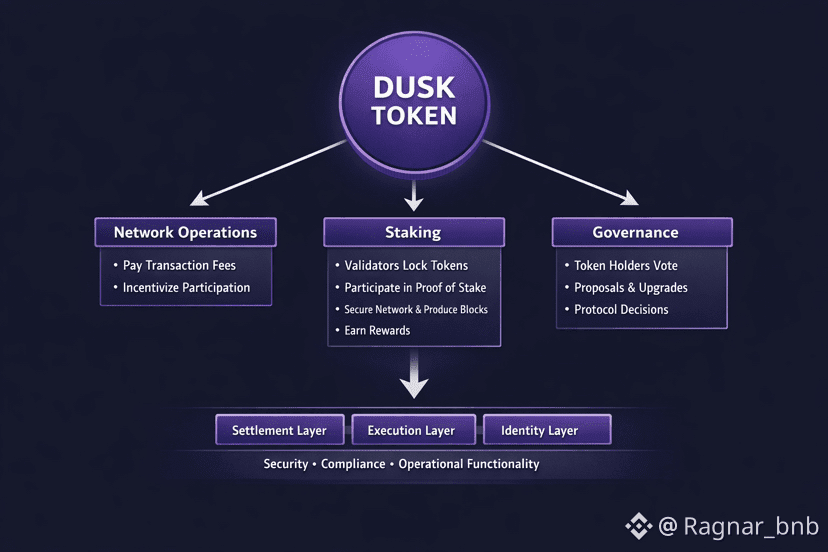
The DUSK token is a workhorse, handling several jobs within the protocol:
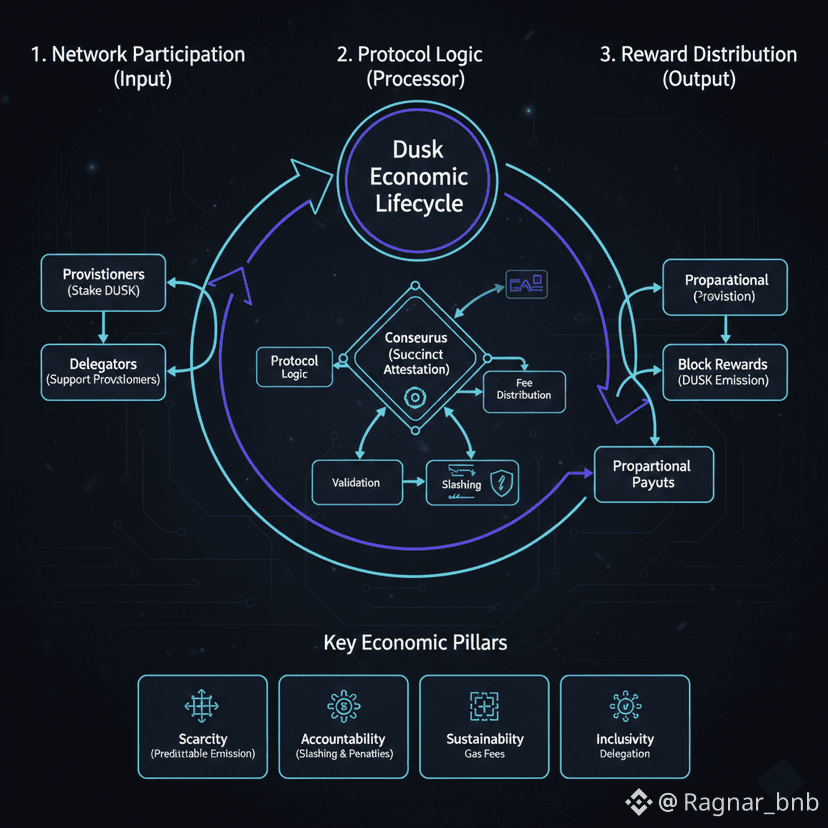
1. Staking and Security: If you want to run a node and help secure the Dusk network, you'll need to stake DUSK. These nodes, called provisioners, are the backbone of the consensus mechanism.
2. Gas and Fees: Just like you pay a toll on a highway, you use DUSK to pay for transaction fees and when running smart contracts on the network.
3. Economic Incentives: The network rewards those who support it with DUSK. This includes provisioners and other participants who keep things running smoothly.
4. Governance Alignment: By using DUSK, the protocol makes sure that everyone is playing by the rules and invested in the network's long-term success. It's a way of saying, We all have skin in the game.
All of this is straight from the official Dusk documentation, which clearly lays out how the token is woven into the economic design of the entire network.
### How DUSK Tokens are Released: The Emission Model
The way DUSK tokens are issued is planned out to encourage long-term involvement in the network. Here’s what you need to know:
*Initial Supply:** When the main network launched, there was a set amount of DUSK created.
*Emission Duration:** New tokens are released over a long period (we're talking years) to keep people interested in supporting the network.
*Reward Distribution:** Those who help maintain the network's security and availability, like provisioners, earn rewards over time.
The rate at which tokens are released isn't random. The protocol controls it, so it's not based on anyone's gut feelings.
### Staking: How You Can Help Secure the Network
Staking is a vital part of Dusk's economic setup. Here's a closer look:
Provisioners
* These are the nodes that stake DUSK to keep the network secure.
* To become a provisioner, you've got to lock up a minimum amount of DUSK (the exact amount is in the documentation).
* The amount of DUSK you stake affects your chances of being chosen for the committee in the Succinct Attestation consensus process.
* If you do your job right—proposing blocks, attesting to them, and other consensus-related tasks—you get rewarded.
Delegation
* Don't have the tech skills to run a node? No problem. You can delegate your stake to a provisioner.
* When you delegate, you share in the rewards earned by that provisioner.
* Delegation helps deepen the staking pool and makes the network's security more decentralized.
Staking and delegation are both ways to get token holders to support the network's security instead of just sitting on their tokens.
### Who Gets What? Understanding Reward Distribution
Dusk's reward setup is all about encouraging people to be active and honest:
* Rewards go to provisioners and delegators based on how much they've staked.
* If you mess up—say, your node goes offline or you vote incorrectly—you could lose some of your staked DUSK. This is called slashing.
* The reward system favors those who stick around for the long haul. The longer you support the network, the more you earn.
These reward dynamics are in place to boost security by making it worth people's while to be honest and keep their systems up and running.
### Transaction Costs and Gas Fees: Paying for Resources
The Dusk protocol charges fees in DUSK for anything that uses network resources:
*Transaction Fees:** When you send a transaction, you pay a fee.
*Contract Execution Fees:** Running smart contracts costs DUSK, which covers the gas needed to execute them.
*Priority Fees:** Need your transaction to go through fast? You can pay a higher fee to jump the line.
These fees make sure that everyone is paying their fair share for using the network's resources and that the network can sustain itself.
### Long-Term Thinking: Supply Decay and Incentives for the Future
The DUSK token has a long-term emission plan:
* Tokens are released slowly over a long time
* This keeps inflation in check while still encouraging network support.
* A slow release helps keep incentives alive as things grow.
### Penalties: Staying Honest with Slashing Rules
The protocol has rules about what happens if you misbehave:
*Slashing Conditions:** If a provisioner does something wrong (like voting incorrectly, signing the same block twice, or going offline), they can lose part of their stake.
* These penalties discourage people from being malicious or unreliable.
* Tokens that are slashed aren't necessarily burned; the protocol spells out how slashing affects the total supply.
These rules help by connecting security with economic responsibility.
### Economic Roles in Consensus
The Dusk Foundation sees economic incentives as a key part of its security model:
* Provisioners get rewarded for keeping the infrastructure running and participating in consensus.
* Delegators help by adding to the stake weight and earning a share of the rewards.
* Even if you don't run a node, you still benefit from the value of your DUSK holdings as the network grows.
This setup is similar to other proof-of-stake systems, but it's tailored to Dusk's goals in regulated finance.
### In Short: Key Economic Features of the DUSK Token
*Role of DUSK:** It’s used for network fees, staking, delegation, and as the unit for rewards.
*Emission:** There's a set schedule for releasing tokens to encourage long-term network involvement.
*Staking:** Provisioners need to stake a minimum amount, and delegation is an option for others.
*Rewards:** Rewards are based on how much you stake and how long you're active; penalties apply if you mess up.
*Fees:** You pay transaction and execution fees in DUSK.
