
If you’re new to crypto or just scrolling Binance Square wondering “what is this Walrus thing?”, don’t worry — let’s break it down from the ground up, no technical headache 😄
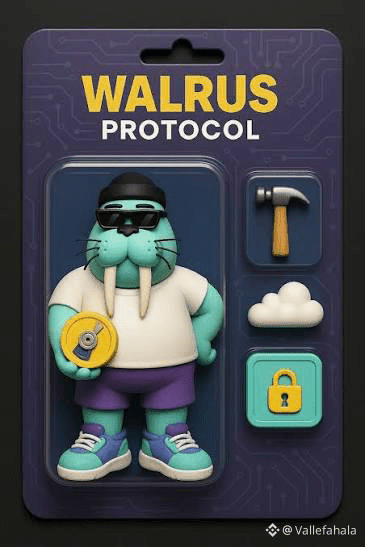
At its core, Walrus Protocol is about data. Not prices, not hype — data. In Web3, apps need a place to store information like images, game assets, social posts, or historical records. Right now, a lot of that data still lives on centralized servers, which kind of defeats the whole “decentralized” idea. That’s where @Walrus 🦭/acc comes in.
Walrus is building a decentralized data storage layer designed specifically for blockchain applications. Think of it as a backbone that lets Web3 apps store large amounts of data securely, efficiently, and without relying on Big Tech servers.
Here’s the simple version 👇
• 🧠 What problem does it solve?
Blockchains are great for transactions, terrible for large data. Walrus fixes that gap.
• 🛠️ What does Walrus do?
It allows apps to store, verify, and retrieve data in a decentralized way.
• 💰 Why does $WAL matter?
The token $WAL is used to incentivize network participants who help store and maintain data.
• 🌐 Why is this important?
Because real Web3 apps (games, DeFi, NFTs, social platforms) can’t scale without proper data infrastructure.
What makes Walrus interesting is that it’s not chasing memes or short-term hype. It’s focused on infrastructure, the boring-but-essential stuff that actually lasts. As Web3 grows, projects like Walrus become more valuable because everything else is built on top of them.
Walrus Protocol is basically trying to make Web3 usable at scale by fixing how data is stored. If you believe the future of crypto is more than just trading tokens, then #Walrus and $WAL are definitely worth understanding early.

